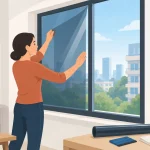

A west-facing room can look perfect on paper and still feel unusable by 3 p.m. The glare is harsh, the sofa heats up, and the air-conditioning runs longer than it should. That is exactly why many homeowners and businesses start looking at window film for heat reduction – not as a cosmetic add-on, but as a practical upgrade that improves comfort without replacing existing glass.
In a hot, sun-exposed environment, the right film can make a noticeable difference. But not all films perform the same, and the marketing language around them often sounds more impressive than it is. If you want real results, it helps to understand what heat-reducing film actually does, which numbers matter, and where expectations should stay realistic.
How window film for heat reduction actually works
Sunlight brings more than brightness into a room. It also carries infrared heat and ultraviolet radiation, along with visible light that creates glare. Window film is designed to manage that solar energy before it fully enters the space. Depending on the film type, it can reflect, absorb, or selectively filter parts of the solar spectrum.
That distinction matters. A film that simply darkens the glass may cut glare, but it will not always deliver strong heat rejection. A high-performance solar film is engineered to reduce solar heat gain while still preserving useful daylight. This is why two films that look similar from indoors can perform very differently once the afternoon sun hits the glass.
In practical terms, a good heat-control film helps rooms feel less intense during peak sun hours. Floors, furniture, and work surfaces stay cooler, and the strain on cooling systems can be reduced. It is not a replacement for insulation, shading design, or efficient HVAC, but it is often one of the most direct ways to improve glass performance without major renovation.
The performance numbers that matter
When comparing products, the most useful step is to ignore vague claims like “blocks heat” and focus on tested performance data. Total Solar Energy Rejected, often shortened to TSER, is one of the clearest indicators. It measures how much total solar energy the film helps keep out. In general, a higher TSER means better overall heat rejection.
Solar Heat Gain Coefficient, or SHGC, is also important. A lower SHGC means less solar heat passes through the glass system. If your priority is cooling a sun-exposed room, this is a number worth paying attention to.
Visible Light Transmission, or VLT, tells you how much light still comes through the window. Lower VLT usually means a darker film, but darker is not always better. Some advanced spectrally selective films reject substantial heat while keeping the glass relatively bright and natural-looking. That can be a better fit for living rooms, offices, or storefronts where daylight matters.
You should also check UV rejection, especially if fading and skin exposure are concerns. Many premium films reject up to 99 percent of UV rays, which helps protect furnishings, flooring, and interior finishes over time.
Choosing the right type of film
There is no single best film for every property. The right choice depends on glass type, orientation, privacy needs, appearance, and how much heat reduction you are trying to achieve.
Reflective films are often selected for strong solar performance. They can be very effective on windows that take heavy direct sun, especially in commercial settings. The trade-off is appearance. Reflective glass changes the building’s exterior look and may create a mirrored effect that not every homeowner wants.
Dyed or darker films can reduce glare and improve comfort, but entry-level options may not offer the highest heat rejection relative to newer technologies. They can still be suitable for budget-conscious applications where glare control matters as much as thermal performance.
Ceramic and other advanced non-metalized films are popular because they balance heat rejection, clarity, and aesthetics. They are especially useful when you want a cleaner, less reflective finish. Many property owners prefer them for homes because they preserve views while still improving comfort.
Metalized films can perform well for solar control, but they are not ideal in every case. Depending on the product and setting, they may affect signals or create a shinier exterior finish. This is where expert recommendation matters. The best film is not just the one with the strongest headline number – it is the one that suits the actual room, facade, and daily use.
Where you will feel the biggest difference
Rooms with large glass panels, west-facing windows, and minimal exterior shading usually see the most immediate improvement. Bedrooms that stay hot into the evening, living areas with intense afternoon sun, and office spaces where computer glare affects productivity are all strong candidates.
For homeowners, comfort is usually the first benefit they notice. The room becomes more usable during the hottest parts of the day, and blinds do not have to stay closed all the time. That means you keep the view and natural light without paying for it in heat and glare.
For commercial spaces, the benefits often extend beyond comfort. Employees work better in spaces with less glare, customers stay longer in more comfortable interiors, and display areas receive added protection from UV exposure. In buildings with broad glass frontages, film can be a practical upgrade that supports both operations and appearance.
What window film can and cannot do
This is where a lot of disappointment can be avoided. Window film for heat reduction can significantly improve solar control, but it will not make a poorly ventilated room feel cold on its own. If the room has internal heat from appliances, warm walls, poor airflow, or an undersized air-conditioning system, those factors still matter.
It also will not perform identically on every piece of glass. Existing window type affects the final result. Single-pane, double-pane, tinted glass, laminated glass, and coated glass all interact differently with film. Applying the wrong film to the wrong glass can create thermal stress or simply produce underwhelming results.
That is why proper assessment comes before product selection. A reliable installer does not just ask whether you want a dark film. They ask which direction the window faces, how the room is used, what the current glass specification is, and whether daytime privacy or a low-reflective look is part of the requirement.
Why installation quality matters as much as the film
Even premium film can disappoint if it is installed poorly. Heat rejection performance depends on the product, but long-term appearance and durability depend heavily on installation standards. Dust contamination, edge lift, bubbling, uneven cutting, and poor curing all affect the result.
A professional installation team also knows how to match the film to the glass safely. This is especially important in hot climates, where glass can face intense thermal stress. An experienced specialist will evaluate compatibility, explain realistic expectations, and recommend a film that performs well over time instead of just looking good on day one.
This is where established providers stand apart. Companies with long experience in residential and commercial applications tend to offer better guidance because they have seen how different films behave in real conditions, not just in product brochures. ShieldShade International, for example, built its reputation by focusing on practical performance, premium sourcing, and proper installation for heat, glare, and privacy control.
Is window film worth it?
For many properties, yes – especially when replacing the glass is too expensive or too disruptive. Window film is one of the few upgrades that can address heat, glare, UV exposure, and sometimes privacy in a single application. That makes it cost-effective compared with larger renovation work.
Still, value depends on choosing correctly. If your priority is reducing the harsh afternoon sun in a living room, the best solution may be different from what works in a street-facing office or a bedroom that also needs privacy. The more specific the requirement, the better the outcome.
A good rule is to think beyond shade. The right film should support how the space feels, functions, and looks every day. When that balance is done well, the room does not just get darker. It gets more comfortable, more efficient, and easier to live or work in.
If your windows are turning a bright room into a heat trap, the smartest next step is not guessing which tint looks best. It is choosing a film backed by real performance data, matched to your glass, and installed with precision so the difference shows up where it matters most – in the way the space feels every afternoon.