A bedroom window facing a brightly lit street, a glass meeting room beside a busy corridor, or a storefront that needs complete visual separation all have one thing in common: partial privacy is not enough. This blackout film review looks at what blackout window film actually delivers, where it performs best, and when another type of window film may be the smarter investment.
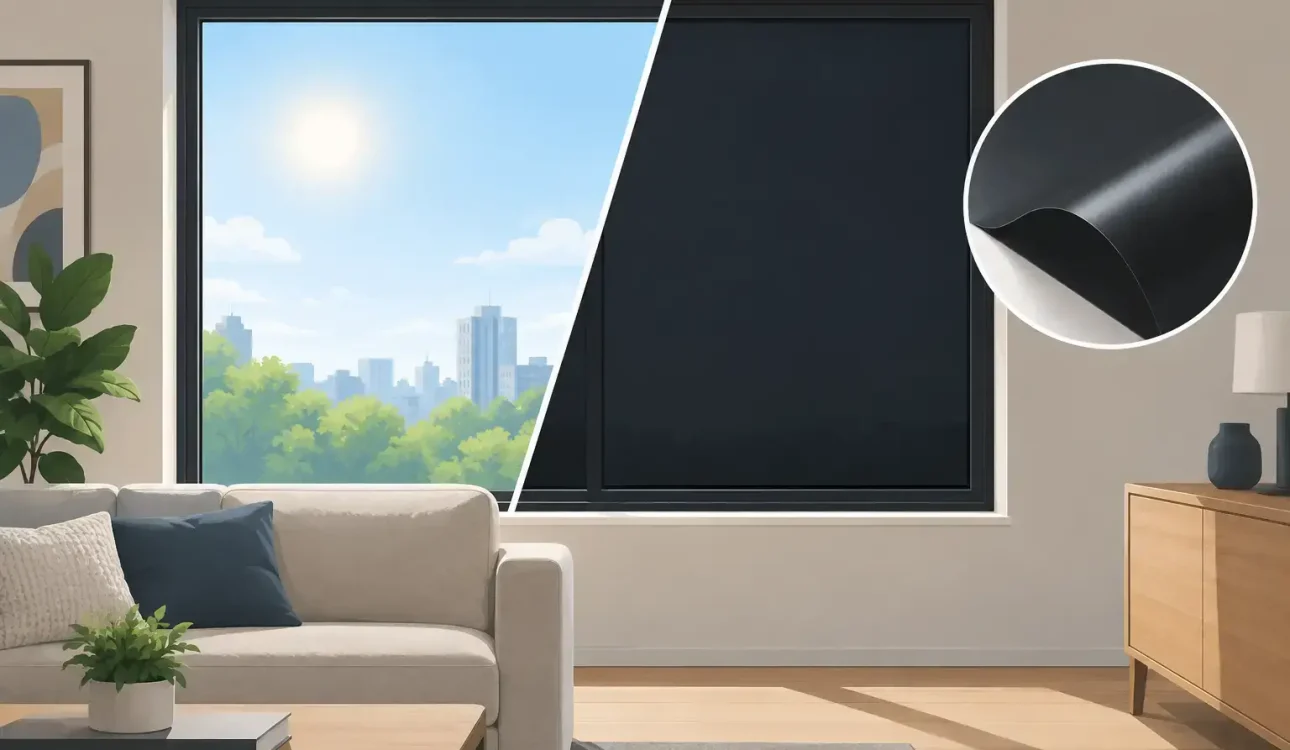
Unlike solar or one-way reflective films, blackout film is designed to stop visibility through the glass. It creates an opaque finish that prevents people from seeing in or out and blocks incoming light across the covered pane. For homeowners and business operators, that can solve a specific problem quickly without replacing glass or building a permanent wall.
What Blackout Film Does Well
Blackout film is a purpose-built privacy solution. Once professionally applied, it turns a clear glass panel into a solid visual barrier. Depending on the selected finish, it may be black, white, gray, or another opaque color suited to the interior design. The essential result remains the same: no direct view through the treated glass.
That level of coverage makes it particularly useful for bedrooms where light leakage disrupts sleep, home offices with distracting views, glass doors facing close neighbors, storage areas, and commercial spaces that handle confidential work. In offices, it can also be used to screen server rooms, back-of-house areas, private consultation rooms, or sections of a glass partition that do not need to remain transparent.
A key advantage is consistency. Curtains can leave side gaps, blinds can tilt open, and frosted film still permits shadows and general movement to be seen. Blackout film provides reliable visual coverage across the glass surface every hour of the day.
The Privacy Benefit Comes With a Trade-Off
Complete privacy is blackout film’s strongest feature, but it also explains why the product is not right for every window. If applied to a window that provides the only daylight or exterior view in a room, the space may feel darker and more enclosed. This is rarely an issue for a storage room, but it can be a major consideration in a compact bedroom, apartment, or office.
The film also blocks the view from inside. That sounds obvious, yet it is one of the most common points people overlook while comparing options. If you want daytime privacy while retaining a view outward, a reflective or one-way film may be a better fit. If you want privacy with soft natural light, frosted film is often the more balanced choice.
A good blackout film review should not treat complete opacity as automatically better. The right choice depends on how the room is used, the direction of sunlight, existing lighting, and whether the glass serves a practical safety or visibility purpose.
Blackout Film Versus Frosted Film
Frosted film obscures detail but allows light to pass through. It is popular for bathroom windows, office partitions, front doors, and interior glass where privacy matters but a bright, open appearance is still preferred. People may be visible as vague silhouettes behind certain frosted finishes, especially when a room is brightly lit.
Blackout film eliminates that concern. It is the stronger option when silhouettes, shapes, and light transmission are unacceptable. The trade-off is that artificial lighting may be needed more often in the treated area.
Blackout Film Versus Solar Film
Solar film is primarily selected to reduce solar heat, glare, and UV exposure while preserving visibility. Premium solar films can make a meaningful difference in rooms affected by intense sun and high cooling demand. They are not, however, designed for full privacy at night when interior lights are on.
Blackout film can prevent light from entering through the covered glass, but it should not automatically be treated as a replacement for a high-performance solar film. If heat rejection is the main concern, the best specification may be solar film on sun-exposed windows and blackout film only where visual coverage is necessary.
Best Places to Use Blackout Window Film
The most successful installations start with a clear purpose. In residential settings, blackout film works well on sidelights beside entry doors, windows facing neighboring buildings at close range, nursery windows, media rooms, and selected sections of glass that compromise privacy.
For commercial properties, the uses can be even more varied. Retailers may use it to conceal stockrooms or renovation zones. Offices may use it to create confidential areas within glass-walled layouts. Clinics, salons, and studios can apply blackout film where client privacy is non-negotiable.
It is also a practical option for rented spaces. A professionally installed film can change the function of an existing glass panel without the cost, disruption, and building work associated with replacing doors or constructing partitions. Before installation, tenants should still check lease conditions and obtain any required property approval.
Installation Quality Matters More Than It Seems
Blackout film is simple in concept, but the final appearance depends heavily on preparation and installation precision. Glass must be thoroughly cleaned, measured accurately, and assessed for chips, damaged seals, existing coatings, or hardware that affects the film edge. A poorly prepared installation can lead to trapped debris, lifting corners, visible gaps, and an uneven finish.
Professional installation is especially valuable for large windows, glass partitions, door panels, and areas with tight edges or multiple cutouts. An experienced installer will also assess whether the proposed film is suitable for the glass type. Some glass configurations require careful product selection to manage heat absorption and reduce the risk of thermal stress.
At ShieldShade International, recommendations are based on the function of the glass, not simply its dimensions. That consultation matters because a film that looks right on a sample may not be the best choice once daylight, privacy expectations, and surrounding conditions are considered.
Questions to Ask Before Choosing a Film
Start by deciding whether you need full opacity or simply better privacy. If you still want daylight, frosted film may provide the result with fewer compromises. If you need to see outside during the day, consider an appropriate solar or reflective option instead.
Next, look at the window’s role in the room. Does it provide ventilation, serve as an emergency exit, or bring the only natural light into the space? Film should not interfere with how the area must function. On doors and accessible glazing, consider local building and safety requirements before covering the glass completely.
Finally, think about the desired appearance from both sides of the glass. A blackout film can make a striking design statement, but color, finish, and edge details should complement the surrounding walls, frames, and furnishings. White opaque film can feel clean and architectural, while black offers a sharper, more dramatic look.
Is Blackout Film Worth It?
Blackout film is worth considering when total privacy and light blocking are the priority. It offers a clean, space-efficient alternative to heavy curtains, blinds, or construction work, and it can make an exposed window or glass partition immediately more functional.
It is less suitable when your goal is to maintain an outdoor view, brighten a room naturally, or reduce solar heat without sacrificing transparency. In those cases, the right answer may be a different film category or a combination of solutions across different windows.
The best result comes from treating each pane as part of how the room works, not as an isolated surface. When blackout film is used where complete coverage genuinely improves comfort, confidentiality, or rest, it becomes a practical upgrade that earns its place every day.


