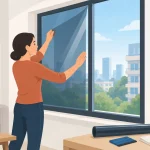
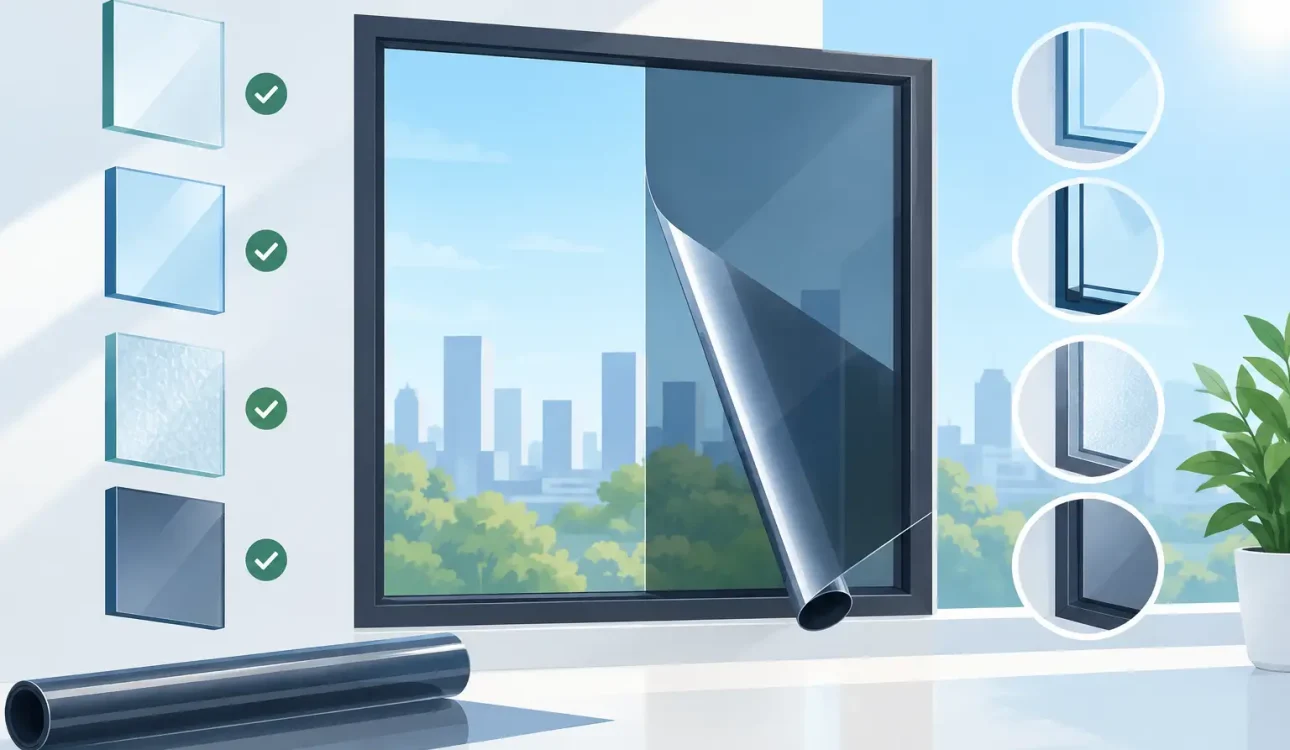
A window film can transform a sun-facing room in a single day, but the wrong film on the wrong glass can create unnecessary risk. This glazing compatibility guide explains how glass type, window construction, shading, and film performance work together, so you can improve comfort without compromising your windows.
For homes, apartments, offices, and retail spaces, compatibility is not a minor technical detail. It is the foundation of a dependable installation. Before selecting a solar, privacy, decorative, or blackout film, the glazing must be assessed properly.
Why Glass and Film Must Be Matched
Window film changes the way glass manages solar energy. Some films reflect heat away from the pane, while others absorb a portion of it. Both approaches can reduce heat and glare indoors, but they also alter the temperature of the glass itself.
Glass expands when it heats and contracts as it cools. If one area of the pane becomes significantly hotter than another, stress can build around edges, existing chips, or imperfections. In certain situations, this may increase the risk of thermal glass breakage. It does not mean window film is unsafe. It means the film must be selected according to the glass construction and real conditions at the property.
This is particularly relevant for large windows exposed to intense afternoon sun, common in high-rise residences and commercial buildings. Strong solar exposure, partial exterior shading, air-conditioning, and dark interior finishes can all affect how a glass panel performs after film installation.
Start With the Type of Glazing
The term glazing refers to the glass system installed in a window. It may be a single pane, an insulated glass unit, tempered safety glass, laminated security glass, or a more specialized coated system. Each has different characteristics and compatibility considerations.
Single-pane glass
Single-pane glass is found in many older properties and interior partitions. It is often a straightforward surface for window film, but thickness, pane size, existing damage, and sun exposure still matter. A high-performance solar film can be an excellent solution for reducing heat and glare, provided the glass is in sound condition.
Tempered glass
Tempered glass is heat-treated to improve strength and break into small fragments if damaged. It is widely used in doors, floor-to-ceiling windows, railings, and modern residential projects. Tempered glass is generally suitable for many film applications, but it must still be inspected for edge damage, manufacturing marks, and prior stress.
Because tempered glass can occasionally experience spontaneous breakage due to internal inclusions, film should never be blamed automatically for every failure. A professional assessment helps distinguish pre-existing glass issues from a true compatibility concern.
Laminated glass
Laminated glass contains two or more layers of glass bonded with an interlayer. It offers improved safety, sound control, and security performance. Many solar and privacy films can be installed on laminated glass, although the film selection should account for the glass thickness, interlayer type, and exposure level.
Laminated glass can also react differently to heat than a standard single pane. The best choice depends on the manufacturer’s specifications and the film’s tested compatibility data.
Insulated glass units
Insulated glass units, often called double-pane windows, use two panes separated by a sealed air or gas-filled space. They offer better insulation than single-pane glass, but installation requires added care.
The interior-facing pane and the exterior-facing pane do not experience the same temperatures. Applying a heat-absorbing film to the room side of an insulated unit may raise the temperature of that inner pane. Some combinations are suitable, while others can affect thermal stress or potentially impact the manufacturer’s warranty. A specialist should identify the unit type and select a film designed for that application.
Low-E and coated glass
Low-emissivity, or Low-E, glass has a thin coating that improves energy efficiency. The coating may be on an interior-facing surface within an insulated glass unit or on another protected surface. These windows already manage solar and infrared energy differently from clear glass.
Adding film is still possible in many cases, but it must be evaluated carefully. The wrong product can create excessive heat absorption or produce an appearance that does not meet expectations. Compatibility is not only about avoiding breakage. It is also about achieving the heat rejection, visibility, and reflectivity you want.
What a Professional Glazing Assessment Checks
A reliable recommendation begins with more than a quick look at the window. The installer should consider the pane size, glass thickness, orientation, exterior and interior shading, surrounding frames, and condition of the glass.
A south- or west-facing window that receives prolonged direct sun deserves closer attention than a shaded interior partition. The same film may be appropriate for one elevation and unsuitable for another. Nearby structures, balcony overhangs, blinds, trees, and air-conditioning can create uneven shade patterns that change the pane temperature throughout the day.
The assessment should also identify visible concerns such as chips, cracks, scratches near the edge, seal failure in double-pane units, or prior film adhesive. Film does not repair damaged glass. Installing it over an existing issue can make later diagnosis more difficult and may not deliver the long-term result you expect.
Choosing Film by Performance, Not Just Appearance
A dark film may reduce glare, but darkness alone does not define heat rejection. Likewise, a highly reflective film may offer strong daytime privacy, but its appearance can be unsuitable for certain residential façades or office settings. The best choice balances glazing compatibility with the purpose of the room.
For heat control, consider films that reject solar energy while maintaining useful daylight. For a living room with strong afternoon sun, a premium solar film can reduce heat buildup, glare on screens, and fading from UV exposure without closing off the view.
For privacy, the direction of light matters. One-way reflective film provides daytime privacy only when the exterior side is brighter than the interior. At night, when lights are on indoors, the effect reverses. Bedrooms and bathrooms may be better suited to frosted or blackout solutions, depending on whether natural light is still desired.
Decorative films are usually less demanding from a solar-performance perspective, yet compatibility still matters on large panes or specialized glass. Frosted finishes, patterns, and custom designs can improve privacy and interior style without the disruption of replacing glass.
The Risk Factors That Need Extra Attention
Certain situations call for a more cautious recommendation. Large glass panels, thick or tinted glass, insulated units, and Low-E glazing should always be verified before installation. So should windows with exterior obstructions that produce sharp shade lines across part of the pane.
Dark blinds or curtains positioned close to the glass can trap heat. So can internal furniture or display panels placed directly against a sunny window. In commercial spaces, building rules may also limit exterior reflectivity or require approval for façade-facing film.
There is no universal “best” film for every window. A high-rejection film that performs brilliantly on one glass type may not be the right match for another. This is why product data, installation experience, and site conditions all matter more than selecting a shade from a sample chart alone.
Questions to Ask Before Installation
Before approving a window film project, ask whether your glass has been identified and whether the recommended product is approved for that glazing type. Confirm how the installer handles existing chips, seal issues, or damaged panes, and ask what warranty applies to both the film and installation.
You should also discuss your actual priorities. Is the main problem heat, glare, daytime privacy, UV exposure, or a need for visual separation? Clear goals lead to better product selection. A film that reduces glare for an office may be different from the film that creates privacy in a bathroom or improves comfort in a sun-facing bedroom.
ShieldShade International approaches film selection as a technical recommendation, not a one-size-fits-all sale. With premium film options sourced for demanding tropical conditions, the goal is to match performance to the glass, the room, and the way you use the space.
Protect the Investment You Already Have
Replacing windows is costly, disruptive, and often unnecessary when the glass is sound. The right window film can improve indoor comfort, protect furnishings from UV exposure, reduce harsh glare, and create more privacy while preserving the windows already in place.
The key is to treat compatibility as part of the purchase decision, not an afterthought. Have the glazing assessed, choose a film based on tested performance, and work with an experienced installer who understands how real-world sun exposure affects glass. A well-matched film should make your space feel better every day while helping your windows perform as intended.