A window can solve one problem and create another. Clear glass brings in daylight and an open view, but it can also expose a living room to neighboring blocks, make a meeting room feel too visible, or leave a bathroom without the privacy it needs. This glass film opacity guide explains how to choose the right level of coverage without making your space feel unnecessarily dark or closed in.
Opacity is one of the most visible decisions in window film selection, yet it should not be chosen by appearance alone. The right film depends on where the glass faces, how close other buildings are, when privacy is needed, and whether heat and glare control are also priorities. A well-chosen film improves everyday comfort while preserving the daylight and style that made the window valuable in the first place.
What Glass Film Opacity Actually Means
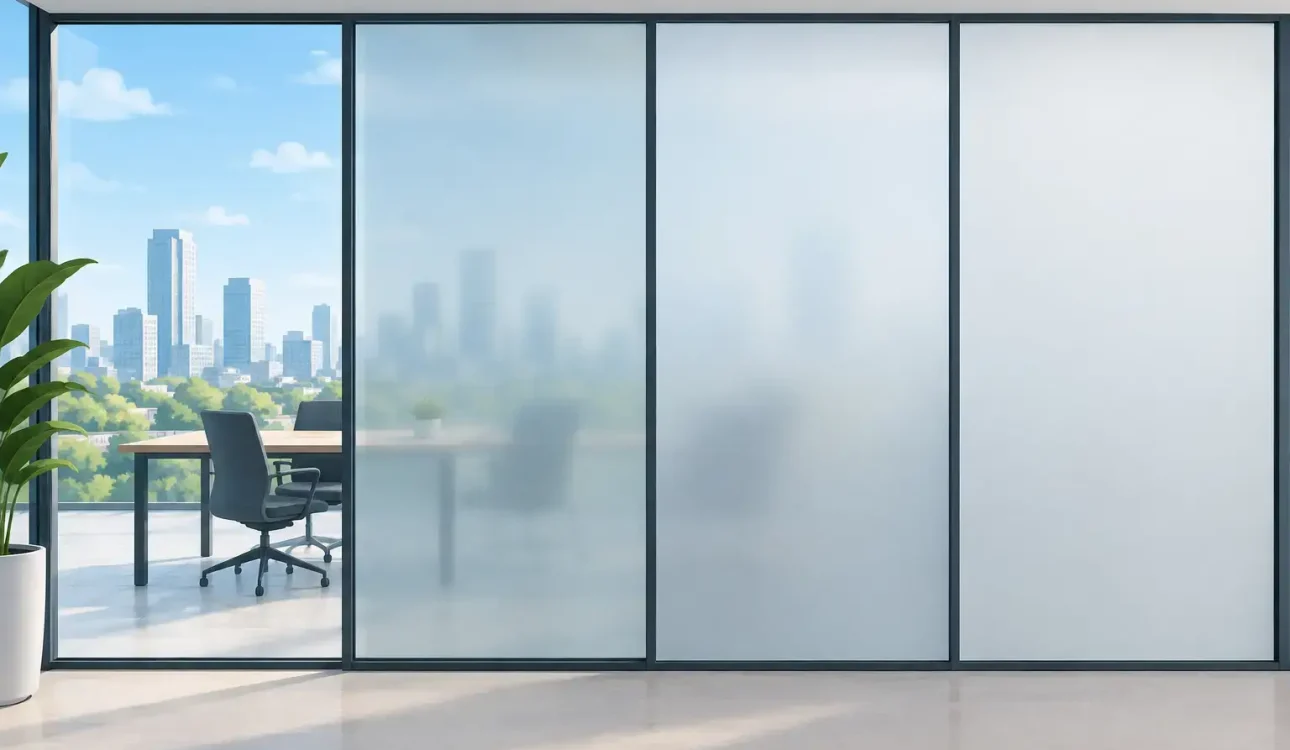
Glass film opacity describes how much the film obscures visibility through the glass. At one end are nearly clear solar films that maintain an open view. At the other are blackout films that stop visibility completely. Between them are frosted, tinted, patterned, and reflective options that create different degrees of privacy.
Opacity is not the same as darkness. A dark film may reduce visible light and glare while still allowing people to see shapes or details through the window. Conversely, a white frosted film can look bright during the day while making the glass highly private. This distinction matters when selecting film for bedrooms, bathrooms, office partitions, or street-facing storefronts.
It is also useful to separate privacy from solar performance. Some films are designed primarily to reject heat, ultraviolet rays, and glare. Others are designed primarily to conceal a view. Premium films can combine both functions, but the performance balance varies by product. A specialist should assess the glass, orientation, and intended use before recommending a solution.
A Glass Film Opacity Guide by Privacy Level
Low opacity: Keep the view, reduce the discomfort
Low-opacity films are best when preserving visibility is the main goal. These include clear UV films, light solar tints, and subtle neutral films. They are often installed in living rooms, condo units with good views, offices, and retail spaces where natural light and outward visibility remain important.
This category is effective for reducing heat, glare, and UV exposure without changing the character of the glass dramatically. For homes with strong afternoon sun, a high-performance solar film can make a room more comfortable and reduce fading on flooring, furnishings, and curtains while keeping the view intact.
The trade-off is straightforward: low-opacity films offer limited privacy. They may soften the view from outside, particularly in bright conditions, but they should not be relied on to conceal interiors from close neighbors or pedestrians.
Medium opacity: Balance light with day-to-day privacy
Medium-opacity films create a noticeable visual barrier while still allowing light to enter. Light frosted film, etched-style designs, gradient films, and some decorative finishes fall into this range. They are a practical choice for windows facing common corridors, nearby units, or shared work areas.
For many HDB and condo homeowners, this is the most flexible option. A frosted lower section can shield a dining area or bedroom from direct sightlines while leaving the upper portion clear for daylight. Gradient film can create a similar result with a more contemporary look. In offices, medium-opacity film is commonly used on internal glass partitions to define spaces without making them feel enclosed.
This level works best when privacy is needed mainly at eye level rather than across the entire pane. It offers a considered alternative to permanently closing curtains or blinds during the day.
High opacity: Create privacy where it cannot be compromised
High-opacity frosted film substantially limits visibility through glass. It is a reliable choice for bathrooms, clinic rooms, treatment areas, meeting rooms, changing spaces, and windows that face very close neighboring properties. White frost remains popular because it provides strong privacy while reflecting and diffusing daylight into the room.
Other high-opacity finishes can be selected to suit the interior. Gray frost, matte black, colored films, or printed designs can add a more distinct visual identity while serving the same practical purpose. For commercial spaces, branded frosting can also reinforce wayfinding or create a professional finish on glass doors and partitions.
High opacity comes with a compromise: the view is reduced or eliminated. This may be exactly what a bathroom or confidential office needs, but it can feel restrictive on a large living room window. Consider partial coverage before applying high-opacity film across a full pane.
Full blackout: Block the view and the light
Blackout film is designed for complete visual privacy and significant light control. It is commonly used in server rooms, storage areas, photography spaces, projection rooms, back-of-house areas, and windows where occupants do not need daylight.
For residences, blackout film can be useful on a troublesome small window or a glass panel that creates unwanted exposure. It is usually not the first choice for main living areas because it changes the room’s brightness permanently. Where sleep quality is the priority, blackout curtains or blinds may offer more flexibility, while blackout film provides a fixed solution for specific glass panels.
Daytime Privacy Is Not the Same as Nighttime Privacy
One-way reflective film is frequently requested for its daytime privacy effect. During the day, when the exterior is brighter than the interior, the reflective surface makes it harder for people outside to see in. It can be highly effective on street-facing windows, offices, and homes with intense sunlight.
At night, the lighting relationship changes. If indoor lights are on and the exterior is dark, people outside may be able to see inside. One-way film does not create guaranteed nighttime privacy on its own. Curtains, blinds, or a different privacy film may still be required.
This is one of the most important expectations to set before installation. A film can perform exceptionally well in daylight and still behave differently after sunset. The right choice depends on how the space is used across the full day, not just how it looks during a site visit.
Match Opacity to the Room, Not Just the Glass
A bathroom window and a home office window may be the same size, but they require different solutions. In a bathroom, high-opacity frost gives dependable privacy without sacrificing daytime brightness. In a home office, a partial frosted band may be enough to screen a desk from nearby homes while preserving an open feel.
Bedrooms require more careful thought. If the concern is direct visibility from another block, frosted film on the lower portion or a decorative privacy film may solve it. If the concern is morning glare and heat, a solar film may be the better foundation, supported by curtains for nighttime privacy. Combining treatments is often more effective than asking one film to solve every concern.
For commercial settings, consider the purpose of the room and the behavior inside it. Meeting rooms may need partial privacy for presentations but still benefit from visibility at entrances. Clinics may need full discretion. Retail stores may want solar control and branding without hiding merchandise. Opacity should support the function of the space, not work against it.
Consider Heat, Glare, and UV Alongside Privacy
In hot, high-sun environments, choosing a privacy film without considering solar performance can leave a major comfort issue unresolved. Frosted and decorative films may provide privacy, but their heat rejection varies widely. If a room receives strong direct sun, ask whether the chosen film can also manage solar heat, glare, and UV exposure.
Solar films are available in different shades and reflectivity levels. A lighter film can maintain a more natural appearance, while a darker or more reflective option may deliver stronger glare reduction and daytime privacy. The best option depends on glass type, window orientation, interior lighting, and the desired appearance from both inside and outside.
Professional assessment is particularly valuable for large windows, high-rise units, and commercial facades. Not every film is suitable for every glass type. Heat absorption, glass construction, existing coatings, and installation conditions should be considered to protect both performance and the glass itself.
Why Samples and Site Assessment Matter
A small sample is one of the best ways to avoid an expensive visual mistake. Hold it against the actual window at different times of day. Look at it from inside and outside. Check how it interacts with wall colors, flooring, furnishings, and nighttime lighting.
Opacity can appear different on a sample board than it does across a full pane of glass. The direction of sunlight, the surrounding buildings, and the distance between your window and neighboring windows all affect the result. A professional consultation turns those variables into a recommendation that fits the real space rather than a generic product description.
ShieldShade International helps homeowners and businesses select premium window films based on practical performance, privacy needs, and the look they want to achieve. Precision installation matters just as much as film selection, especially when applying patterned, frosted, or multi-panel designs where alignment is highly visible.
The best film should make the room feel more comfortable, private, and usable without drawing attention for the wrong reasons. Start with the moments that matter most – relaxing near the window, working without glare, or enjoying privacy at home – and let those daily needs determine the opacity level you choose.