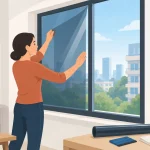
A window can look completely private during the day, then become surprisingly exposed after the lights come on inside. That shift is why homeowners often ask, does privacy film work at night? The honest answer depends on the type of film and, most importantly, which side of the glass is brighter.
For homes, apartments, offices, and storefronts with close-facing windows, choosing the right privacy film is not just about appearance. It affects how confidently you can use a bedroom, bathroom, living area, meeting room, or ground-floor space after dark. Here is what changes at night and how to choose a solution that performs when you need it.
Does Privacy Film Work at Night?
Some privacy films work very well at night. Others are designed mainly for daytime privacy and will not provide the same effect once indoor lights are brighter than the exterior.
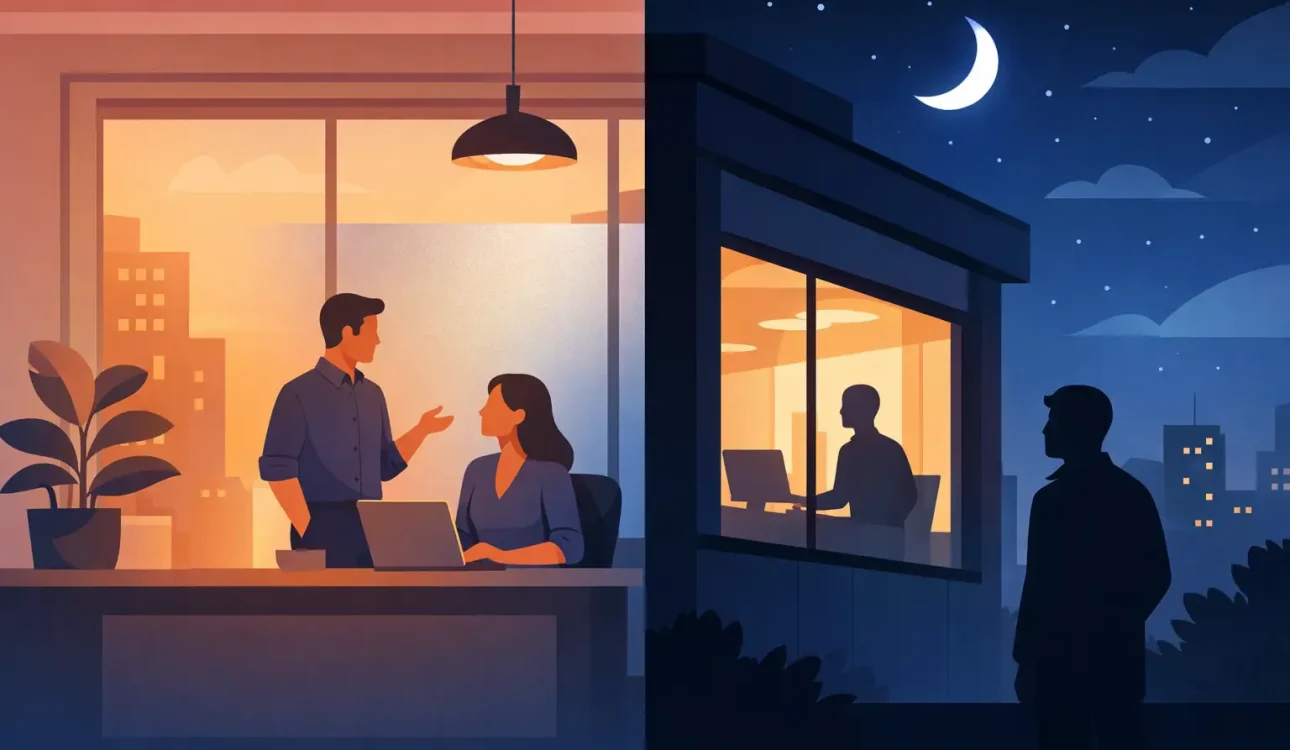
One-way reflective film is the most commonly misunderstood option. In daylight, the brighter outdoor environment reflects off the exterior surface of the glass, making it harder for people outside to see in. From inside, you can generally still see out. At night, the lighting relationship reverses. If your interior lights are on and it is dark outside, the glass becomes more transparent from the exterior side. Someone outside may be able to see into a lit room.
Frosted, opaque, and blackout films behave differently. These films do not rely on a brighter exterior to create privacy. They change the transparency of the glass itself, so they continue to obscure views at night. The trade-off is that they also limit or eliminate a clear view outward.
The best choice comes down to what you expect privacy to mean: preventing clear views into a space, blocking all visibility, maintaining daylight, or preserving an outdoor view.
Why Lighting Determines Nighttime Privacy
Glass transmits light. A reflective or one-way film adds a mirror-like surface, but it cannot override the laws of lighting. The brighter side of the glass is typically easier to see from, while the darker side tends to reflect more.
During the day, sunlight makes the exterior much brighter than your interior. This is the ideal condition for one-way privacy film. In the evening, an illuminated room can become brighter than the exterior by a wide margin. The reflected image fades, and the view into the room becomes clearer.
This does not mean reflective film has no value after sunset. It can still reduce glare, reject solar heat during the day, filter UV exposure, and provide a degree of obscurity in areas with adequate outdoor lighting. But it should not be selected as the only nighttime privacy measure for bedrooms, bathrooms, or windows directly facing neighboring homes.
Window position also matters. A unit facing a corridor, parking area, walkway, or nearby tower may need a higher level of privacy than a high-floor window with no direct line of sight. Before selecting a film, consider where people stand outside, how close they are to the glass, and whether they can look directly into the room.
Which Types of Privacy Film Work Best After Dark?
Frosted glass film
Frosted film is one of the most dependable choices for around-the-clock privacy. It diffuses light and prevents clear visibility through the glass, while still allowing a bright, open feel. At night, people outside may see light and vague movement, but they cannot see facial details, furniture, or activities clearly.
This makes frosted film especially useful for bathroom windows, entry sidelights, kitchen windows near common corridors, office partitions, and lower sections of living room glass. It is also a practical option when you want privacy without the heavy look of curtains or blinds.
The level of obscurity varies by finish. A lightly frosted film can retain more light but may reveal stronger silhouettes. A denser frosted or white opaque film offers greater concealment. A professional recommendation should account for the room’s use and the distance between the glass and where people normally stand or sit.
Decorative privacy film
Decorative films can provide privacy with more visual character. Patterns, gradients, stripes, and textured finishes break up sightlines while supporting the interior design of the room. They are often used in offices, glass doors, meeting rooms, and contemporary homes where full frosting may feel too plain.
Their nighttime performance depends on the pattern. A densely printed or textured design can obscure views effectively, while an open pattern may leave visible areas between design elements. Decorative film is best assessed from both sides of the window, with lights on, before making a final selection.
Blackout and opaque film
If complete visual privacy is the priority, blackout or opaque film provides the strongest result. It blocks the view in both directions at all times, whether the sun is out or indoor lights are on. It can also help conceal storage areas, back-of-house spaces, utility rooms, and sensitive commercial areas.
The compromise is obvious: you lose the view and much of the natural light through that section of glass. For this reason, blackout film is often applied to a lower panel, a side window, or only the areas that require full coverage rather than across an entire room.
One-way reflective film
One-way reflective film is a strong daytime solution for sun-facing windows, particularly where heat, glare, UV exposure, and daytime privacy are all concerns. It can give exterior glass a clean, modern appearance while preserving outward visibility during daylight hours.
At night, though, it needs support. Curtains, blinds, shades, or exterior lighting can help reduce the visibility into a room, but none changes the basic rule that a brighter interior weakens the one-way effect. If you want a clear daytime view and dependable nighttime concealment, pairing reflective film with a window covering is usually the most balanced approach.
How to Improve Privacy at Night Without Losing the View
Many homeowners do not want fully frosted windows because they value daylight and an open view. In that case, a layered solution often works better than asking one film to do every job.
Use reflective solar film for heat and glare control during the day, then close curtains or blinds after dark. This approach is well suited to living rooms, bedrooms, and home offices where daylight comfort matters but privacy is non-negotiable in the evening.
Another effective option is partial coverage. Applying frosted film to the lower half of a window can block direct sightlines from passersby while leaving the upper portion clear for daylight and views. This is particularly useful in ground-floor spaces, apartments facing common areas, and rooms with windows close to neighboring properties.
For bathrooms and private work areas, prioritize obscurity over view. A high-quality frosted film gives a cleaner, lower-maintenance alternative to keeping blinds closed all day. In commercial settings, it can also define private rooms without making an office feel enclosed.
Lighting choices can make a difference as well. Closing sheer curtains, moving bright lamps away from windows, or using layered window treatments reduces the contrast between the room and the exterior. These steps improve discretion, but they are enhancements, not replacements for an appropriately selected film.
Questions to Ask Before Installing Privacy Film
The right recommendation starts with the real conditions at your window, not just a product photo. Consider whether you need privacy during the day, at night, or both. Think about whether you need to preserve a view, reduce solar heat, soften glare, or block visibility completely.
Also look at the glass itself. Different glass types, existing coatings, window sizes, and exposure conditions can affect film compatibility and long-term performance. In warm, high-sun environments, a film should be selected for both privacy expectations and solar control needs. Proper installation is equally important, as clean edges, correct film handling, and suitable product selection determine how the finished window looks and performs.
ShieldShade International helps homeowners and businesses evaluate these factors before installation, with film options sourced for demanding residential and commercial applications. A professional site assessment can identify sightlines that are easy to miss when viewing a window only from inside the room.
Privacy after dark should never be left to guesswork. Choose a film based on the lighting conditions you actually live with, then build in the right balance of view, daylight, heat control, and confidence in your space.