The 2 p.m. sun can turn a bright living room, bedroom, or office into the least comfortable space in the building. If you need to reduce afternoon sun through windows, the goal is not simply to make the room darker. It is to control solar heat, screen glare, and reduce UV exposure while preserving the daylight and outward view that made the window valuable in the first place.
For homes and workplaces with west-facing glass, the right solution can make a noticeable difference in daily comfort without the cost and disruption of replacing windows. The best approach depends on the glass you have, how the room is used, and whether heat, glare, privacy, or all three are the primary concern.
Why afternoon sun feels more intense
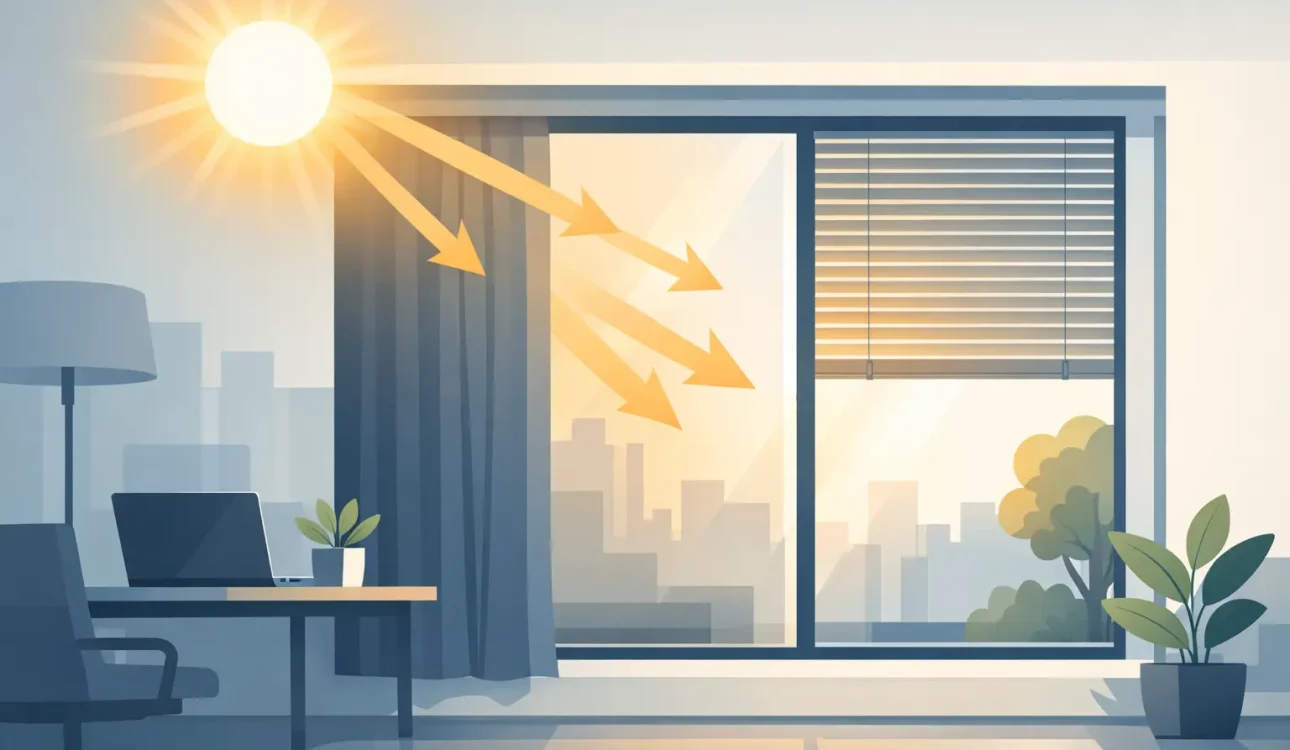
Afternoon sun often enters from west- and southwest-facing windows at a low angle. That angle sends direct light farther into a room, hitting sofas, desks, television screens, flooring, and the people using the space. In warm climates, the heat stored by glass and interior surfaces can keep a room uncomfortable even after direct sunlight has moved away.
There are three separate problems at work. Solar heat makes air-conditioning work harder. Visible light creates glare, which is especially frustrating around screens and glossy surfaces. Ultraviolet radiation contributes to fading on furnishings, artwork, wood finishes, and fabrics. A solution that addresses only one of these issues may still leave the room difficult to use.
Curtains may reduce brightness, for example, but they do little to stop heat once sunlight has already passed through the glass. This is why window treatments that manage solar energy at the window are often more effective for persistent afternoon exposure.
The most effective ways to reduce afternoon sun through windows
Install high-performance solar window film
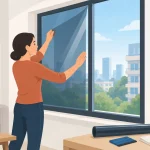
Solar window film is one of the most practical upgrades for existing glass. Applied directly to the interior surface of suitable windows, it helps reject a portion of solar heat and reduces glare and UV transmission. Unlike heavy coverings, many modern films retain useful daylight and maintain a clear view outside.
The right film is not always the darkest one. Darker films can reduce visible light and glare, but a premium spectrally selective or ceramic-style film may deliver strong heat control with a lighter appearance. This is often the better choice for living areas, offices, and spaces where natural light matters.
Film selection should be based on measurable performance, not appearance alone. Look at solar heat rejection, visible light transmission, glare reduction, and UV protection together. A film that looks nearly clear can still provide meaningful solar control, while a very dark film may create an unwanted nighttime mirror effect or make the room feel closed in.
For apartments, condos, and commercial properties, professional assessment is also important. Some glass types, including certain insulated, laminated, or coated units, require careful film compatibility checks. Correct recommendations and precision installation help protect both performance and the condition of the glass.
Add exterior shading where possible
Stopping sunlight before it reaches the glass is highly effective. Exterior awnings, overhangs, shutters, vertical fins, and outdoor roller shades can reduce direct solar load before it enters the room. They are particularly useful for ground-floor homes, patios, storefronts, and offices with accessible exterior facades.
The trade-off is practical rather than technical. Exterior systems require space, suitable mounting points, and ongoing exposure to weather. Building management rules may also limit what can be installed on a facade. Where exterior shading is not permitted or practical, solar film provides a low-profile indoor alternative.
Use blinds and shades for direct glare control
Blinds, cellular shades, roller shades, and curtains still have an important role. They provide flexible control when the sun is low and direct, especially in bedrooms, media rooms, and meeting spaces. A light-filtering roller shade can soften the view and reduce screen glare, while blackout shades are useful when complete darkness is needed.
For many rooms, combining shades with solar film produces the best result. Film manages heat and UV throughout the day, while shades offer privacy and extra glare control when needed. This layered approach prevents the common choice between a hot, bright room and a dark room with no view.
Rearrange the room around the sun path
A small layout adjustment can improve comfort immediately. Move a desk so the window is to the side rather than directly in front of or behind the monitor. Position television screens away from reflected light. Keep leather furniture, delicate textiles, and artwork out of the strongest direct sun path when possible.
This does not reduce solar gain by itself, but it can reduce the most visible effects of afternoon sun while you decide on a longer-term window solution. It is also useful in rental properties where permanent changes may need approval.
Choose the right solution for each room
A west-facing living room usually needs heat reduction without sacrificing daylight. A lighter solar-control film is often a strong fit, with optional roller shades for late-day glare. If privacy is also a concern because of nearby buildings, a reflective or privacy-focused film may be considered, keeping in mind that many one-way reflective films offer their strongest privacy effect during daylight hours when the outside is brighter.
Bedrooms have different priorities. Residents may want daytime heat control, UV protection, and a darker environment for sleep. Solar film paired with blackout curtains or blackout film on selected panes can be effective. The choice depends on whether the window also needs to provide a view and daylight during the day.
For home offices and commercial workspaces, glare is often the deciding issue. Employees should not have to close every blind to read a screen. A film with strong glare reduction and comfortable visible light transmission can preserve a more open, professional setting while reducing eye strain from direct light.
Retail spaces, reception areas, and storefronts need an additional balance: keeping merchandise visible while protecting interiors from harsh sun. In these locations, a clear or lightly tinted premium solar film is often preferable to a dark treatment that changes the appearance of the glass.
Avoid common mistakes before choosing window film
The lowest-priced dark tint is rarely the best answer for difficult afternoon exposure. It may reduce light but offer limited long-term clarity, color stability, or heat performance compared with better-engineered films. It can also make a room too dark, especially on cloudy days.
Do not choose film solely from a small sample held against the window. A sample is useful for color and reflectivity, but it cannot show how the entire room will feel at 4 p.m. Consider the window orientation, glass size, existing air-conditioning, interior finishes, and the view outside. A large west-facing wall of glass needs a different solution from a small bedroom window that catches only an hour of direct sun.
Another mistake is overlooking nighttime appearance. Highly reflective films can increase daytime privacy and heat control, but when indoor lights are on after dark, the effect may reverse. If privacy is required around the clock, consider combining solar film with blinds, curtains, or a frosted treatment for specific areas.
Finally, do not treat installation as an afterthought. Clean preparation, accurate cutting, correct edge finishing, and appropriate curing time all influence the final appearance and service life of window film. An experienced installer can also identify glass conditions and compatibility concerns before work begins.
When professional advice makes the difference
A proper site assessment turns a general product category into a targeted solution. It should consider where sunlight enters, when the room is occupied, which windows create the greatest discomfort, and whether you need privacy or glare control in addition to heat reduction.
ShieldShade International approaches window film selection as a performance decision, not a one-size-fits-all tint choice. With premium film options sourced for demanding tropical conditions, the focus is on matching the glass and the space with a solution that improves comfort without unnecessary renovation.
If the afternoon sun is making one room unusable, start with that window rather than trying to solve the entire property at once. Observe where the light lands, what time it becomes uncomfortable, and whether heat, glare, or privacy bothers you most. Those details point directly to a window treatment that lets you keep the light you enjoy and leave the punishing part outside.