
A retail window has only a few seconds to earn attention. The top films for retail displays do more than decorate the glass: they control glare, protect merchandise, support visual merchandising, and help customers see your products at their best. The right choice depends on what the display must achieve – a clear street-level view, stronger privacy, lower heat, a seasonal campaign, or a more premium branded look.
For retailers, film is a practical upgrade because it works with existing glass. There is no need to replace storefront windows or disrupt operations with major renovation work. However, not every film belongs on every display. A highly reflective solar film may improve comfort in a sun-facing boutique, for example, but it can reduce the clarity of products behind the glass after dark. Selecting the film around the store’s daylight, lighting plan, merchandise, and viewing distance produces a much better result.
What Retail Display Film Needs to Do
The best retail film balances appearance with performance. A storefront may face intense afternoon sunlight, heavy pedestrian traffic, neighboring businesses, or bright indoor lighting. Each condition changes how customers perceive the window.
Heat and glare control are often the first priorities. Direct sunlight can make displays hard to view, fade packaging and fabrics, and create uncomfortable hot spots for employees near the front of the store. High-quality solar window film reduces a portion of solar heat and UV exposure while maintaining useful daylight. This supports a more comfortable sales floor without making the storefront feel closed off.
Visibility is equally important. Customers should be able to read pricing, recognize product colors, and see the feature display without fighting reflections. Decorative and privacy films can make a window look more intentional, but they should be placed strategically. Covering the entire pane with an opaque pattern may suit a treatment room or back office, yet it usually works against a retailer relying on product visibility.
Finally, a retail film needs to match the brand. A minimalist jewelry store, a busy beauty retailer, and a fitness studio have different visual needs. The glass should reinforce the experience customers expect before they walk through the door.
The Top Films for Retail Displays
Solar control film for sun-facing storefronts
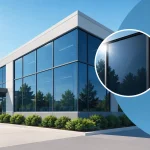
Solar control film is often the strongest all-around choice for retailers with large glass façades. It is designed to reduce solar heat, glare, and UV transmission while preserving a clean, professional exterior. For shops in warm, high-sun locations, this can reduce the strain on air conditioning and make window browsing more comfortable.
A neutral or lightly tinted solar film is usually preferable when merchandise color accuracy matters. Apparel, cosmetics, artwork, and food displays can look noticeably different behind a very dark tint. A darker film may provide stronger glare reduction, but it can also make the display less inviting in the evening. The better approach is to match visible light transmission to the storefront’s orientation and interior lighting levels.
Solar film is especially useful for retail categories that place displays directly behind glass. It helps protect textiles, printed materials, wood finishes, and selected product packaging from long-term UV-related fading. It does not eliminate all fading risk, but it is a meaningful layer of protection.
Anti-glare film for clearer product viewing
Glare is not only a comfort issue. It is a sales issue when customers cannot see what you are trying to show them. Anti-glare and low-reflectivity films can improve the view through glass where vehicle headlights, strong sky reflections, or nearby buildings compete with a display.
This category works well for electronics, eyewear, collectibles, framed art, and stores that use bright, detailed window installations. It can also be valuable on internal glass partitions, where reflections from overhead lighting make displays or digital screens difficult to see.
The trade-off is that glare control should be considered alongside the glass type and the lighting behind it. In some cases, repositioning display lights or adding more focused interior lighting has as much impact as the film itself. A site assessment helps identify whether reflection is coming from the sun, the street, or the store’s own fixtures.
Frosted and etched-look film for privacy with polish
Frosted film is a reliable choice when a retailer needs to conceal part of the premises without installing permanent opaque panels. It diffuses views through the glass and creates a clean, upscale finish for consultation areas, fitting rooms, treatment spaces, staff zones, and stockroom partitions.
For customer-facing windows, partial frosting is usually more effective than full coverage. A frosted lower section can obscure clutter or create privacy while leaving the upper glass clear for signage and natural light. Bands, geometric shapes, and custom-cut patterns can also introduce a branded detail without overwhelming the storefront.
Etched-look films offer a similar visual effect at a lower level of disruption than actual etched glass. They are practical for businesses that lease their space or refresh their interior design periodically. Since the pattern and coverage can be customized, the film can be designed around sightlines rather than applied as a one-size-fits-all solution.
Decorative printed film for campaigns and visual merchandising
Decorative film gives retailers a flexible way to use glass as advertising space. It can support seasonal launches, opening promotions, event messaging, product imagery, and brand patterns. Unlike loose posters, professionally applied film sits flat against the glass and gives the storefront a more finished appearance.
The key is restraint. A display window packed with text, graphics, products, and lighting can become visually noisy from the sidewalk. Large, clear creative elements tend to work better than many small messages. Leave enough open space for customers to see the merchandise or the store interior where that visibility is part of the appeal.
For short-term promotions, removable decorative film can be a sensible option. For a permanent identity feature, choose a higher-grade film and a design that will still feel relevant after several campaigns have passed. Retail teams should also plan for clean removal and replacement so the glass remains in good condition.
One-way reflective film for daytime privacy
One-way reflective film can offer daytime privacy for retailers that want customers to see outward while reducing views into the store. This may suit wellness studios, specialty service counters, high-value product areas, or shops located very close to pedestrian traffic.
The phrase “one-way” needs a realistic expectation. The effect depends on lighting conditions. During the day, when the exterior is brighter, the reflective side can limit inward views. At night, if the interior is brightly lit, people outside may be able to see in. This is not a defect in the film; it is how reflective privacy works.
For stores open late, combine reflective film with interior blinds, curtains, a security shutter, or a design that does not rely on total nighttime privacy. It is a high-performing daytime solution, but it should not be specified as a 24-hour privacy barrier.
Choosing Film by Retail Environment
A fashion boutique with a high-visibility street window may benefit most from a light solar film paired with limited decorative graphics. This keeps the interior bright, protects garments, and allows the window display to remain the focal point.
A salon, clinic, or wellness retailer often needs a different mix: frosted film for consultation rooms, solar film on west-facing glass, and subtle branding at the entrance. A technology store may prioritize anti-glare performance around screens and product demonstrations. In a mall setting, decorative film can help a storefront stand out, but management guidelines may limit coverage, color, or promotional content.
Before choosing a film, examine the glass in the morning, afternoon, and evening. Notice where reflections land, which products receive the most sun, and how the display reads from across the walkway. Also consider whether the glass is single-pane, insulated, laminated, or treated. Film compatibility matters, particularly for large exterior panels exposed to heat. A professional recommendation should account for glass type as well as appearance.
Installation Quality Protects the Investment
Even premium retail display film can look disappointing if it is poorly installed. Misaligned graphics, trapped debris, uneven edges, and visible gaps immediately weaken the finish of a storefront. They can also shorten the film’s service life in a busy retail environment.
Experienced installation begins with clean preparation and accurate measurements. It should include thoughtful panel layout, especially when a design spans multiple panes, and a clear plan for door hardware, window frames, existing decals, and operating hours. For businesses, scheduling matters as much as workmanship. Installation should minimize disruption to staff, customers, and visual merchandising activities.
A qualified specialist can also explain practical maintenance. Most films need only gentle cleaning with non-abrasive materials after the recommended curing period. Avoid aggressive scrapers and harsh chemicals that may damage the surface or edges.
Make the Glass Work Harder for Your Store
Retail windows should not force a choice between comfort and visibility. With the right film, the same glass can reduce harsh sun, improve privacy where it is needed, and give your display a more deliberate brand presence. ShieldShade International helps businesses evaluate those trade-offs and select premium film solutions suited to real storefront conditions. Start with the customer’s view from the sidewalk, then build the film specification around the experience you want them to have once they step inside.