A room that faces strong afternoon sun can become uncomfortable long before the air conditioner catches up. When property owners compare window film versus replacement glass, the real question is rarely just about appearance. It is about whether the upgrade will control heat, reduce glare, protect interiors, improve privacy, and fit the condition of the existing windows without creating unnecessary renovation work.
For many homes, offices, and retail spaces, professionally selected window film delivers a meaningful performance upgrade while keeping the existing glass in place. Replacement glass can also be the right answer, especially when the window itself is damaged, poorly sealed, or due for a major overhaul. The better choice depends on what the glass needs to do and what condition it is in now.
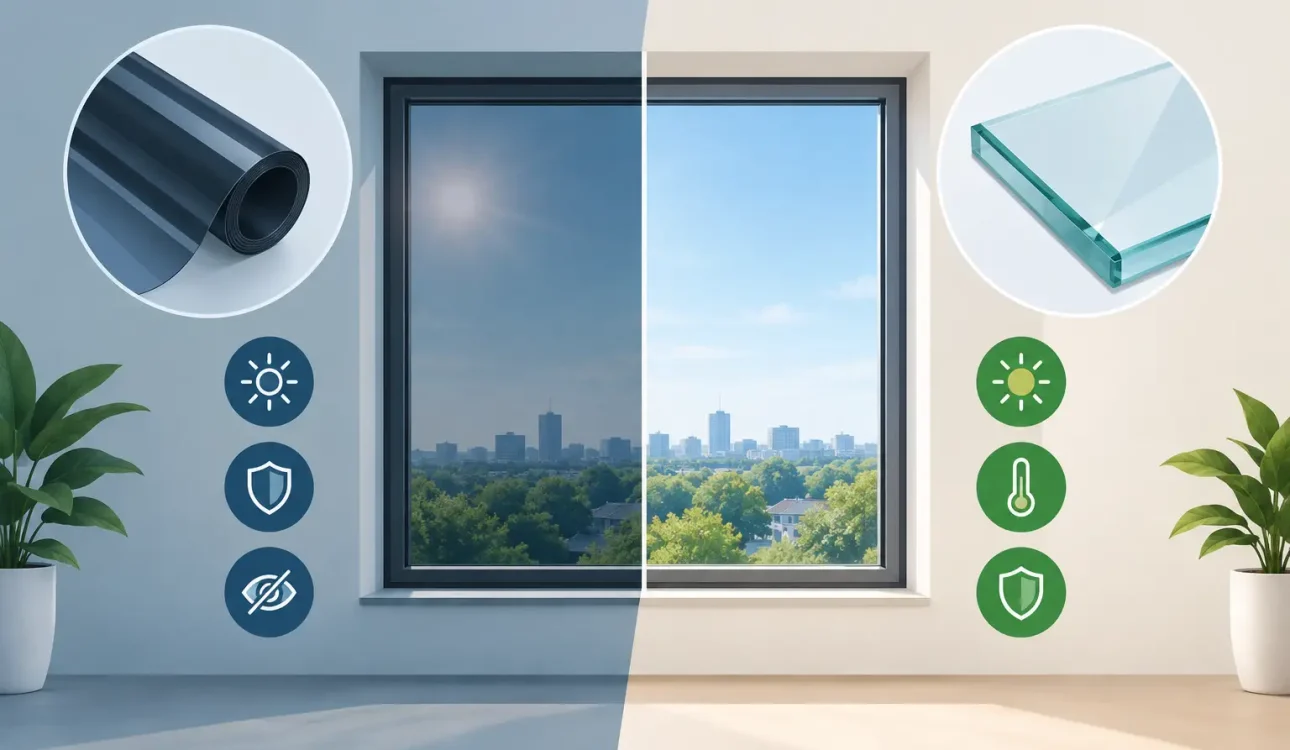
Window Film Versus Replacement Glass: The Main Difference
Window film is a thin, engineered layer applied directly to the interior surface of existing glass. Depending on the product, it can reject solar heat, soften glare, block UV rays, add daytime privacy, create a frosted effect, or add decorative detail. Installation is completed on the existing window, with no need to remove the glass frame or disturb surrounding finishes.
Replacement glass means removing the current pane or insulated glass unit and installing new glazing. The replacement may be tinted, laminated, double-pane, low-E, or made with another specialized specification. This is a more involved construction decision because performance depends not only on the new glass but also on the frame, seals, installation quality, and overall window system.
That distinction matters. Film is a targeted upgrade for a functioning window that needs better solar control, privacy, or aesthetics. Replacement glass is often a repair or full-system investment when the existing window has failed or cannot meet the property’s long-term requirements.
Heat, Glare, and UV Performance
For rooms that receive intense direct sunlight, solar window film can substantially improve day-to-day comfort. Premium films are designed to reduce solar heat gain while preserving useful natural light. The exact result varies by film shade, reflectivity, glass type, window direction, and the amount of time the sun reaches the window.
A lighter solar film may maintain a brighter, more open view while reducing glare and UV exposure. A darker or more reflective option can deliver stronger glare control and daytime privacy, though it may change the exterior appearance and reduce visible light more noticeably. The right balance is usually more valuable than choosing the darkest film available.
Replacement low-E glass can also control solar heat gain, particularly when it is part of a well-built insulated glass unit. In a full window replacement project, it may offer benefits beyond solar control, including improved insulation and sound reduction. However, replacing glass only to address heat and glare can be disproportionate if the existing windows are structurally sound.
Window film does not create the same insulating effect as a high-quality double-pane replacement window. It is not a cure for drafts, failed seals, or a room with significant heat entering through uninsulated walls and a roof. It is highly effective, however, for solar radiation passing through glass – often the most immediate source of discomfort near sun-facing windows.
Cost, Installation, and Disruption
The cost difference between window film and replacement glass is usually significant. Film allows property owners to improve targeted windows without paying for glass removal, new glazing, frame adjustments, disposal, and restoration work. It is particularly practical when only a few rooms suffer from glare, harsh sun, or limited privacy.
Professional film installation is also comparatively low-disruption. Furniture may need to be moved away from the glass, but there is no major demolition, no replacement of window frames, and typically no lengthy construction schedule. This makes film well suited to occupied homes, offices, retail stores, and apartments where daily operations need to continue.
Replacement glass involves more variables. Custom measurements, glass lead times, frame compatibility, access requirements, and weather can all affect the schedule. Costs rise further if the frame is damaged or if the glass is part of a large façade, sliding door, or unusual window design.
The lower upfront cost of film does not mean every film is equal. Performance, clarity, adhesive quality, warranty coverage, and installation precision all matter. A poorly selected film may look too dark, produce more reflection than expected, or fail to deliver the desired heat reduction. A professional assessment helps match the film specification to the room rather than treating every window the same.
When Window Film Is Usually the Better Choice
Window film is often the practical choice when the glass is intact but the space feels too hot, bright, exposed, or visually plain. It is especially useful for apartments and dense urban properties where close-facing buildings make privacy a concern but natural light is still wanted.
Solar film is a strong option for living rooms, bedrooms, home offices, meeting rooms, storefronts, and glass-fronted workspaces with direct sun exposure. Frosted film can bring privacy to bathrooms, entry panels, glass partitions, and interior office rooms without blocking light completely. Decorative films can refresh dated glass surfaces without the cost and disruption of replacing them.
One-way reflective film can provide daytime privacy when outside light is stronger than indoor light. It is not a privacy solution after dark if interior lights are on and the exterior is dimmer. In those situations, a privacy film, blinds, curtains, or a layered solution may be more appropriate.
Film is also a sensible choice when a property owner wants results without committing to permanent construction changes. A well-installed premium film can provide years of service, while still avoiding the scale of a glazing replacement project.
When Replacement Glass Makes More Sense
Replacement glass should be seriously considered when the existing glass is cracked, chipped, leaking, fogged between panes, or showing failed seals. These are physical window problems, not surface-performance issues. Applying film over damaged glass does not repair the fault and may delay a necessary replacement.
It can also be the better investment during a major renovation, when window frames are already being replaced, or when the property needs improved insulation and acoustic performance throughout. A full window upgrade allows the entire system to be specified together rather than improving only the glass surface.
Older single-pane windows can sometimes justify replacement if they contribute heavily to heat transfer, outside noise, or condensation. Still, the assessment should be specific. Replacing every pane may not be necessary when the main issue is concentrated on a west-facing wall or a few large windows receiving direct afternoon sun.
Glass Compatibility and Installation Quality Matter
Not every film should be applied to every type of glass. Tempered, laminated, insulated, tinted, and coated glass can react differently to solar absorption and thermal stress. A film specialist should identify the existing glass construction before recommending a high-performance solar film, especially for large panels or windows exposed to prolonged direct sun.
This is where experience protects the investment. The goal is not simply to install the strongest film. It is to specify a compatible product that provides the desired heat, glare, privacy, or decorative benefit while respecting the glass and its environment.
Careful preparation also determines the final appearance. Professional installation removes surface contaminants, aligns the film accurately, manages edges and seals, and allows proper curing. Small imperfections may be visible during the curing period, but a quality installation should settle into a clean, consistent finish.
Make the Decision Room by Room
The most effective solution is often not one blanket decision for an entire property. Start by identifying what is happening in each room. Is the problem afternoon heat, screen glare, fading furniture, lack of privacy, failed glass, or a dated appearance? Then consider how much natural light and outside view you want to retain.
For intact glass with a solar-control or privacy problem, window film is usually the faster, more cost-conscious upgrade. For damaged glazing or a major whole-window improvement, replacement glass deserves closer consideration. ShieldShade International helps property owners evaluate these details and select premium film solutions suited to demanding tropical sun and everyday use.
A good window upgrade should make the room easier to live or work in, not simply change how the glass looks. Choose the solution that addresses the actual problem, preserves what is working, and gives every sun-facing space a more comfortable view.