
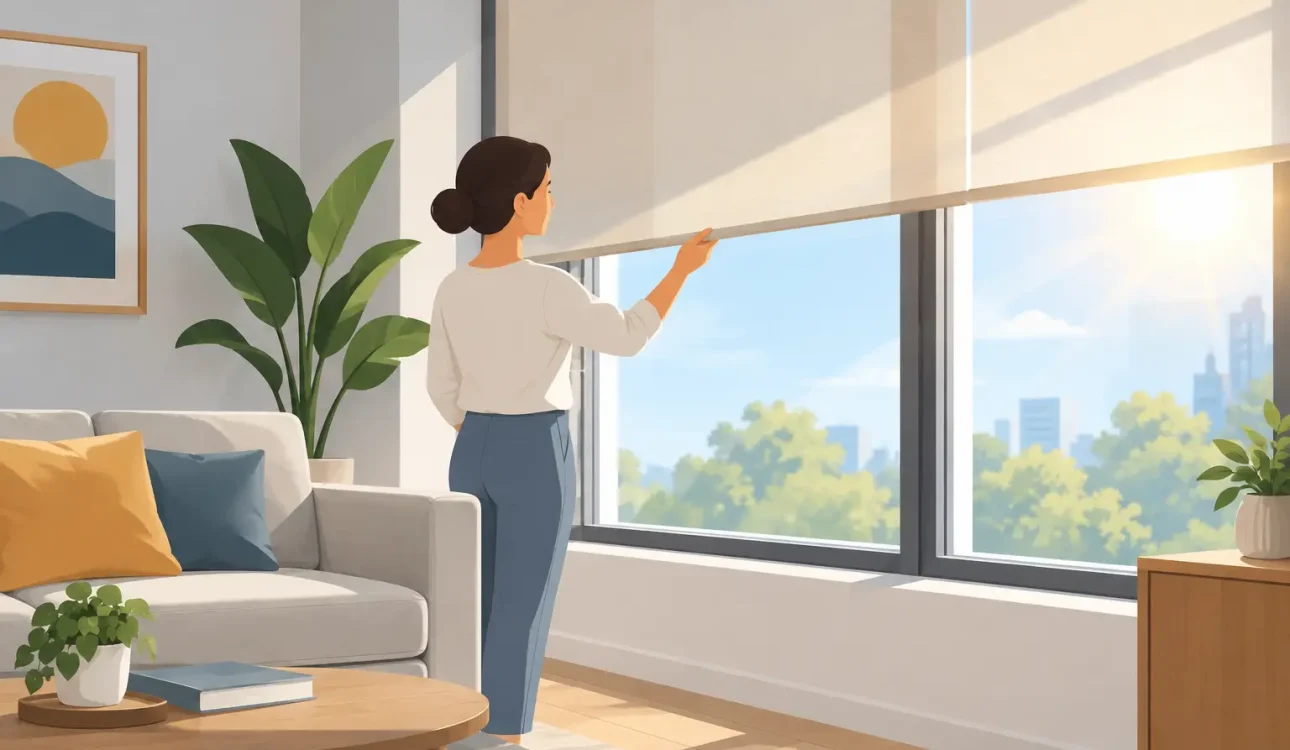
At 3 p.m., a room can go from bright and pleasant to nearly unusable. Screens wash out, television images disappear, and direct sun creates hot patches on floors, desks, and sofas. To reduce afternoon window glare effectively, the solution must address the angle and intensity of the sun without making the room feel dark or closed in.
For homes and workplaces with large west-facing windows, glare is rarely a minor inconvenience. It affects comfort, productivity, cooling demand, and even how often you use a space. The good news is that most glare problems can be improved without replacing existing glass or starting a major renovation.
Why Afternoon Glare Is So Difficult
Afternoon glare is usually caused by low-angle sunlight entering through west- or southwest-facing glass. Unlike overhead daylight, low sun travels directly across a room and lands at eye level. That is why a window can feel manageable at noon but become overwhelmingly bright later in the day.
Reflective interior surfaces make the problem worse. Polished tile, light-colored walls, glass tables, glossy cabinets, and computer monitors can bounce sunlight around the room. In offices, glare often comes from both the window and the reflection it creates on a screen. At home, it may turn a living room television area or home office into a space you avoid until sunset.
Heat and glare are related, but they are not exactly the same. A room may feel hot because the glass admits solar energy, while glare is the visible brightness that strains your eyes and obscures your view. The best window treatment considers both factors together.
Reduce Afternoon Window Glare With the Right Window Film
Solar window film is one of the most practical ways to reduce afternoon window glare while preserving natural light and outdoor visibility. Applied directly to existing glass, it filters a portion of the sun’s visible light and solar heat before they enter the room.
The key measurement for glare control is visible light transmission, often called VLT. A lower VLT generally means a darker film and greater glare reduction. However, choosing the darkest option is not always the best decision. A film that is too dark can make an already shaded room feel dim, alter the exterior appearance of the property, or reduce nighttime visibility.
For many residential living rooms and offices, a medium-tint solar film provides a useful balance. It can soften harsh afternoon sunlight, reduce eye strain, and maintain a bright, open feel. Rooms with intense direct exposure, such as a west-facing study, meeting room, or television area, may benefit from a lower-VLT film designed for stronger solar and glare control.
Reflective and spectrally selective films are also worth considering. Reflective films can deliver strong daytime glare and heat rejection, although they may create a more mirrored exterior appearance. Spectrally selective films are often chosen when homeowners want significant heat reduction with a lighter, more neutral look. The right choice depends on the room’s sun exposure, privacy needs, building rules, and desired appearance.
Quality matters here. Premium films are engineered to perform consistently in high-heat conditions and should be selected based on the type of glass already installed. A professional assessment helps prevent issues such as choosing an unsuitable film for certain double-pane or heat-absorbing glass configurations.
Match the Solution to How You Use the Room
A window does not need the same treatment in every room. The most effective glare-control plan starts with what happens in the space during the afternoon.
For living rooms and TV areas
The priority is usually screen visibility without losing the daytime view. Solar film can reduce the harshest brightness, while curtains or roller shades provide additional control when watching television or relaxing. Consider placing the television perpendicular to the window rather than directly opposite it. This simple adjustment can reduce reflections dramatically.
For home offices
Computer monitors are especially sensitive to direct sunlight and reflected glare. Position the desk so the window sits to the side of the screen, not in front of or behind it. A glare-reducing window film paired with an adjustable shade gives you flexibility for video calls, focused work, and changing weather conditions.
For bedrooms
If afternoon sunlight heats the room and disrupts rest, a solar film may be sufficient during the day. For complete darkness at nap time or for shift workers, blackout blinds or curtains are the stronger choice. Window film reduces glare and heat, but it is not intended to create total darkness.
For offices and retail spaces
Commercial spaces need comfort without sacrificing a professional appearance. Solar film can improve screen visibility for staff, reduce uncomfortable glare in waiting areas, and help protect merchandise, displays, and furnishings from UV exposure. For street-facing glass, the chosen film should also support the visual identity of the business and any building management requirements.
Add Shades When You Need Adjustable Control
Window film works continuously, which makes it ideal for reducing glare throughout the day. Shades and blinds are adjustable, making them useful when the sun is at its most aggressive angle. Combining the two often delivers the best result.
Roller shades provide a clean, modern look and are available in different openness levels. A higher openness fabric preserves more of the view but allows more light through. A lower openness fabric offers stronger glare control and privacy but can make the room feel more enclosed. For rooms where direct sun is intense, choose a fabric that prioritizes glare reduction rather than appearance alone.
Venetian blinds and vertical blinds allow you to redirect sunlight, but they can create narrow bands of light and require regular adjustment. Curtains can soften a room visually and block substantial light when closed, although they are less convenient if you want daylight and a view for most of the afternoon.
Exterior shading, such as awnings or outdoor blinds, can be very effective because it stops some sunlight before it reaches the glass. It may not be practical for every apartment, condo, or commercial building, especially where façade guidelines apply. In those situations, professionally installed window film is often the more straightforward upgrade.
Do Not Overlook Furniture, Finishes, and Window Direction
Before selecting a product, observe the room for several afternoons. Notice exactly when the glare begins, where it lands, and which surfaces reflect it. The problem may be limited to one window panel or one work zone, which means you may not need to treat every piece of glass.
Rearranging furniture can make an immediate difference. Move desks away from direct sunlight paths, angle screens slightly away from windows, and avoid placing reflective artwork or mirrors opposite exposed glass. Matte monitor screens and adjustable monitor hoods can also help in work areas, but they address the symptom rather than the sunlight entering the room.
Window direction should guide your decision. West-facing windows typically receive the strongest afternoon exposure. Southwest-facing windows can create long periods of glare, while northwest exposure may become more noticeable at certain times of year. A proper recommendation should account for direction, window size, surrounding buildings, and whether nearby surfaces reflect additional sunlight into the room.
What to Ask Before Installing Window Film
Not all films deliver the same glare, heat, UV, privacy, or appearance benefits. Before installation, ask about visible light transmission, glare reduction performance, solar heat rejection, UV protection, warranty coverage, and compatibility with your current glass.
Also ask to see actual film samples against your windows. Film can look different depending on the glass color, interior lighting, and outdoor surroundings. A sample viewed in the afternoon is more useful than one viewed only in a showroom or early in the day.
Professional installation is equally important. Precise application helps ensure a clean finish, reduces the risk of visible imperfections, and supports long-term performance. An experienced specialist can recommend a film grade that solves the glare issue without over-darkening the room or compromising the look of your property.
ShieldShade International helps homeowners and businesses evaluate solar exposure, privacy requirements, and interior use before recommending a suitable film solution. That consultation-led approach matters because the best glare-control film is not simply the darkest one. It is the one that improves comfort while keeping the space usable and visually balanced.
The next time afternoon light takes over a room, take note of the exact window, hour, and surface causing the problem. Those details make it far easier to choose a solution that lets you enjoy the daylight without having to hide from it.


