A sunny room can be one of the best features of a home or workplace – until the floor near the window fades, upholstery loses color, and afternoon glare makes the space difficult to use. Knowing how to block UV through windows helps protect interiors while preserving the daylight that makes a room feel open and inviting.
Standard window glass does not offer equal protection against every type of ultraviolet radiation. It can reduce much of the UVB associated with sunburn, but UVA can still pass through in meaningful amounts. UVA is a major contributor to fading, material deterioration, and long-term skin exposure near bright windows. For homes, apartments, offices, storefronts, and shared workspaces, the right window treatment can make a measurable difference without the disruption of replacing existing glass.
Why UV Through Windows Is a Real Indoor Problem
UV damage is gradual, which makes it easy to overlook. A rug does not fade overnight. Wood flooring does not suddenly turn pale after one afternoon. Instead, fabrics, artwork, photographs, leather, cabinetry, and merchandise can slowly lose their original appearance where sunlight reaches them day after day.
The effect is often strongest on windows facing the morning or afternoon sun. East-facing glass can create intense exposure early in the day, while west-facing rooms may experience the most uncomfortable heat and glare later on. Large living-room panels, office facades, and glass doors can also expose a greater area of furnishings and occupants to sunlight.
UV is only one part of the issue. Visible light can contribute to fading, and infrared heat can make rooms warmer and force air-conditioning systems to work harder. That is why a solution should be assessed as a complete performance upgrade, not simply as a way to darken the glass.
The Most Effective Ways to Block UV Through Windows
Window film offers high protection without losing the view
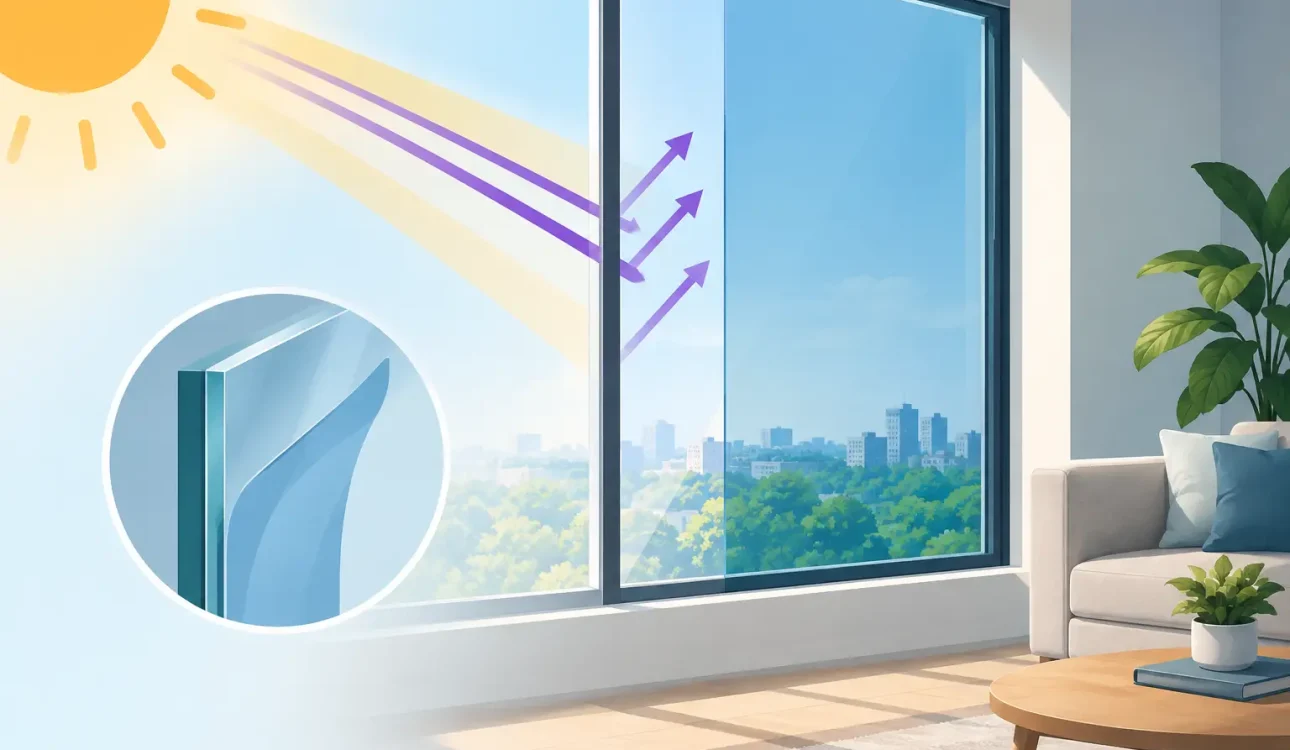
High-quality solar window film is often the most practical way to block UV through windows while keeping the existing glass. Many premium films are designed to reject up to 99% of UV radiation, creating a protective layer directly on the interior surface of the glass.
Unlike heavy curtains or blinds, window film works even when the window is uncovered. It can protect furnishings throughout the day, maintain a cleaner visual line, and still allow natural light into the room. This makes it especially useful for spaces where privacy is not the main concern but heat, glare, and fading are.
Film is available in clear, lightly tinted, neutral, reflective, and darker finishes. A clear UV-focused film may be suitable where maintaining the original appearance of the glass is the priority. Solar-control films can provide UV rejection alongside heat and glare reduction. Reflective films can offer stronger daytime privacy and solar performance, although they may change the exterior look of the building and provide less privacy after dark when interior lights are on.
The best choice depends on the room. A bright home office may need glare reduction without making the space feel dim. A living room with valuable furniture may prioritize UV protection and a natural-looking finish. A west-facing commercial space may need stronger solar rejection to improve comfort for staff and customers.
Shades and curtains add flexibility, but only when closed
Roller shades, cellular shades, curtains, and blinds can reduce light exposure when they are drawn. They also give occupants control over brightness and privacy at different times of day. For bedrooms, media rooms, or rooms with intense direct sun, they remain a useful part of the solution.
Their limitation is simple: protection depends on using them consistently. If shades stay open for the view or curtains are pulled aside during working hours, UV and sunlight continue to reach the room. They also do not address heat that has already entered through the glass as effectively as a solar-control film can.
Pairing window film with shades is often the strongest approach. Film provides continuous UV protection, while shades provide additional glare control, nighttime privacy, and room-darkening when needed.
Exterior shading can reduce solar load before it reaches the glass
Awnings, exterior blinds, overhangs, and landscaping can limit direct sunlight before it reaches a window. This can be highly effective for low-angle morning or afternoon sun. However, exterior systems may require building approval, ongoing maintenance, and more extensive installation than an interior film application.
For apartments, condos, offices, or properties with facade restrictions, exterior changes may not be practical. In those cases, professionally installed window film provides a lower-disruption alternative that does not require replacing frames or glass panels.
Replacement glass is useful during major renovations
Low-E or laminated glass can offer UV-related benefits, depending on the product specification. It may make sense when windows are already being replaced because of age, leaks, breakage, or a full renovation plan.
However, replacing functional glass solely for UV control is usually a larger and more expensive project than necessary. A quality film installation can upgrade existing windows with far less downtime, provided the glass type and condition are suitable for film.
What to Look for in UV-Blocking Window Film
Do not choose a film based only on darkness. A dark film can reduce visible light, but the most relevant performance figures are UV rejection, total solar energy rejection, visible light transmission, glare reduction, and interior or exterior reflectivity.
UV rejection indicates how much ultraviolet radiation the film blocks. For rooms with furnishings, flooring, displays, or artwork exposed to sun, a film rated for very high UV rejection should be a baseline requirement. Still, UV rejection alone does not tell the whole story because visible light and heat also affect comfort and fading.
Visible light transmission determines how bright the room will remain after installation. A higher percentage allows more daylight through, while a lower percentage creates a darker appearance and can reduce glare more aggressively. There is no universal “best” number. The right balance depends on the room orientation, surrounding buildings, privacy needs, and how the space is used.
Reflectivity matters too. Reflective films can improve daytime privacy and control solar gain, but some homeowners prefer a neutral finish that does not make windows look mirrored. Office managers may favor a uniform exterior appearance across a facade, while retail spaces may need enough interior visibility for customers to see displays.
Why Professional Assessment Matters
Not every film should be installed on every glass type. Double-pane units, tempered glass, laminated glass, coated glass, and older panels can respond differently to heat absorption. A poorly matched film may create unnecessary thermal stress or affect the manufacturer’s glass warranty.
A professional assessment should consider the glass construction, window direction, pane size, existing seals, shading conditions, and desired outcome. It should also account for building rules. Condos, managed offices, and high-rise properties may have guidelines on reflectivity or visible changes to the exterior facade.
Installation quality is just as important as the film itself. Clean preparation, accurate cutting, careful edge finishing, and proper curing conditions affect the final appearance and long-term durability. Bubbles, lifting edges, contamination, and uneven alignment are not details to accept as normal workmanship.
At ShieldShade International, recommendations are based on how a space actually performs in a tropical urban environment: where heat builds up, when glare occurs, which furnishings need protection, and how much daylight the customer wants to retain. This turns window film selection from a color choice into a practical comfort and protection decision.
Set Realistic Expectations for Fading and Protection
Even excellent window film cannot stop every source of fading. Sunlight is a major factor, but indoor lighting, humidity, heat, material quality, and age also play a role. Delicate fabrics, antique finishes, and highly saturated colors may still change over time.
The goal is to slow the process substantially and reduce unnecessary exposure. For valuable artwork or displays, consider placing the most sensitive items away from direct sunlight in addition to installing UV-blocking film. Rotate movable furnishings and use shades during periods of extreme direct sun when practical.
Also remember that daytime privacy is not the same as nighttime privacy. Reflective film works because the outside is brighter than the inside. After sunset, interior lighting can reverse that effect. Bedrooms and close-facing windows may still benefit from blinds, curtains, or frosted film depending on the privacy requirement.
A well-chosen window film should make a room easier to live or work in, not force you to sacrifice the view that attracted you to it. Start with the sun exposure you experience every day, then choose protection that keeps the light, comfort, and appearance in the right balance.