A good ceramic window film review should answer one practical question first: will it make a sun-facing room feel noticeably more comfortable without turning the glass dark or changing the look of your home? For most homeowners and property managers dealing with persistent afternoon heat, glare, and fading interiors, the answer can be yes – provided the film grade, shade, and installation are matched to the glass and the space.
Ceramic film is often positioned as a premium solar-control option. That reputation is earned in many applications, but it is not a universal answer for every window. The right choice depends on your sun exposure, existing glass, privacy expectations, and whether your priority is maximum heat reduction, a brighter view, or a balanced result.
What Makes Ceramic Window Film Different?
Ceramic window film uses non-metallic ceramic particles within its construction to manage solar heat. Unlike older dyed films, it is designed to reject a meaningful portion of heat without relying on a very dark appearance. Unlike metallic films, it generally does not create a highly reflective, mirror-like finish and is less likely to interfere with mobile, GPS, or radio signals.
That matters in homes, apartments, offices, and retail spaces where large windows bring in strong daylight but also make rooms difficult to cool. A lighter ceramic film can preserve a more open view while reducing the harshness of direct sun. For many property owners, that balance is the main reason to consider ceramic rather than simply choosing the darkest available tint.
The word ceramic alone, however, does not guarantee performance. Film construction, thickness, visible light transmission, and the manufacturer’s published test data all affect the result. Two films labeled ceramic can look similar on a sample board while delivering different heat-rejection performance on a full wall of glass.
Ceramic Window Film Review: The Benefits That Matter
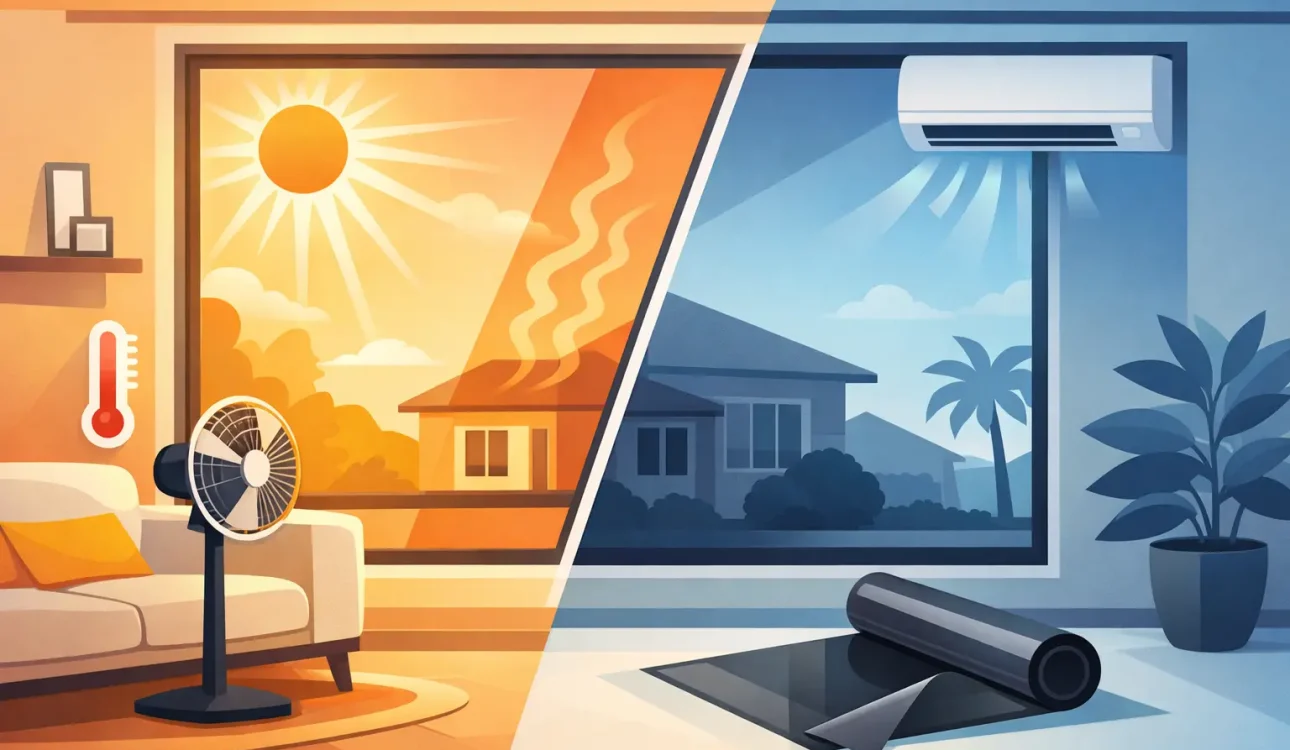
The strongest benefit is solar comfort. Ceramic films can reduce the amount of solar energy entering through glass, helping sun-exposed areas feel less punishing during peak hours. This may reduce the need to close curtains throughout the day and can support more efficient air-conditioning use. It will not replace insulation, shading, or an undersized cooling system, but it can be a meaningful improvement where windows are the main source of heat gain.
Glare control is another clear advantage. Screen reflections on televisions, monitors, and phones can make a bright room frustrating to use. Selecting an appropriate film shade softens that glare while still allowing usable daylight indoors. This is particularly valuable for home offices, living rooms, meeting rooms, and storefronts with west-facing glass.
Quality ceramic films also provide strong ultraviolet protection. UV exposure contributes to fading and deterioration in flooring, furniture, curtains, artwork, and merchandise. Window film cannot stop all fading, since visible light and heat also play a role, but it adds an important protective layer for interiors that receive daily sun.
Aesthetic flexibility is where ceramic film often stands apart. Many homeowners want heat control but do not want their windows to look heavily tinted from inside or outside. Ceramic options are available in lighter, more neutral tones that can maintain a clean, modern appearance. This makes them suitable for condos, HDB apartments, and commercial settings where maintaining the building’s visual character matters.
Where Ceramic Film Has Trade-Offs
Ceramic film is usually more expensive than basic dyed or entry-level solar film. The added cost can be worthwhile when heat control, optical clarity, and long-term appearance are priorities, but it should be judged against the window’s actual exposure. A shaded bedroom with limited direct sun may not need the same premium specification as a west-facing living room with floor-to-ceiling glazing.
Privacy is another area where expectations need to be realistic. A light ceramic solar film can reduce visibility somewhat in daylight, but it is not the same as a dedicated privacy film. At night, when interior lights are brighter than outdoors, people outside may still see into the room. If daytime privacy is the primary concern, a one-way reflective film may be more suitable. If full privacy is required at all hours, frosted or blackout film is the more dependable solution.
Film does not eliminate heat completely. Glass still transfers some warmth, and uncovered windows remain exposed to the sun. The goal is to reduce solar heat gain and glare enough to improve comfort, not to make a room feel like it has no windows. Claims that promise dramatic cooling without considering glass type, window size, orientation, and air-conditioning conditions deserve a closer look.
Finally, very dark film is not always better. Darker shades can improve glare reduction and privacy during the day, but they also reduce natural light. In a small apartment or office, this can make an interior feel more enclosed. The best-performing choice is often a film that fits how the room is used, rather than the one with the darkest appearance.
How to Compare Ceramic Film Performance
When reviewing ceramic window film, start with the data sheet rather than the marketing label. Total Solar Energy Rejected, often called TSER, is one of the most useful figures because it indicates how much overall solar energy the film-and-glass system rejects. Higher TSER generally means better heat control, although results should be compared on the same glass type.
Visible Light Transmission, or VLT, tells you how much visible light passes through the glass after installation. A high-VLT film remains lighter and brighter; a lower-VLT film appears darker and provides stronger glare reduction. There is no perfect VLT for every room. A bright living area may suit a medium shade, while a room with limited daylight may need a lighter film.
Also check ultraviolet rejection, glare reduction, interior and exterior reflectivity, and the manufacturer’s warranty. Reflectivity deserves attention because a highly reflective film can change the exterior appearance of the building and may not be permitted in every managed property. It can also create a stronger mirror effect from the inside under certain lighting conditions.
Ask the installer whether the chosen film is compatible with your existing glass. This is especially important for insulated glass units, tempered glass, laminated glass, and certain coated glass. Applying the wrong film can increase thermal stress in some situations. A professional assessment is not an unnecessary extra – it is part of protecting the glass and ensuring the film performs as intended.
Installation Quality Shapes the Result
Even premium ceramic film can disappoint when installation is rushed. Clean preparation, precise cutting, correct edge finishing, and proper curing all affect appearance and durability. Small water pockets or a slightly hazy look can be normal during the initial curing period, especially in humid conditions, but these should settle as the moisture evaporates.
Large bubbles, debris trapped under the film, lifting edges, and obvious gaps around the frame are not signs of a quality installation. They can affect both appearance and longevity. Experienced installers also assess practical details that are easy to overlook, such as window seals, access constraints, existing blinds, and whether a particular pane receives unusually intense sun.
ShieldShade International approaches this process as a complete window solution, pairing premium film options with recommendations based on glass, sunlight, privacy needs, and the way each room is used. That consultative step is particularly valuable when a property has different exposures across multiple rooms.
Is Ceramic Window Film Worth the Cost?
Ceramic film is worth considering when you want high heat rejection with a lighter, less reflective finish. It is especially well suited to sun-facing living spaces, offices with large glass areas, and homes where preserving daylight and views matters as much as reducing glare.
It may be less compelling when the main goal is full privacy, blackout performance, or the lowest upfront cost. In those cases, a dedicated frosted, blackout, or conventional solar film may deliver a more direct solution. The right film category should follow the problem you are trying to solve, not the trendiest product name.
Before choosing, stand in the room during its hottest and brightest time of day. Notice where the glare falls, whether furniture is exposed to direct sun, and how much daylight you are willing to trade for comfort. A ceramic film selected around those real conditions can improve the way your space feels every day – without the disruption and expense of replacing the glass.