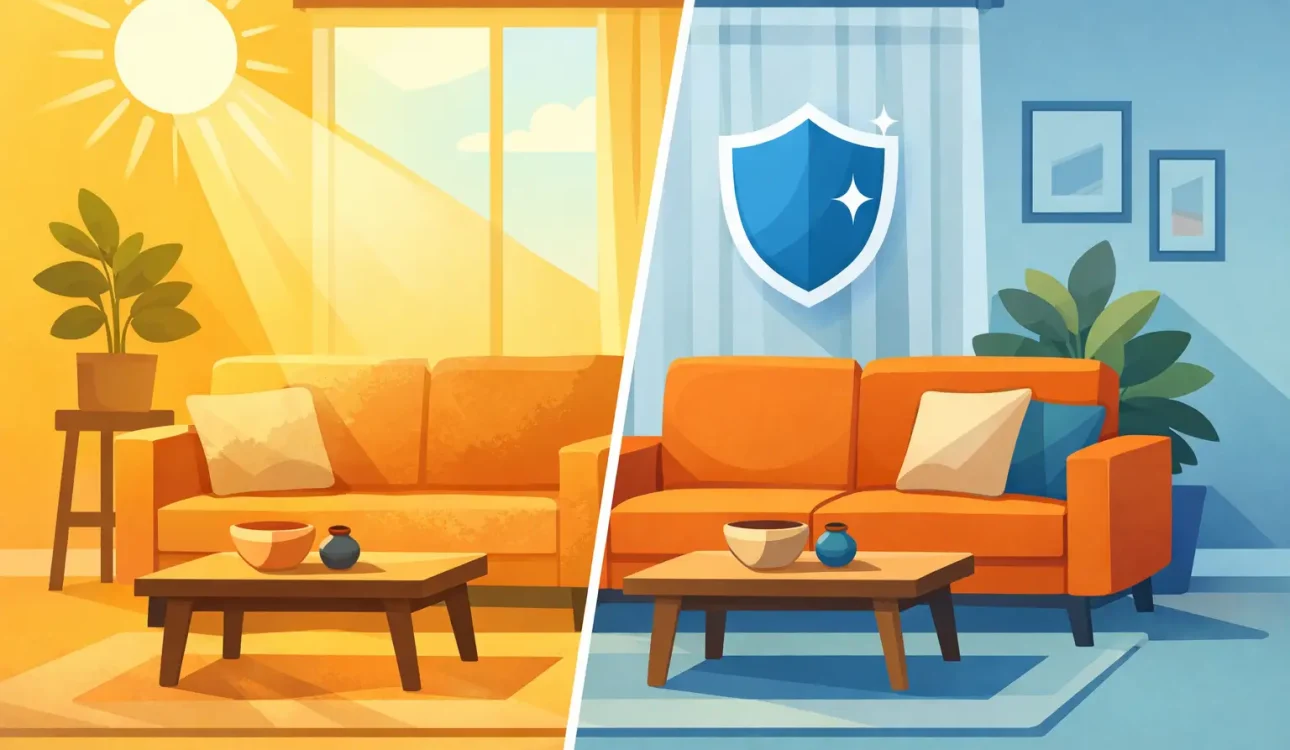
A sunlit room can make a home feel larger, warmer, and more inviting. It can also quietly bleach a sofa arm, dull a wood dining table, and leave a visible outline where a rug once sat. To protect furniture from sun fading, the most effective approach is to control what reaches the room through the glass – especially ultraviolet light, glare, and heat – before it has months or years to damage your interiors.
Sun damage is gradual, which is why it often goes unnoticed until the difference is difficult to reverse. A practical protection plan preserves the look of your furnishings while allowing you to keep the natural light that makes a room enjoyable.
Why Furniture Fades Near Windows
Sunlight is not a single problem. Ultraviolet rays are a major cause of fading and material breakdown, but visible light and solar heat also contribute. Fabrics lose color, leather can dry and crack, wood finishes may change tone, and artwork can become noticeably duller on the side facing a window.
Many homeowners assume standard window glass provides enough protection. While glass does block much of the more aggressive UVB radiation, it can still allow a significant amount of UVA light into the room. UVA exposure is particularly relevant for furnishings because it passes through glass and contributes to long-term fading.
The risk is highest in rooms with broad, unobstructed windows, afternoon sun, skylights, or glass doors. South- and west-facing windows often receive the strongest exposure, depending on the property’s orientation and surrounding buildings. In offices and retail spaces, the same issue affects upholstered seating, display merchandise, flooring, and branded materials near the storefront.
Protect Furniture From Sun Fading at the Glass
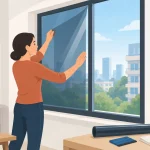
The most reliable place to reduce solar damage is at its entry point: the window. Interior solutions such as blinds and curtains help, but high-quality window film adds a continuous layer of protection even when window coverings are open.
Choose window film with high UV rejection
A premium solar window film can reject up to 99% of ultraviolet rays. This is a meaningful upgrade for rooms with valuable wood furniture, leather seating, custom cabinetry, rugs, or artwork. It reduces a key driver of fading without requiring you to replace existing glass.
Not all films perform the same way. A decorative film may create privacy or soften the look of a window, but it may not deliver the heat and UV control required for a sun-exposed living room. Solar film is designed for performance, with options that balance UV rejection, glare reduction, heat control, and visible light transmission.
For homeowners who want daylight without a noticeably dark appearance, a light or neutral solar film is often the right fit. Where heat and glare are more severe, such as west-facing rooms or large glass facades, a higher-performance film may be worth the slightly darker view. The right choice depends on the glass type, room use, orientation, and how much natural light you want to retain.
Reduce glare and solar heat as well
UV control matters, but fading is not caused by UV alone. Strong visible light can affect dyes and finishes, while heat accelerates drying, warping, and deterioration in certain materials. Solar window film can reduce both glare and solar heat, helping furniture hold its appearance while making the room more comfortable to use.
This matters in practical ways. A leather sofa beside a sunny window is exposed not only to light but also to repeated heating and cooling. A solid wood table can expand and contract as temperatures change. Lowering the solar load on the room supports both comfort and furniture care.
At ShieldShade International, window film recommendations are based on how the space actually performs, not simply on whether a film looks dark or reflective. A professional assessment can identify where the sun is strongest and match a film to the level of protection, privacy, and visual clarity you need.
Use Window Coverings as a Second Layer
Window film works continuously, but blinds, shades, curtains, and shutters give you additional control during the brightest hours. The strongest results usually come from combining these measures rather than expecting one product to solve every issue.
Cellular shades and lined drapes can reduce direct sunlight and provide a softer interior look. Roller shades are a clean option for modern spaces, especially when selected with a solar screen fabric that filters glare while preserving an outside view. Blackout curtains offer the highest level of light control, although they are better suited to bedrooms, media rooms, or periods when privacy and darkness matter more than daylight.
The trade-off is simple: heavier coverings provide more protection when closed, but they can make a room feel enclosed and require daily adjustment. Window film remains useful on days when you want the curtains open, are away from home, or do not want to block the view.
Arrange Furniture With Sun Exposure in Mind
Moving furniture away from direct sunlight is one of the simplest ways to limit uneven fading. Even a small change in placement can reduce the number of hours a surface receives concentrated light each day.
Keep particularly vulnerable pieces away from the immediate path of the sun where possible. This includes silk, linen, wool, natural-fiber rugs, dyed upholstery, antique wood, photographs, and framed art. If a room layout requires furniture near the window, use window film and coverings rather than relying on distance alone.
Rotation also helps. Turn cushions, rearrange decorative objects, and rotate area rugs periodically so one section does not age faster than another. This will not prevent fading, but it can make wear more even and less noticeable over time.
Be mindful of throw blankets, table runners, and placemats. They can create sharp color differences by shielding part of a table or sofa while leaving the surrounding area exposed. The same applies to furniture placed under a partially shaded window where sunlight moves across the surface throughout the day.
Match Care to the Material
Different furniture materials react to sunlight differently, so care should be specific rather than generic. Wood benefits from stable indoor temperatures and finishes designed to resist discoloration. Leather should be cleaned and conditioned with products appropriate for its finish, particularly in bright rooms where heat can cause it to dry out.
For fabric upholstery, follow the manufacturer’s cleaning guidance and avoid harsh cleaning products that may weaken dyes. Some textiles are marketed as fade-resistant, but that does not mean they are fade-proof in direct sun. Fade-resistant materials still benefit from UV-filtering film and controlled daylight.
Artwork deserves special consideration. Original paintings, watercolors, prints, photographs, and signed memorabilia can be highly sensitive to light. Place valuable pieces on walls away from direct sun where possible, and avoid assuming a standard frame protects them. The glazing, placement, and amount of daily light all matter.
What Not to Rely On Alone
A few common habits help only marginally when used by themselves. Closing curtains occasionally, applying a furniture polish, or purchasing darker furniture does not address the ongoing exposure coming through the glass. Dark fabrics can fade too, sometimes showing discoloration more clearly than lighter materials.
Tinted glass may reduce brightness, but its UV and heat performance varies significantly. Temporary static films and low-cost DIY products can also be inconsistent in clarity, adhesion, longevity, and solar performance. Poor installation may lead to bubbles, edge lifting, or a finish that detracts from the window rather than improving it.
For large windows, high-value interiors, or spaces with strong daily sun, professional-grade film and precision installation are usually a better long-term decision. The goal is not to make the room dark. It is to reduce the damaging parts of sunlight while keeping the space comfortable and attractive.
A Smarter Way to Keep Your Interiors Looking New
Furniture fading is easier to prevent than to repair. Once fabric dyes have broken down or a wood finish has changed color, restoration can be costly and may not fully return the original appearance. Start by identifying the windows that receive the strongest direct sun, then select protection that fits how you live and work in the space.
A well-chosen solar window film, supported by thoughtful window coverings and furniture placement, lets you enjoy bright rooms with greater confidence. Protect the pieces you have invested in now, and your home or workplace can keep its color, comfort, and polished appearance for years to come.