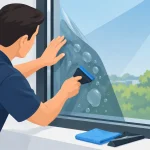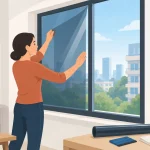

A clear bathroom window facing a neighboring block, a meeting room exposed to a busy corridor, or a front door that leaves too much of your home on display can make a space feel uncomfortable. Frosted film solves that problem without turning the room dark. Applied directly to existing glass, it diffuses views while still allowing natural daylight to enter.
For homes and businesses where privacy matters but renovation disruption does not make sense, frosted glass film is one of the most practical upgrades available. The right product and installation can create a clean, finished look that feels built into the glass, at a fraction of the cost and downtime associated with replacing it.
What Frosted Film Does Best
Frosted film is a privacy window film with a translucent finish. Rather than making a window fully opaque, it scatters light passing through the glass. People on either side can see brightness and general movement, but clear facial details, furniture, and interior activity are obscured.
That distinction matters. Frosted film is ideal when you need daytime and nighttime privacy, unlike many one-way reflective films that depend on a brighter exterior side to reduce visibility. It also differs from blackout film, which blocks views and light almost completely. If you want a bright room that does not feel exposed, a frosted finish is usually the better fit.
Its clean, neutral appearance works across modern HDB apartments, condominiums, landed homes, clinics, offices, retail spaces, and food-and-beverage premises. It can cover an entire pane of glass or be cut into bands, panels, logos, and custom patterns. This flexibility makes it as useful for interior design as it is for privacy.
Where Frosted Film Makes the Biggest Difference
Bathrooms are the most familiar application, especially where windows face neighboring homes, service areas, or common corridors. A frosted finish lets sunlight in while removing the need to keep curtains or blinds closed throughout the day. It is also effective on shower screens, although the film selection and installation method should suit the glass type and moisture exposure.
For HDB residents, front-facing windows and glass panels near entryways can create direct sightlines into living areas. Frosted film can be installed full-height for stronger privacy or only along the lower portion of a window when you still want to retain an open view of the sky.
In offices, clear glass meeting rooms often look impressive but can create distractions and confidentiality concerns. Frosted bands at eye level give meeting spaces privacy without making the office feel closed off. Full coverage can work well for HR rooms, consultation areas, treatment rooms, and storage spaces, while branded designs can reinforce a company identity on reception glass.
Retailers and commercial operators also use frosted film to conceal back-of-house areas, improve the appearance of aging glass, define zones within a space, or add privacy to street-facing windows. The finish can make a practical partition look intentional rather than temporary.
Choosing the Right Frosted Film Finish
Not every frosted film looks or performs the same way. Some finishes closely resemble acid-etched glass, with a fine and consistent matte appearance. Others have a more pronounced texture, patterned detail, gradient effect, or decorative design. The best choice depends on the level of privacy you need, the amount of light you want to preserve, and how the glass fits into the overall space.
A denser white or matte film generally obscures more detail. It is a strong choice for bathrooms, private rooms, and areas where people stand close to the glass. A lighter frosted film may be sufficient for meeting-room partitions or internal windows where you want visual separation without completely concealing silhouettes.
Placement is just as important as opacity. Full coverage delivers the most consistent privacy, but partial coverage can be more attractive and functional. A lower frosted panel on a bedroom window can block direct views from nearby units while leaving the upper glass clear. Horizontal bands on office partitions preserve the open-plan feel while reducing eye contact and visual distractions.
Before selecting a design, consider what happens after dark. Frosted film remains private when interior lights are on, but it does not create total blackout. Close-up silhouettes may still be visible in certain lighting conditions. For spaces that require complete visual concealment, such as sensitive treatment rooms or storage areas, blackout film or a more opaque solution may be the better option.
Frosted Film Is Not a Substitute for Solar Film
Privacy and heat control are often discussed together, but they are separate performance needs. Standard frosted film is designed primarily for appearance and privacy. It may reduce a small amount of glare simply because it diffuses light, but it should not be chosen as the main solution for harsh sun, UV exposure, or high indoor heat.
For sun-facing windows in warm, humid climates, solar film may be the priority. High-quality solar films are engineered to reduce solar heat gain, glare, and UV exposure while preserving a clearer view. Depending on the glass, layout, and product compatibility, it may be possible to use different films on different windows or combine privacy and solar-control strategies across the property.
This is why a site assessment is valuable. A bathroom window facing a neighboring block has a different requirement from a west-facing living room that becomes uncomfortably hot every afternoon. One film does not have to solve every problem. A tailored approach usually produces a better result.
Why Professional Installation Matters
Frosted film can look simple, but the finished result depends heavily on preparation, cutting accuracy, and application technique. Dust, fingerprints, old adhesive residue, uneven edges, and trapped moisture are especially noticeable on a pale matte surface. Professional installers clean and prepare the glass carefully, apply the film with controlled pressure, and trim edges precisely for a consistent finish.
Correct installation also matters around glass doors, sliding panels, window frames, handles, and silicone joints. These details affect both appearance and long-term adhesion. For commercial projects, experienced installation planning helps reduce disruption to staff, customers, and daily operations.
Glass type should be checked before installation, particularly for insulated glazing, specialty glass, and panels that receive intense sun. Film compatibility is not something to guess. A specialist can recommend a product suited to the glass and intended use, helping you avoid premature failure or an appearance that does not meet expectations.
ShieldShade International draws on decades of window film experience to recommend and install premium options selected for real residential and commercial conditions. The objective is not simply to cover glass, but to provide a durable solution that looks right from every angle.
Care and Expected Lifespan
After installation, the film needs time to cure. Minor water haze or small moisture pockets can appear during the initial curing period and typically clear as the adhesive sets. The timeframe varies with weather, film type, and ventilation, so avoid judging the final appearance too quickly.
For routine cleaning, use a soft microfiber cloth or sponge with mild, non-abrasive cleaning solution. Avoid rough scouring pads, sharp tools, and harsh chemicals that can damage the film surface or edges. Cleaning is straightforward, but gentle care helps preserve the finish.
A quality frosted film installed on properly prepared glass can provide years of privacy and visual improvement. Its lifespan depends on the product grade, sun exposure, moisture conditions, cleaning habits, and whether it is installed internally or externally. Interior applications generally face less weathering, while high-use doors may need closer attention around handles and edges.
A Small Glass Upgrade With Daily Impact
The best window solutions do more than change how glass looks. They make a home feel more private, help employees focus, give customers confidence, and allow daylight to remain part of the space. Frosted film is especially effective because it solves an everyday problem without requiring new windows, heavy construction, or a major design overhaul.
Choose the opacity, coverage, and finish around how the room is actually used. When the film is matched to the glass, lighting, and privacy needs, the result is simple: a brighter space that feels comfortably your own.