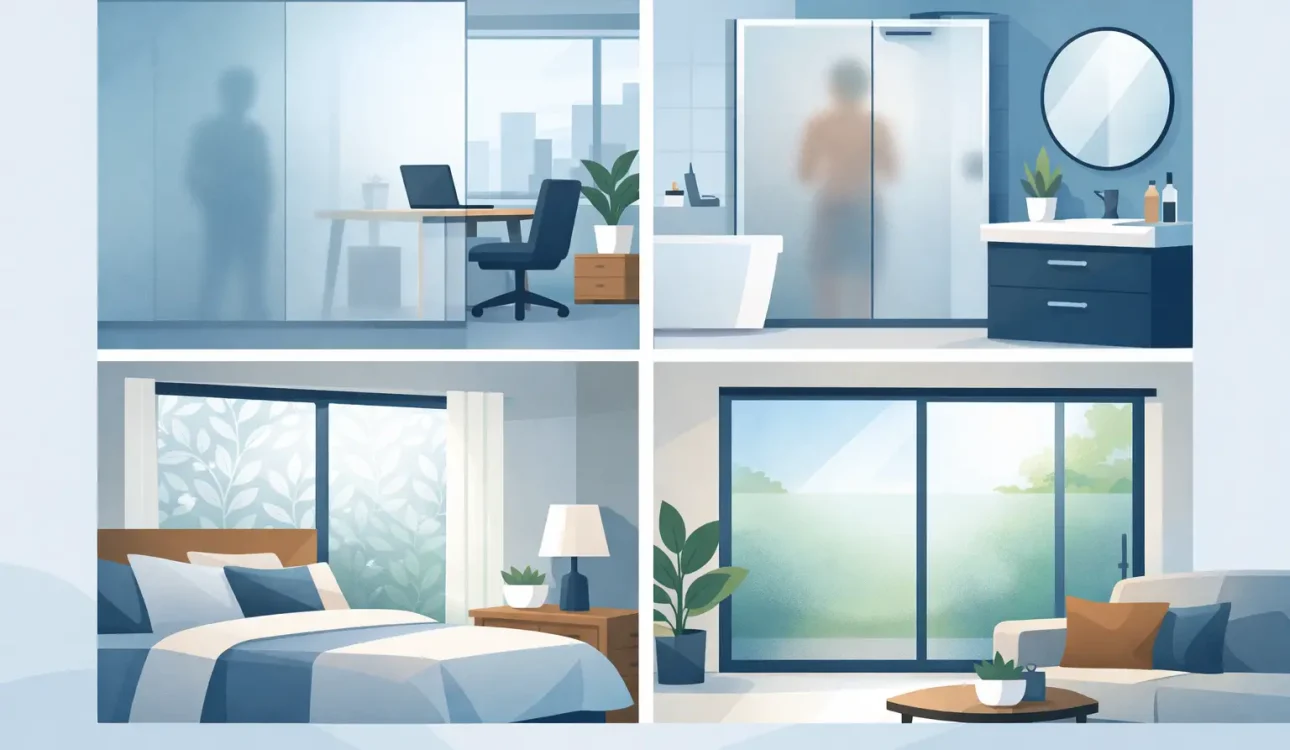
A close neighboring window, a street-facing office, or a bathroom with clear glass can make a room feel exposed even when the layout is otherwise perfect. This guide to privacy glass films explains how to regain privacy without replacing your existing glass or committing to a major renovation. The right film can preserve daylight, improve the appearance of a room, and add a practical layer of comfort where curtains or blinds are not the best fit.
Privacy is not one single requirement. Some spaces need full visual separation at all hours. Others need a soft barrier that lets daylight through, while street-facing windows may need daytime privacy combined with heat and glare reduction. Selecting a film starts with understanding what you need the glass to do.
What Privacy Glass Film Does
Privacy glass film is applied directly to an existing window, glass door, partition, or shower enclosure. Depending on the material and finish, it can obscure views, block views completely, create a decorative visual screen, or reduce visibility from one side of the glass.
For homeowners, the most common applications are bathroom windows, entry sidelights, kitchen windows, balcony doors, bedroom windows, and glass partitions. In dense residential settings, including apartments, condos, and HDB homes, frosted film is often a practical answer when neighboring units overlook one another.
For offices and commercial spaces, privacy film is commonly used on meeting-room partitions, consultation rooms, clinic windows, storefront glass, and internal glass doors. It creates a more professional environment without making a space feel enclosed by permanent walls.
The result depends on the film type, the lighting conditions, the existing glass, and the quality of installation. A professional recommendation should account for all four rather than relying on appearance alone.
A Guide to Privacy Glass Films by Type
Frosted and etched-look film
Frosted film is the most versatile choice when you want reliable privacy while keeping a bright, open feeling. It diffuses light and obscures detail from both sides of the glass, making it well suited to bathrooms, interior partitions, front-door panels, and windows that face nearby homes.
A light frosted finish still allows generous daylight into the room. A denser frosted or white matte finish provides greater obscurity. If a window is large or highly visible, the film can also be installed in bands or geometric sections, giving you privacy at eye level while retaining a clear view above or below.
Frosted film is not intended to provide a clear outdoor view. That trade-off is precisely what makes it effective for spaces where privacy matters more than visibility.
Blackout and opaque film
Blackout film is designed for complete visual blocking. It is useful where no light transmission or visibility is wanted, such as storage areas, service rooms, equipment enclosures, private back-office windows, or selected glass panels in a commercial setting.
This option creates the strongest privacy barrier, but it also removes natural light through the treated glass. It is generally not the best first choice for a living room, kitchen, or workspace that relies on daylight. In those rooms, a frosted or decorative alternative often delivers better balance.
One-way reflective film
Reflective or mirrored film can provide daytime privacy when the exterior side is brighter than the interior. During daylight hours, people outside see a more reflective surface while occupants retain a clearer view outward. This makes it attractive for street-facing windows, offices, and rooms with strong sun exposure.
The key limitation is nighttime performance. When indoor lights are on and it is darker outside, the effect reverses. People outside may be able to see in unless curtains, blinds, or another privacy treatment is used. One-way film should therefore be selected for daytime privacy and solar control, not as a 24-hour privacy solution.
Decorative privacy film
Decorative film combines visual screening with a designed finish. Patterns, gradients, stripes, textured effects, and custom-cut elements can turn plain glass into an architectural feature. It is especially useful for office partitions, reception areas, retail spaces, and homes where full frosting would feel too plain.
The level of privacy varies by pattern. A film with wide clear sections may look refined but reveal more than expected at close range. Review the design from both sides of the glass and at the actual viewing distance before deciding.
Match the Film to the Room, Not Just the Look
A privacy film that works beautifully in a bathroom may be a poor fit for a sun-facing living room. Start with the room’s purpose and the type of exposure you want to control.
Bathrooms and shower areas usually benefit from frosted film because it provides consistent privacy day and night while still admitting daylight. For entry doors and sidelights, a partial frosted design can protect the home from direct views without making the entrance dark.
Bedrooms on lower floors or facing nearby buildings may need a combination of daytime and nighttime measures. Frosted film offers all-day obscurity, while reflective solar film can help during the day but requires curtains or blinds after dark. If the goal is sleep quality as well as privacy, blackout film may work on selected panes, although it will reduce natural light.
For offices, consider how the room is used. Meeting rooms often need visual privacy but still benefit from borrowed light, making frosted or gradient film a strong choice. Executive offices, medical consultation rooms, and sensitive work areas may require denser coverage. Retail businesses may prefer decorative film that screens back-of-house areas while supporting the brand’s interior design.
Privacy, Heat Control, and Glare: When One Film Can Do More
Privacy is frequently connected to sun exposure. Windows that overlook a busy street or nearby property may also receive intense direct sunlight, creating glare, heat gain, and fading risk for furnishings. In these cases, a solar or reflective window film may offer a more functional solution than a privacy-only film.
However, multifunctional film involves trade-offs. Darker or more reflective films can reduce glare and heat, but may change the appearance of the glass and lower visible light transmission. A very light film maintains a brighter interior but may deliver less daytime privacy and solar performance. The best balance depends on the window orientation, room use, existing shades, and how much natural light you want to keep.
Tropical and high-sunlight environments place extra demands on window film. A premium film should be selected for its performance characteristics, not simply because it looks dark from the outside. Quality materials, proper compatibility with the glass, and precise installation all affect long-term appearance and results.
Check These Details Before Installation
Before choosing a privacy film, assess the glass and the conditions around it. Tempered glass, double-pane glass, laminated glass, and older glass can have different film compatibility requirements. Applying the wrong film can create unnecessary thermal stress or affect manufacturer warranties, especially on certain insulated glass units.
Also consider whether the glass is inside or outside, flat or curved, and exposed to moisture, grease, or frequent cleaning. Bathroom and kitchen windows require careful surface preparation. Glass partitions and large storefront panels demand accurate alignment, particularly when using stripes, patterns, or multiple film sections.
A professional site assessment helps prevent common disappointments: a film that is too dark, a pattern that does not align across panels, reflective film expected to work at night, or a privacy level that feels inadequate once furniture and lighting are in place.
Why Installation Quality Matters
Even premium privacy glass film can look poor when installed without proper preparation. Dust, adhesive contamination, inaccurate trimming, and visible gaps around edges can compromise the finish. On patterned or decorative film, inconsistent alignment is immediately noticeable.
Professional installation begins with evaluating the glass, confirming the film specification, and preparing the surface thoroughly. The film is then cut and fitted precisely, with attention to edges, joints, handles, frames, and surrounding seals. This is especially valuable for large windows, glass doors, multi-panel partitions, and custom privacy designs.
ShieldShade International approaches window film as a performance upgrade, not a one-size-fits-all accessory. With the right recommendation and installation method, privacy film can improve how a space looks and feels for years rather than merely covering a problem temporarily.
Care and Long-Term Expectations
After installation, allow the film adequate time to cure. Slight haze or small water pockets may appear during the early curing period and usually clear as moisture evaporates. Avoid aggressive cleaning products, abrasive pads, and sharp tools on the film surface.
For regular care, use a soft cloth or rubber squeegee with a mild, film-safe cleaning solution. Treat edges gently, particularly on older installations or windows exposed to frequent moisture. High-quality film should maintain a clean, even appearance when it is properly selected and maintained.
The most effective privacy solution is the one that fits the way you actually use the room. Choose a film that gives you the right level of screening at the times you need it, while preserving the daylight, comfort, and visual character that made the space worth improving.