
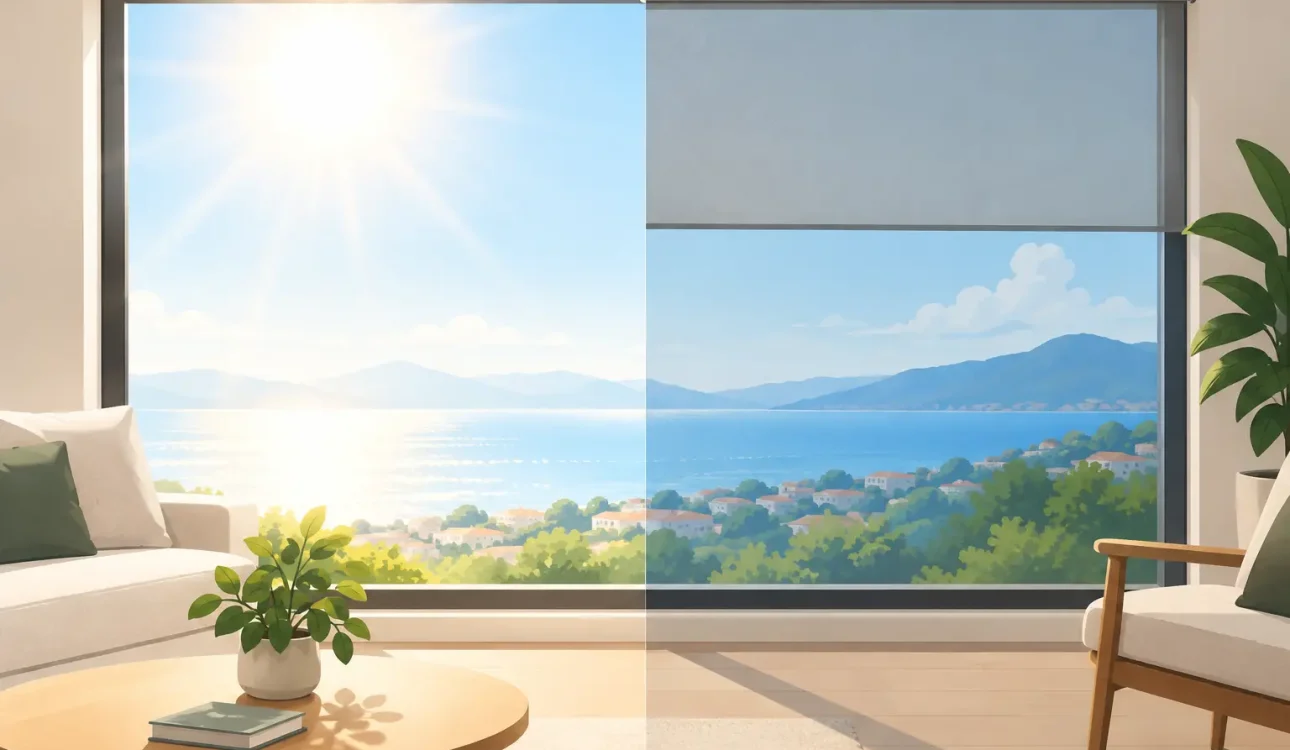
A bright room can quickly become uncomfortable when direct sun turns your sofa into a hot seat, washes out your television screen, and makes it difficult to work near a window. Learning how to soften harsh sunlight is not about making a space dark. It is about controlling glare, heat, and UV exposure while keeping the daylight and views that make a room feel open.
For homes, apartments, offices, and storefronts with large glass areas, the best solution depends on the direction of the windows, the hours of exposure, and how the room is used. A west-facing living room has different needs from a bedroom facing a neighboring building, while an office may need clear screens and consistent light throughout the day.
Start by Identifying What Makes the Sun Feel Harsh
Harsh sunlight is usually a combination of three issues: glare, solar heat, and ultraviolet radiation. They often arrive together, but one may be the main problem.
Glare is the intense visible light that causes squinting, screen reflections, and eye fatigue. It is common in rooms with bare windows, glossy flooring, white walls, or workstations placed directly in front of glass. Solar heat is the warmth that builds up around sun-facing windows, making air conditioning work harder and creating uncomfortable hot spots. UV radiation is invisible, but it can fade flooring, curtains, furniture, artwork, and retail displays over time.
Spend a few days observing the room before choosing a treatment. Note when the sun enters, where it lands, and whether the issue is strongest during morning or afternoon hours. Also consider whether you need privacy at night. This simple assessment prevents an attractive but poorly matched solution.
How to Soften Harsh Sunlight With Window Film
Solar window film is one of the most effective ways to reduce the impact of direct sun without replacing existing glass. Applied directly to the interior surface of suitable windows, quality film filters a portion of solar energy and visible light while maintaining a clean, low-profile finish.
The right film can reduce glare, reject heat, and block up to 99% of UV rays. Unlike heavy curtains, it works even when the window is uncovered, so your space remains bright and usable during the day. This makes it especially practical for living rooms, home offices, kitchens, meeting rooms, and commercial spaces where daylight matters.
Choose the Right Film for the Room
Not all solar films create the same result. A darker film may provide stronger glare control and more daytime privacy, but it can noticeably change the appearance of the glass and reduce natural light. A lighter, high-performance ceramic or spectrally selective film can reject significant heat while keeping the view clearer and the room brighter.
For a home office, a medium-light solar film may reduce screen reflections without making the space feel enclosed. For a west-facing bedroom, a higher heat-rejection film can help control late-afternoon warmth. In a retail space, films with strong UV protection can help preserve merchandise while allowing customers to see inside.
Reflective and one-way films can provide useful daytime privacy, particularly where buildings face each other closely. However, the one-way effect depends on lighting conditions. At night, when interior lights are brighter than outdoors, curtains or blinds may still be needed for privacy.
Do Not Treat Window Film as a One-Size-Fits-All Product
Glass type matters. Double-pane insulated glass, tempered glass, laminated glass, and specialty coatings can have different compatibility requirements. Applying an unsuitable film may increase thermal stress or affect the manufacturer’s glass warranty.
Professional consultation and installation help avoid these risks. An experienced installer can assess the glass, recommend an appropriate film shade and construction, and apply it without bubbles, edge lifting, or contamination. ShieldShade International takes this approach because sunlight control should improve a space for years, not create a maintenance problem after a few months.
Add Adjustable Layers for Changing Light
Window film provides constant protection, while interior treatments give you control when sunlight conditions change. The two work well together rather than competing with each other.
Roller shades are a practical choice for clean, modern interiors. Light-filtering fabrics soften intense daylight and reduce glare while preserving a sense of openness. Solar screen shades are designed to maintain outward visibility during the day, although a more open weave offers less glare and privacy control than a tighter weave.
For bedrooms and media rooms, blackout blinds or curtains offer stronger light blocking when needed. They are particularly useful if early-morning sun disrupts sleep or if a room is used for presentations and video viewing. The trade-off is that blackout treatments need to be opened to restore daylight, whereas solar film continues working in the background.
Sheer curtains can also diffuse direct rays beautifully in living spaces. They are best suited to rooms where heat is moderate and the main goal is visual softness. If the glass itself is generating substantial heat, sheers alone will not deliver the cooling benefit of a solar-control film.
Reposition the Room Before You Buy More Products
Sometimes the fastest improvement comes from changing what sits in the sun path. Move a desk so the window is to the side rather than directly in front of or behind the monitor. Shift reading chairs away from the strongest beam. Place television screens perpendicular to windows where possible.
Furniture placement also protects finishes. Leather, wood, fabric, and printed materials can fade unevenly when exposed to daily direct sunlight. Even with UV-blocking film, moving sensitive items away from constant exposure is a sensible precaution.
In commercial settings, consider where employees, customers, and displays are positioned. A bright reception area may look welcoming, but glare at a check-in counter or heat near a window-facing workstation can affect comfort and productivity. Small layout changes often make a noticeable difference before any major renovation is considered.
Use Exterior Shading When Direct Heat Is Severe
If sunlight strikes the glass for long periods, exterior shading can intercept heat before it reaches the window. Awnings, exterior blinds, pergolas, and architectural fins can be highly effective on patios, balconies, and large commercial facades.
This approach requires more planning than interior window treatments. Building rules, wind exposure, maintenance, and visual impact all matter, especially in apartments, condominiums, and managed commercial properties. Exterior systems can also reduce daylight more dramatically, so they are most suitable where solar heat is the dominant concern.
For many existing spaces, solar film combined with interior shades delivers a more practical balance of performance, appearance, and installation simplicity.
Match the Solution to Window Direction
Window orientation gives useful clues about what will work best. East-facing windows receive strong morning light, which may affect bedrooms, breakfast areas, and early office hours. West-facing windows often create the greatest heat and glare burden because afternoon sun is intense and arrives when outdoor temperatures are already high.
South-facing windows tend to receive extended daylight and can benefit from year-round solar management. North-facing windows generally receive softer indirect light, though nearby reflective buildings or water can still create glare.
Do not choose a film solely by how dark it looks on a sample. Ask about visible light transmission, glare reduction, UV rejection, and total solar energy rejection. These measurements explain how a film will perform, not just how it will appear. A well-chosen lighter film may outperform a darker, lower-quality option when heat control and clear views are both priorities.
Avoid Common Mistakes That Make Rooms Feel Darker
The most common mistake is overcorrecting. When harsh sun becomes frustrating, it is tempting to choose the darkest available film or keep blackout curtains closed all day. The result can be a room that feels dim, smaller, and dependent on artificial lighting.
Another mistake is relying on decorative film for heat control. Frosted and patterned films are excellent for privacy and visual design, but they are not automatically engineered to reject substantial solar heat. Choose each film for its intended function.
Finally, do not overlook installation quality. Dust, trapped moisture, misaligned edges, and unsuitable adhesives can affect both appearance and long-term durability. Premium materials deserve precise preparation and application.
A comfortable room should still feel like a bright room. Start with the sun exposure you actually experience, choose a solution that addresses the main discomfort, and preserve the daylight you enjoy. With the right combination of solar film, adjustable shading, and thoughtful layout, your windows can remain an asset instead of the hottest part of the room.


