A west-facing living room can feel comfortable at 9 a.m. and punishingly hot by midafternoon, even with the air conditioning running. When comparing tint versus awnings, the real question is not which one looks better from the street. It is which solution addresses the sun exposure, building rules, budget, and day-to-day use of your windows.
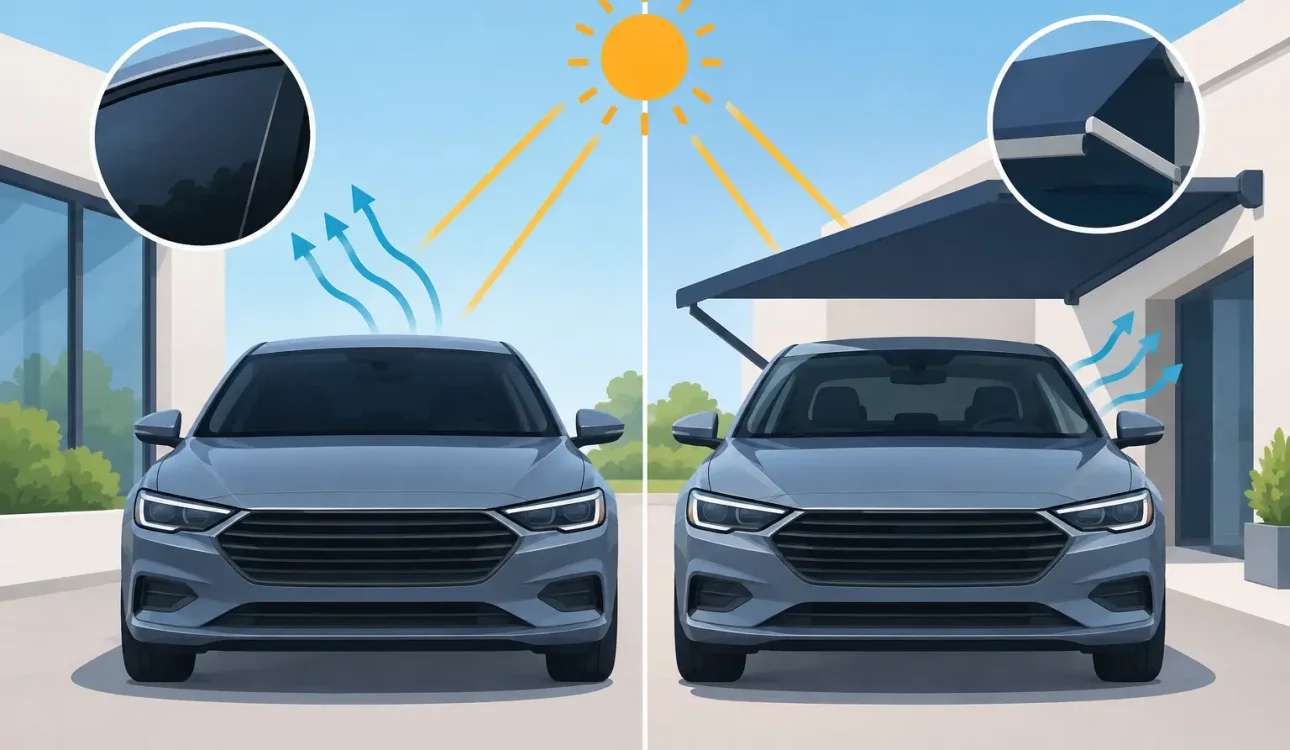
Window tint, more accurately called solar window film, and awnings both reduce the impact of sunlight. They work in very different ways, however. Awnings stop part of the sun before it reaches the glass. Solar film manages solar energy at the glass itself while keeping the window fully usable and the exterior of the building largely unchanged.
For many apartments, condos, HDB homes, offices, and retail spaces, that difference determines the practical choice.
Tint Versus Awnings: How They Control Heat
An awning creates exterior shade. Because sunlight is intercepted before it hits the glass, a properly sized awning can be highly effective on windows with direct sun exposure, especially on lower floors, patios, storefronts, and landed properties. Fixed awnings provide constant coverage, while retractable models let occupants choose between shade and open sky.
Their performance depends heavily on geometry. The awning needs enough projection to block the high-angle sun, while still accounting for the lower morning or afternoon sun that can slip underneath. Window direction, façade design, neighboring buildings, and seasonal sun angles all affect the result. A small decorative awning may improve appearance without delivering much meaningful heat control.
Solar window film is applied directly to existing glass. Premium solar films use carefully engineered layers to reject a portion of solar heat, reduce glare, and filter ultraviolet radiation. They do not create physical shade, but they can significantly improve comfort across the entire glazed area, including tall fixed windows that are difficult or impossible to shade externally.
This makes film particularly useful in high-rise residences and commercial buildings, where exterior additions may be restricted. It also works well where heat is coming through large glass panels rather than one easily shaded opening. The right film specification matters: visible light transmission, solar heat rejection, glare reduction, and glass compatibility should all be assessed before installation.
The Best Choice Depends on Window Orientation
East- and west-facing windows often receive the most uncomfortable direct sun. The sun sits lower in the sky during morning and late afternoon, which is precisely when a horizontal awning may provide less protection. In these cases, solar film often offers more consistent relief because the full pane remains treated regardless of sun angle.
South-facing windows in the Northern Hemisphere and north-facing windows in Singapore can receive strong high-angle sun for long periods. Awnings can perform well here when they are properly designed and permitted. They can shade windows and nearby outdoor spaces at the same time, making them attractive for patios, café fronts, terraces, and ground-level living areas.
For glass walls, corner windows, and broad office façades, awnings can become visually heavy and expensive. Film preserves the architecture while reducing glare across computer screens, television areas, workstations, and display zones. It is also a practical answer when there is no exterior structure available to support an awning.
Glare, UV Protection, and Privacy Are Different Needs
Heat reduction is usually the first concern, but it is rarely the only one. Awnings reduce some glare by shading the upper portion of a window, yet reflected light from surrounding buildings, roads, water, or bright pavement can still enter the room. They do not change the optical properties of the glass.
Solar film can reduce harsh glare more evenly across the whole window. That is valuable in home offices, meeting rooms, reception areas, and living rooms where occupants need daylight without squinting or closing the curtains. A well-selected film maintains useful natural light while moderating the intensity that makes a room uncomfortable.
UV exposure is another major difference. Window film can help filter UV radiation that contributes to fading in flooring, furnishings, artwork, merchandise, and upholstery. An awning protects the area it shades, but it cannot provide the same consistent UV filtering through the entire glass surface.
Privacy also favors film in many urban settings. If neighboring units overlook a bedroom, bathroom, office, or meeting space, frosted and privacy film options can obscure views while allowing light to enter. Reflective one-way films may provide daytime privacy under the right lighting conditions, but they should not be treated as a complete nighttime privacy solution. When interior lights are brighter than outside, the reflective effect can reverse.
Awnings may make a window less exposed from above or at an angle, but they do not provide meaningful privacy at eye level. If privacy is the primary problem, architectural film is usually the more direct solution.
Appearance and Views Matter More Than Many Buyers Expect
Awnings are architectural features. They can add character, color, and a welcoming sense of shelter to a storefront or landed home. They are especially effective when the goal includes improving an outdoor seating area or protecting an entryway from sun and rain.
The trade-off is that they alter the exterior permanently, or at least visibly. They can block upward views, reduce daylight, and create a darker interior even on overcast days. Fabric choices, frames, fasteners, and drainage also need to suit the building design.
Window film is a more discreet upgrade. Modern spectrally selective films can deliver strong heat rejection with a lighter appearance than older, heavily tinted products. This is important for homeowners who value a bright interior and clear outward views, as well as businesses that want a polished glass façade rather than a shaded canopy.
Darker film is not automatically better. A very dark tint may reduce visible light and change the look of a room more than expected. Reflective film can offer a sleek exterior appearance, but may be unsuitable for every building or neighborhood. An experienced installer should provide samples and explain how the film will look from both inside and outside.
Cost, Maintenance, and Building Approval
Initial pricing varies by window size, film performance level, awning type, and installation complexity. In general, solar film is often the lower-disruption choice for existing glass. Installation is fast, requires no structural alteration, and does not take up exterior space.
Awnings can involve brackets, anchors, frames, waterproofing considerations, and professional installation. Retractable systems add moving parts and usually cost more than fixed units. Their value can be excellent where they shade both windows and an outdoor area, but the project scope is usually greater.
Maintenance should be part of the decision. Quality window film needs sensible cleaning practices and should be backed by a suitable warranty. Awnings may require fabric cleaning, inspections for corrosion or loose fixings, and care after heavy rain or wind. In humid climates, mildew and dirt buildup can affect their appearance over time.
Approval is often the deciding factor for apartments, condos, commercial buildings, and HDB properties. Management corporations, landlords, local authorities, or façade guidelines may limit the type, color, placement, or size of exterior awnings. Film may also be subject to rules, particularly if it changes the exterior reflectivity of a building, but it is typically less intrusive than a new exterior structure. Always verify requirements before committing to either option.
When Combining Film and Awnings Makes Sense
This does not always have to be an either-or decision. A patio door that receives strong afternoon sun may benefit from an awning that improves outdoor comfort and a solar film that reduces glare and UV exposure through the remaining uncovered glass. A retail space might use a canopy for brand presence and weather protection, then install film to protect merchandise near the windows.
The key is to avoid paying twice for performance you do not need. If an awning already blocks nearly all direct sun and the room is comfortable, an aggressive heat-rejection film may be unnecessary. If exterior changes are prohibited, a carefully selected solar film may solve most of the problem on its own.
ShieldShade International approaches window film selection as a performance decision, not a one-size-fits-all tint choice. Glass type, sun direction, room use, privacy expectations, and the desired interior brightness all influence the right recommendation.
A Practical Way to Decide
Choose an awning when you have an approved exterior area, want to shade an outdoor space as well as the glass, and are prepared for a visible architectural addition and ongoing maintenance. It is especially compelling for patios, storefronts, entrances, and ground-level windows with predictable direct sun.
Choose solar window film when you need whole-window heat and glare management without structural work, want to preserve your views, or live and work in a building where exterior changes are limited. It is often the more practical option for high-rise homes, large glass façades, offices, bedrooms, and rooms affected by sun at changing angles.
Before choosing, spend a few days observing where sunlight actually lands. Note the hottest hours, the rooms where glare interrupts daily activities, and whether privacy changes after dark. That simple assessment turns a broad tint versus awnings debate into a window-by-window decision that can improve comfort for years.


