The late-afternoon sun hitting a rental apartment window can turn a living room into a glare-filled hot spot within minutes. Window film for rental apartments offers a practical way to improve comfort and privacy without replacing glass or committing to a major renovation. The right choice, however, depends on your lease, your window type, and whether you need heat control, privacy, or both.
For renters, the goal is not simply to make a window darker. It is to solve a daily problem while leaving the unit in good condition when it is time to move out. That is why film selection and installation method matter as much as the film itself.
Start With Your Lease and Landlord Approval
Before applying any window film, review your lease carefully. Some landlords permit removable interior treatments but restrict changes that affect the exterior appearance of the building. Condos and managed apartment communities may also have rules covering reflective finishes, dark films, or window alterations visible from outside.
A written approval is the safest route, particularly if you are considering solar film, blackout film, or a professionally installed product with an adhesive layer. Be clear about the type of film, where it will be installed, and whether it can be removed at the end of the lease. This avoids a common renter problem: improving the apartment now, then facing a dispute over restoration later.
If your lease is short or approval is uncertain, static-cling and low-tack removable films are usually the more sensible starting point. They may not match the long-term performance of premium bonded solar film, but they offer flexibility that many renters value.
Choose Window Film Based on the Problem You Feel Every Day
Not every bright window needs the same solution. A bedroom facing a nearby building has different needs from a west-facing living room that receives hours of harsh afternoon sun. Selecting film by function prevents overpaying for features you do not need or installing a film that creates a new inconvenience.
Heat and Glare From Direct Sun
Solar window film is designed to reduce solar heat, visible glare, and ultraviolet exposure while preserving daylight. For apartments with large sun-facing windows, this can make the space more comfortable and reduce the strain on air conditioning.
The trade-off is visible light. Films with stronger heat rejection often appear darker or more reflective than lighter films. A high-performance spectrally selective film can reduce heat while keeping a brighter, more natural-looking interior, but product quality and cost vary widely. For a rental, it is worth comparing performance specifications rather than choosing solely by tint color.
Daytime Privacy in Close Quarters
One-way reflective film can provide daytime privacy when the exterior side is brighter than the interior. It is useful for street-level apartments or units facing another building at close range. But it is not a nighttime privacy solution. Once lights are on inside and it is darker outdoors, the effect reverses and people outside may see in.
For round-the-clock privacy, frosted film is more dependable. It obscures the view through the glass while still allowing light into bathrooms, entry sidelights, and windows that look directly into another residence. Decorative frosted patterns can soften the look further without making a rental feel closed off.
Bedrooms and Light-Sensitive Spaces
Blackout or room-darkening film can help in bedrooms, nurseries, and media areas where light control matters most. It also offers privacy, but it changes the character of a room substantially. Unlike solar film, blackout film limits the view and daylight as well as glare.
This is one case where a partial application may be smarter than covering the full window. Applying film to the lower portion can block direct sightlines while retaining daylight and an open view above.
Removable Film vs. Permanent Film for Renters
The main decision for renters is whether flexibility or peak performance matters more.
Static-cling film uses no adhesive and can often be lifted away, cleaned, and reused. It is a practical option for temporary privacy or modest glare reduction. It can also be easier to install on small, simple panes. However, it may not sit as smoothly on every glass surface, and its durability is more limited than professionally applied film.
Removable adhesive film offers a more secure finish and a wider range of privacy and decorative designs. Removal can still be straightforward, but results depend on the quality of the material, how long it remains on the glass, and whether the glass was properly cleaned before installation. Cheap films can shrink, peel, discolor, or leave adhesive residue over time.
Permanent solar film delivers the strongest long-term heat and glare performance. It is often the better choice for a renter planning to stay several years, provided the landlord approves it. Professional installation is especially valuable for large windows, high-rise units, and premium films where a poor application can cause bubbles, edge lifting, or wasted material.
Do Not Ignore Your Glass Type
Window film is not automatically suitable for every window. Modern apartments may use insulated glass units, tempered glass, laminated glass, low-emissivity glass, or tinted glass. Each type absorbs and releases heat differently.
A film that is too dark or too heat-absorbing for a particular pane can increase thermal stress. In some cases, that may raise the risk of glass cracking. This is not a reason to avoid film altogether. It is a reason to have the existing glass assessed before choosing a product, especially for older windows, large panes, and windows exposed to strong sun for long periods.
A specialist should ask about the glass construction, window orientation, and exposure before recommending a solar film. The best film for a shaded north-facing window is rarely the best film for a west-facing pane that receives intense afternoon heat.
Installation Details That Protect Your Deposit
A clean installation starts with clean glass. Dust, cooking residue, and cleaning-product buildup can create visible specks and prevent film from bonding correctly. Avoid applying film over cracked glass, damaged seals, or peeling window coatings.
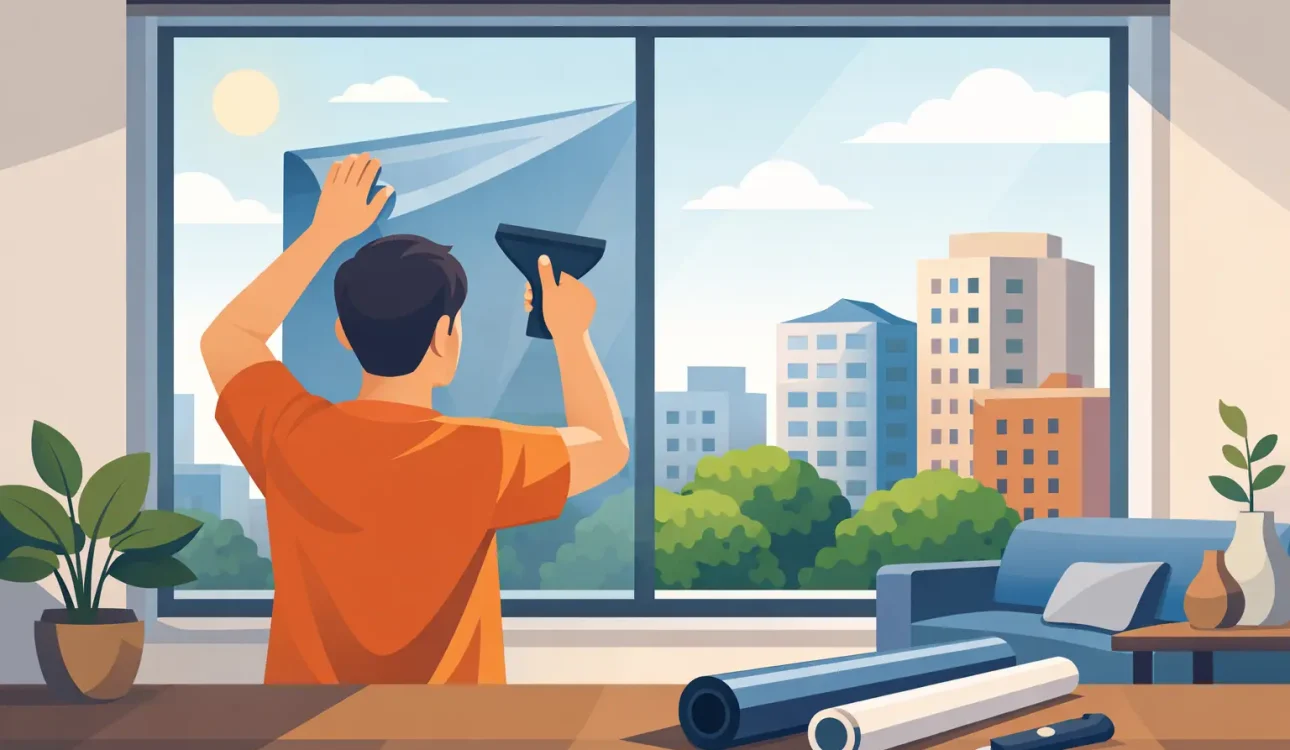
For a small removable privacy film, careful DIY installation can work well. Measure the visible glass area, not just the frame, and leave a slight margin where appropriate. Use a proper application solution and squeegee rather than relying on household tools that can scratch or crease the film.
For solar film on large windows, professional installation is usually the safer investment. Experienced installers can minimize contamination, trim precisely around seals, and recommend a compatible product for the glass. They can also explain curing time. Newly installed film may look hazy or show small moisture pockets at first, particularly in humid conditions, but this often improves as the film cures.
When moving out, follow the manufacturer’s removal guidance. Do not scrape aggressively with metal blades or harsh chemicals. A controlled removal process protects the glass and reduces the chance of residue becoming a landlord concern.
A Smarter Way to Compare Film Options
When comparing window film for rental apartments, look beyond a sample’s color. Ask how much visible light it transmits, how much solar heat it rejects, whether it blocks UV rays, how it performs in daytime and nighttime privacy, and whether removal is covered by the product guidance.
Also consider your timeline. A one-year lease may favor removable film, while a multi-year rental in a hot, sun-exposed location may justify a higher-grade solar film with written approval. If energy costs and indoor comfort are persistent concerns, the right heat-control film can feel less like a decorative upgrade and more like a daily improvement.
ShieldShade International approaches film selection as a practical assessment of glass, sunlight, privacy needs, and expected length of stay. That level of planning matters because the best result is one that looks clean, performs consistently, and remains appropriate for the property.
Your apartment does not need to stay overly bright, exposed, or uncomfortable simply because you rent it. Choose a film that fits the window, the lease, and the way you use the room, then enjoy a more comfortable view without creating a problem for move-out day.