A window facing the afternoon sun can turn a comfortable room into the hottest part of the home within minutes. That is why comparing window film brands should go beyond choosing the darkest tint or the lowest quote. The film on your glass affects indoor heat, glare, privacy, UV exposure, and the appearance of your windows for years to come.
For homeowners and businesses in high-sun environments, the right film is a practical upgrade that avoids the cost and disruption of replacing glass. The wrong one can fade, bubble, turn purple, reduce visibility, or fail to deliver the cooling performance promised at the point of sale. Brand matters, but product specification and installation quality matter just as much.
What separates quality window film brands?
The strongest brands invest in film construction, optical clarity, reliable adhesives, and tested performance data. A quality solar film is not simply a colored layer. It is a carefully engineered product designed to manage solar energy while maintaining a clean view through the glass.
Established manufacturers commonly offer multiple product lines because one film cannot solve every window problem. A bright living room may need high visible light transmission with strong infrared heat rejection. A bedroom facing a nearby block may need daytime privacy or blackout coverage. An office with computer screens may prioritize glare reduction without making the work area feel dim.
When assessing a brand, look at how clearly it explains the following measurements:
- Total solar energy rejected, which indicates how much solar heat the film can keep out.
- Visible light transmission, which affects how bright or dark the room will feel.
- Glare reduction, which is especially useful near TVs, workstations, and west-facing windows.
- UV rejection, which helps protect flooring, furniture, artwork, and fabrics from premature fading.
- Warranty coverage, including what is covered for residential or commercial applications.
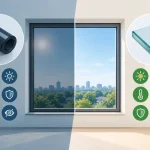
Specifications should be read as a complete picture. A very dark film may reduce glare effectively but can change the appearance of your home and reduce natural daylight. A light, spectrally selective film may preserve a clearer view while rejecting significant heat, but it is usually positioned at a higher price point. The best choice depends on the glass, window orientation, room use, and your priorities.
Premium window film brands use different technologies
Not every film uses the same method to control heat. Understanding the broad categories makes it easier to compare products fairly instead of relying on shade alone.
Dyed and colored films
Dyed films absorb sunlight and create a tinted appearance. They can improve comfort and privacy at an accessible price, making them suitable for applications where a darker look is acceptable. Their limitation is that absorbed heat can remain in the glass, and lower-grade versions may be more prone to fading over time.
Metalized and reflective films
Metalized films use a thin metallic layer to reflect solar energy. They are effective for reducing heat and glare and can provide a reflective exterior appearance during daylight hours. This can work well for certain offices and sun-exposed spaces, but the reflectivity may not suit every residential façade or interior design preference.
One-way reflective film also needs realistic expectations. It provides daytime privacy when the outside is brighter than the interior. At night, when lights are on indoors, the effect reverses unless curtains or blinds are used.
Ceramic and spectrally selective films
Ceramic and advanced spectrally selective films are often preferred where homeowners want heat control without a heavy tint. These products are designed to target infrared energy and UV while allowing more visible light through. They can be an excellent fit for living areas, condos, showrooms, and offices where a bright, natural appearance matters.
They are generally more expensive than basic films, but the trade-off can be worthwhile for rooms that receive persistent direct sun. A higher-performing light film often delivers a better daily experience than a darker film selected only for its appearance.
Do not compare brands by price alone
A low initial price can be tempting, particularly when several windows need coverage. Yet window film is only as good as the materials, measurements, and workmanship behind it. Two films that look similar from a distance may perform very differently after months of tropical sun exposure.
Cheaper products may use less stable dyes, weaker adhesive systems, or limited protective coatings. Common signs of poor-quality film include bubbling at the edges, lifting corners, haze, discoloration, and scratches from ordinary cleaning. These failures are not only cosmetic. They reduce the film’s effectiveness and can leave the glass looking neglected.
A better comparison considers the total installed value. Ask whether the quote identifies the product line, shade, performance figures, warranty, glass preparation, and removal of existing film if needed. A transparent quote gives you something meaningful to compare.
For commercial properties, the calculation should also account for employee comfort and screen visibility. A film that reduces glare and hot spots can make meeting rooms, reception areas, and workstations more usable without major renovation work. For homes, improved comfort near windows may reduce the need to keep curtains closed throughout the day.
The glass itself affects which film is safe
Even premium window film brands cannot override the physical limitations of glass. Applying film changes the way glass absorbs and releases heat. On certain panes, particularly older glass, tinted glass, double-pane units, laminated glass, or glass with existing coatings, an unsuitable film can increase the risk of thermal stress.
This is why a site assessment is more valuable than selecting from a color chart alone. A knowledgeable specialist checks the glass type, pane size, existing condition, framing, window orientation, and whether the glass receives partial shade. These details influence the recommended film.
The same principle applies to decorative and privacy applications. Frosted glass film is often an excellent solution for bathrooms, entry panels, office partitions, and rooms that need privacy without blocking daylight. However, the level of opacity, pattern, and placement should be chosen for the actual viewing angles in the space.
Installation quality protects the investment
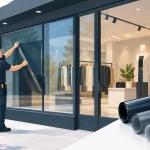
A leading film manufacturer can provide excellent material, but installation determines how it looks and lasts on the window. Professional installers work in a clean environment, prepare the glass carefully, trim precisely, and use the correct application technique for the film type.
Small details make a visible difference. Poorly cleaned glass can trap dust beneath the film. Inaccurate trimming can leave uneven edges. Rushed installation can create contamination, lifting, or creases that become more obvious once sunlight hits the glass.
Freshly installed film also needs time to cure. Slight moisture patterns or a soft hazy appearance may be visible during the early curing period, especially in humid conditions. This does not automatically mean the installation has failed. A reliable installer should explain what is normal, how long curing may take, and how to clean the film once it has settled.
ShieldShade International approaches product selection as part of the installation process, matching premium films from established international sources with the needs of each glass surface and room. That combination of product knowledge and precise application is what turns a film purchase into a long-term improvement.
Questions worth asking before choosing a film
Before approving a quotation, ask what specific problem the recommended film is intended to solve. If heat is the concern, request solar performance information rather than relying on darkness. If privacy is the priority, clarify whether you need privacy day and night. If you want to preserve daylight, compare lighter high-performance options against darker conventional films.
It is also sensible to ask how the film will look from both inside and outside, whether it is suitable for your glass, and what warranty applies to your application. Commercial installations, interior partitions, residential windows, and specialty glass can carry different warranty conditions.
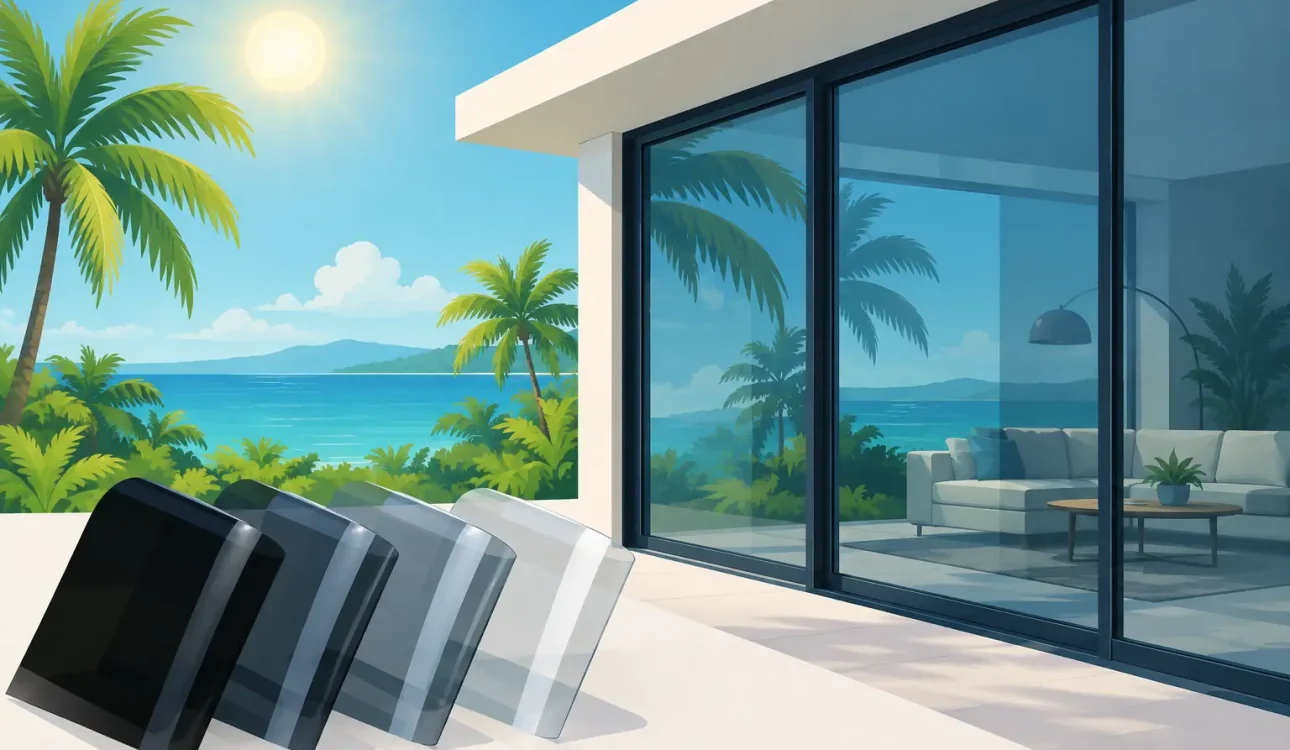
A physical sample can help, but it should not be the final decision-maker. A small piece held against a window cannot fully show how a larger installation will affect the room across changing weather and times of day. Performance data and an on-site recommendation provide the context a sample cannot.
The right film should make a room easier to live or work in, not simply make the glass darker. Choose a product that fits your sun exposure, privacy needs, design preferences, and glass type, then have it installed by a specialist prepared to stand behind the result.