A shopfront does more than separate your business from the street. It presents your products, shapes first impressions, and has to perform under hours of direct sun, constant pedestrian traffic, and close-up scrutiny. The best films for shopfronts balance that visual role with practical needs: reducing heat and glare, protecting merchandise, adding privacy where needed, and preserving a clean, professional appearance.
For retail stores, clinics, offices, cafés, and service businesses, window film is often a smarter upgrade than replacing existing glass. The right selection can improve comfort and protect interiors without blocking the visibility that brings customers through the door. The key is choosing a film based on how your frontage actually works, not simply picking the darkest or most reflective option.
Start With the Job Your Shopfront Needs to Do
There is no single best window film for every commercial frontage. A fashion boutique with sun-facing display windows has different priorities from a ground-floor office handling confidential meetings. A restaurant may want daytime heat control while retaining a clear view, while a beauty salon may need privacy for treatment areas.
Before selecting a film, consider where the sunlight hits throughout the day, whether merchandise fades near the glass, how much visibility your business needs from outside, and whether nighttime privacy matters. Also look at the existing glass type. Tempered, laminated, insulated, and older standard glass can each have different film compatibility requirements. A professional assessment helps prevent issues such as excessive heat absorption or an appearance that does not suit your brand.
In warm, high-sun environments, comfort is usually the first concern. Glass can turn a bright storefront into a hot spot, placing more demand on air conditioning and making customers less likely to linger near the window. Yet a film that is too dark may make the interior feel closed off. Good shopfront planning is about managing that trade-off.
Solar Control Film for Heat, Glare, and Fading
Solar control film is one of the most versatile choices for customer-facing glass. It is designed to reject a portion of the sun’s heat and reduce harsh glare while allowing useful natural light into the space. For businesses with west-facing or afternoon-sun exposure, this can make a noticeable difference to comfort near the entrance and display zones.
A quality solar film can also filter a high percentage of ultraviolet rays, helping reduce premature fading on fabrics, printed materials, flooring, furniture, and display stock. UV protection does not eliminate all fading, since visible light and heat also contribute, but it is a worthwhile layer of protection for high-value merchandise.
The appearance of solar film ranges from almost clear to lightly tinted, neutral, or reflective. A subtle, high-performance film is often the best choice for retailers that want to keep their storefront bright and inviting. More reflective options can provide stronger daytime privacy and solar performance, but they should be specified carefully. A mirror-like finish may conflict with a warm, open brand identity or make it harder for passersby to see products inside.
When a neutral solar film is the better fit
Neutral solar film works well for showrooms, boutiques, cafés, and offices that rely on a natural-looking façade. It reduces the sharpness of direct sun without dramatically changing the color of the glass. This is particularly useful where product color accuracy matters, such as fashion, furniture, electronics, or beauty retail.
For storefronts with intense exposure, a slightly darker film may be the more practical choice. The goal is not maximum darkness. It is the right balance of solar rejection, visible light transmission, and exterior appearance.
Privacy Film for Sensitive Commercial Spaces
Privacy needs vary by business type and by time of day. For meeting rooms, consultation rooms, staff areas, medical practices, or salons, frosted film provides consistent privacy without making a space feel sealed off. It diffuses light and obscures views through the glass, while still maintaining a bright interior.
Frosted film can be applied across an entire window or used strategically as a band, lower panel, or customized pattern. This lets a business conceal workstations, storage areas, or seated customers while retaining clear glass at eye level or above. It is a functional detail that can also reinforce an interior design scheme.
One-way reflective film is another option, especially where daytime privacy is the priority. It creates a reflective exterior surface when it is brighter outside than inside. However, it is not a complete nighttime privacy solution. Once interior lighting becomes stronger than exterior light, the effect reverses and people outside may see in. Businesses that operate late should understand this limitation before relying on reflective film alone.
For complete visual separation at all hours, blackout film or a more opaque decorative solution is the better choice. This is useful for back-of-house windows, equipment rooms, partitions, and areas where no outward visibility is needed.
Decorative Film That Supports Your Brand
Shopfront film can be practical without looking purely functional. Decorative window film allows businesses to add texture, pattern, color, gradients, or branded details to plain glass. Used well, it creates a more considered frontage than a blank pane or a temporary poster installation.
A frosted gradient can create privacy along the lower half of a treatment-room window. Geometric patterns can complement a contemporary office or studio. Custom-cut graphics can define an entrance, identify operating zones, or strengthen brand recognition without permanently altering the glass.
The strongest decorative applications leave enough open space for the storefront to breathe. Overloading every pane with graphics, dense frosting, and promotional messaging can make a business harder to read from the street. Consider what a first-time visitor needs to see: the entrance, your products or service, and a clear sense of what happens inside.
Safety and Security Film for Added Protection
Standard shopfront glass is vulnerable to accidental impact, vandalism, and attempted break-ins. Safety and security film is designed to hold broken glass together more effectively after impact, reducing the risk of dangerous shards scattering into the store.
This film does not make glass indestructible, and it should not be presented as a replacement for purpose-built security glazing where a high level of forced-entry resistance is required. Its performance depends on the film thickness, glass type, installation method, and whether the edges are properly anchored. Still, it can be a valuable risk-reduction measure for businesses with street-facing glass, especially when paired with sensible physical security measures.
For shopfronts, security film is often most effective where there is a realistic risk of impact but where changing the entire glazing system would be disruptive or costly. A qualified installer should assess the glass and frame condition before making a recommendation.
How to Compare the Best Films for Shopfronts
Do not judge commercial film by shade alone. The technical specifications reveal whether it is appropriate for your space. Look at total solar energy rejected, glare reduction, visible light transmission, UV rejection, and the manufacturer’s warranty. For security-focused products, ask what level of impact performance is expected for your glass and installation conditions.
A high visible light transmission means more natural light enters the shop. That can be helpful for an open retail environment, but it may offer less glare control than a darker option. High heat rejection can improve comfort and reduce cooling strain, but a more reflective or tinted appearance may affect your exterior design. These are not flaws. They are selection decisions that should match the use of the space.
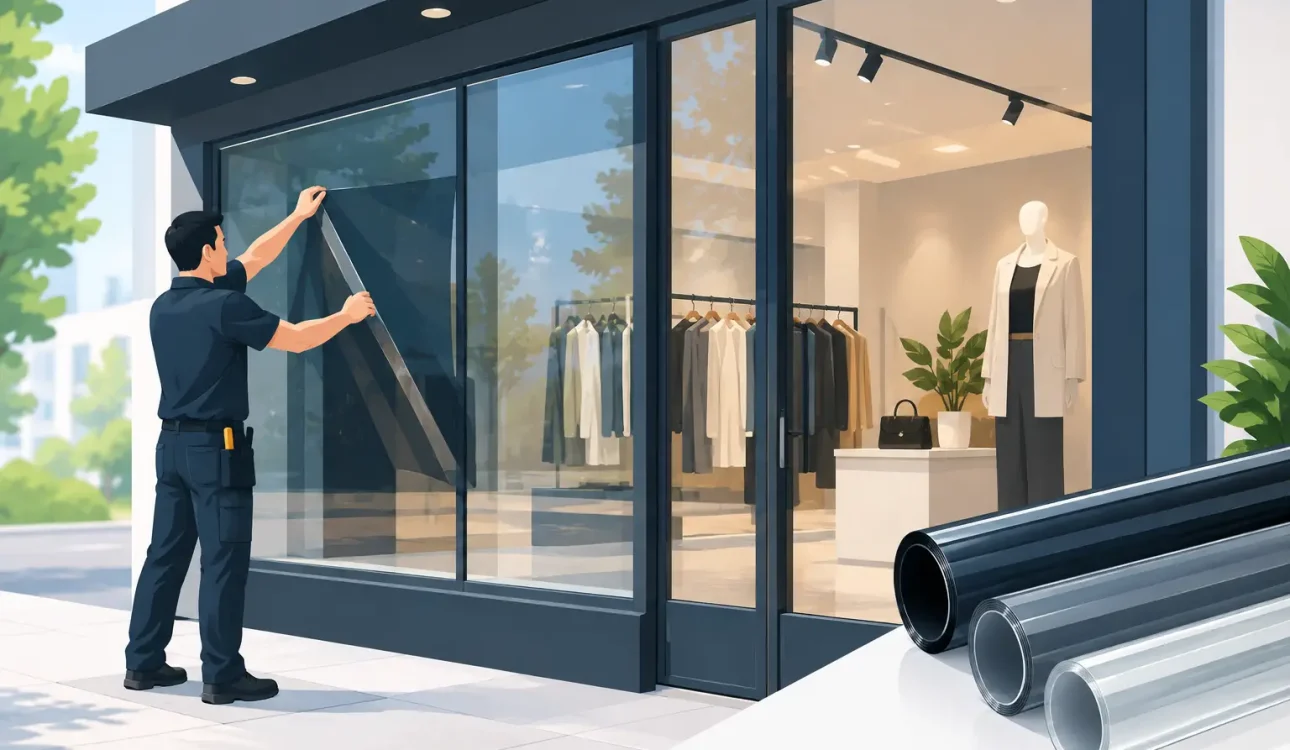
Installation quality matters just as much as the film itself. Commercial glass often includes large panes, existing decals, silicone edges, and access challenges that require careful preparation. A precise installation avoids trapped debris, inconsistent edges, and premature lifting. It also ensures the film is placed where it will perform as intended and look polished from both sides of the glass.
ShieldShade International helps business owners assess solar exposure, privacy requirements, glass compatibility, and visual preferences before recommending premium film options sourced for demanding climates. That consultative approach is especially valuable when a shopfront needs to work as both a high-performance window and a public-facing part of the brand.
Choose for the Customer Experience, Not Just the Glass
The right film should make a storefront more comfortable without making it less welcoming. For many businesses, that means a neutral solar film on display windows, frosted film on private zones, and security film where additional protection is justified. Other businesses may need a more tailored combination based on operating hours, façade orientation, and the level of privacy customers expect.
A well-chosen shopfront film is quiet proof that a business has thought about the details. Customers may not ask what is on the glass, but they will notice a cooler, clearer, more private, and more polished space when they walk in.