Glass partitions make an office feel open, bright, and modern, but clear glass can quickly create the wrong kind of visibility. Conversations become distracting, screens feel exposed, and meeting rooms lose the discretion they need. The right office glass partition privacy ideas restore comfort and confidentiality without closing off the workplace or replacing existing glass.
For offices balancing collaboration with focused work, window film is often the most practical upgrade. It changes how a space performs and feels while retaining the clean architectural lines that made glass partitions attractive in the first place.
Start With the Privacy Level Each Space Needs
Privacy is not one-size-fits-all. A boardroom where confidential discussions take place needs a different solution from a small huddle room, a manager’s office, or a reception-facing meeting pod. Before selecting a film, consider what people should be able to see from both sides of the partition.
Some areas need full visual privacy all day. Others only need to soften sightlines, reduce distractions, or hide computer monitors from passing traffic. Clarifying this early prevents a common mistake: choosing a highly opaque finish for a room that still benefits from visual connection and natural light.
A practical approach is to assess each glass partition by function. Ask whether the room handles private client conversations, human resources matters, financial information, video calls, or general team collaboration. The answer should guide the film opacity, pattern, and placement.
Frosted Film for Reliable Everyday Privacy
Frosted glass film is one of the most effective office glass partition privacy ideas because it provides consistent screening while allowing daylight to travel through the room. It gives clear glass a refined etched appearance without the cost, mess, or permanence of replacing it with frosted panels.
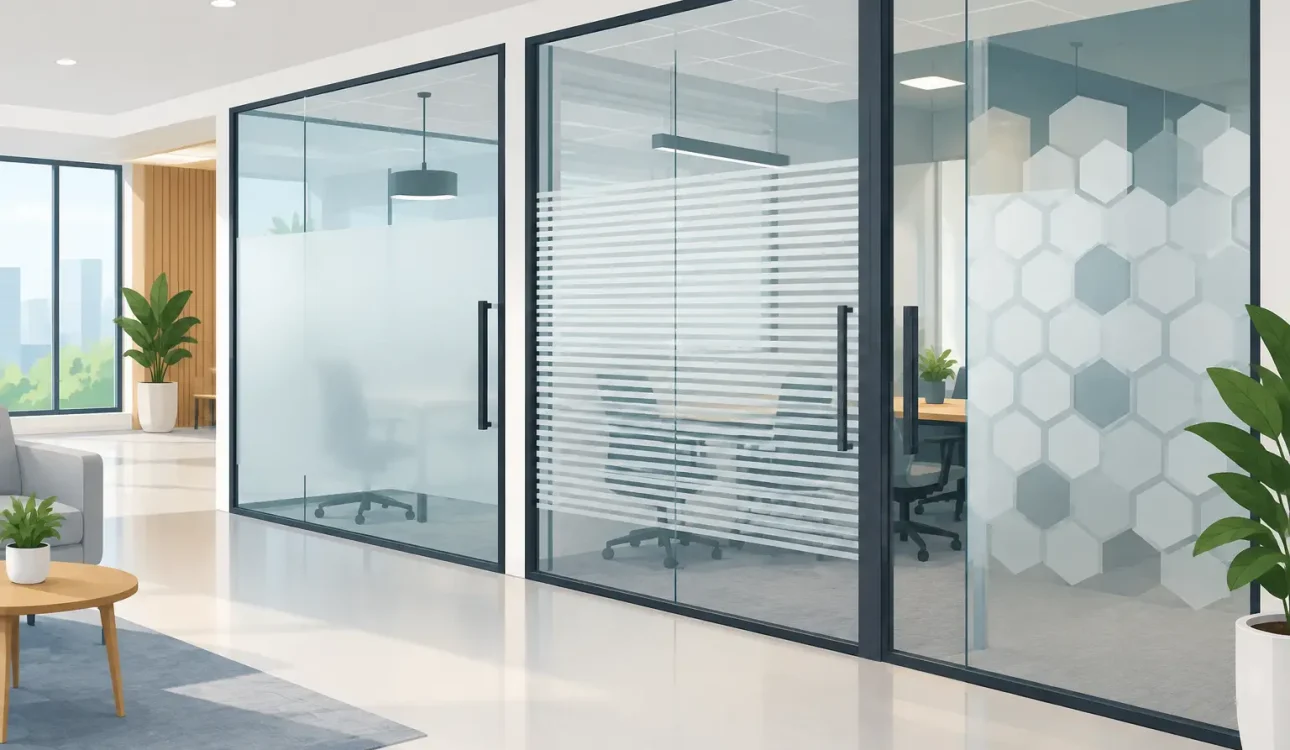
For meeting rooms and private offices, full-height frosted film can prevent direct views into the space. It is especially useful where workstations, display screens, or sensitive documents sit close to the glass. The room remains bright, but outside observers cannot clearly see faces, screens, or written material.
Partial frosting is often the better choice in collaborative areas. A frosted band across the center section of the glass protects seated employees while keeping upper and lower areas visually open. This approach maintains an airy atmosphere and can make compact offices feel less enclosed.
The right opacity matters. Light frost creates a subtle visual barrier, while denser frosted or privacy film provides stronger obscurity. A professional consultation can help match the film to the viewing distance, lighting conditions, and level of confidentiality required.
Add Branded Bands and Safety Markers
Glass partitions can be hard to see, particularly in busy corridors. Frosted bands also serve as clear safety markers, reducing the risk of people walking into transparent panels. Rather than treating these bands as an afterthought, offices can use them to strengthen the interior design.
Company colors, understated geometric patterns, department labels, or a logo can be incorporated into a decorative film layout. The result is functional privacy with a more intentional, professional finish. For client-facing offices, this is a simple way to make meeting rooms feel established and well managed.
Decorative Film Creates Privacy With Character
Decorative window film is well suited to offices that want more than a plain frosted look. Patterns such as fine lines, gradients, textures, and geometric designs break up visibility while contributing to the interior style.
A gradient film is particularly useful when you want stronger screening at desk height and more openness above. For example, a denser lower section can conceal seated staff and monitors, then fade upward to retain a brighter, more connected look. This works well for interior meeting rooms where solid frosting might feel too closed in.
Patterned film also helps large glass walls feel less stark. However, design should not overpower the space. Highly detailed patterns may look impressive on a sample but become visually busy when repeated across multiple rooms. Choose a finish that supports the office palette and still looks professional from a distance.
Use One-Way Film Carefully
One-way reflective film can be a useful privacy option in certain office layouts, but its performance depends on lighting. It works when one side of the glass is significantly brighter than the other. People on the brighter side see a reflective surface, while occupants on the darker side can see outward more easily.
This makes it a potential choice for perimeter-facing offices, reception areas, or glass facing a brighter exterior. It is not a guaranteed solution for internal meeting rooms, where lighting levels can change throughout the day. At night, when interior lights are brighter, the privacy effect may reverse.
For this reason, one-way film should be specified based on the actual environment rather than appearance alone. A specialist should evaluate daylight direction, indoor lighting, and after-hours use before recommending it for privacy-critical spaces.
Combine Privacy Film With Light and Glare Control
Privacy is only one part of a comfortable office. In rooms exposed to strong sunlight, glare can make screens difficult to read and create uneven temperatures. A well-chosen window film can address both visual privacy and solar performance, depending on the product and glass orientation.
For external office glazing, solar control film can reduce glare, heat gain, and UV exposure while preserving the view. For internal partitions, frosted or decorative film is typically the more relevant choice. In some layouts, using different films for external windows and internal glass walls creates a more complete workplace solution.
This distinction matters because not every privacy film is designed for solar control, and not every solar film gives meaningful interior privacy. Matching the product to the glass location ensures you pay for performance that the office will actually use.
Consider Switchable Privacy for High-Use Rooms
For executive rooms, training spaces, medical consultation rooms, or boardrooms, switchable privacy glass film may be worth considering. When powered on or off, depending on the system, the film can change between a clear and opaque state. This gives teams visual openness when a room is available and privacy when a meeting begins.
The trade-off is cost and installation complexity. Switchable solutions require electrical planning and are generally better suited to spaces where adjustable privacy is used frequently enough to justify the investment. For many standard meeting rooms, high-quality frosted film provides the same core privacy benefit at a more accessible cost.
Plan the Installation Around Real Office Use
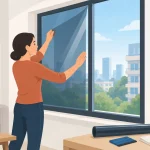
A privacy solution only performs well when it is measured and installed precisely. Misaligned bands, uneven edges, bubbles, or poorly placed patterns can make a polished office look unfinished. Professional installation also helps ensure the design aligns across adjoining panels, doors, and sidelights.
It is worth planning the layout around furniture placement and normal sightlines. If a conference table is near the glass, the privacy zone should protect seated participants. If a room contains wall-mounted screens, the film should cover the relevant viewing angles. Door vision panels may need a different treatment from fixed partitions to preserve safety and wayfinding.
ShieldShade International helps offices select and install privacy, frosted, decorative, and solar films based on how each space is actually used. With premium film options and precise installation, existing glass can be upgraded without the disruption of major renovation work.
A glass-partition office does not have to choose between openness and confidentiality. Start with the conversations, screens, and work that need protecting, then select a film finish that gives people the privacy to do their best work while keeping the office bright and welcoming.