A bathroom window should bring in daylight, not leave you reaching for the blinds every time you step out of the shower. Privacy film for bathroom windows is a practical upgrade for homes where neighboring units, walkways, or nearby houses create unwanted sightlines. Applied to existing glass, the right film obscures the view without closing off the room or requiring a major renovation.
For apartments, condos, and closely built neighborhoods, the decision is rarely about whether privacy is needed. The real question is how much privacy you need, where it is needed on the glass, and whether you still want a clear view or natural light in the rest of the window.
What Privacy Film for Bathroom Windows Does Best
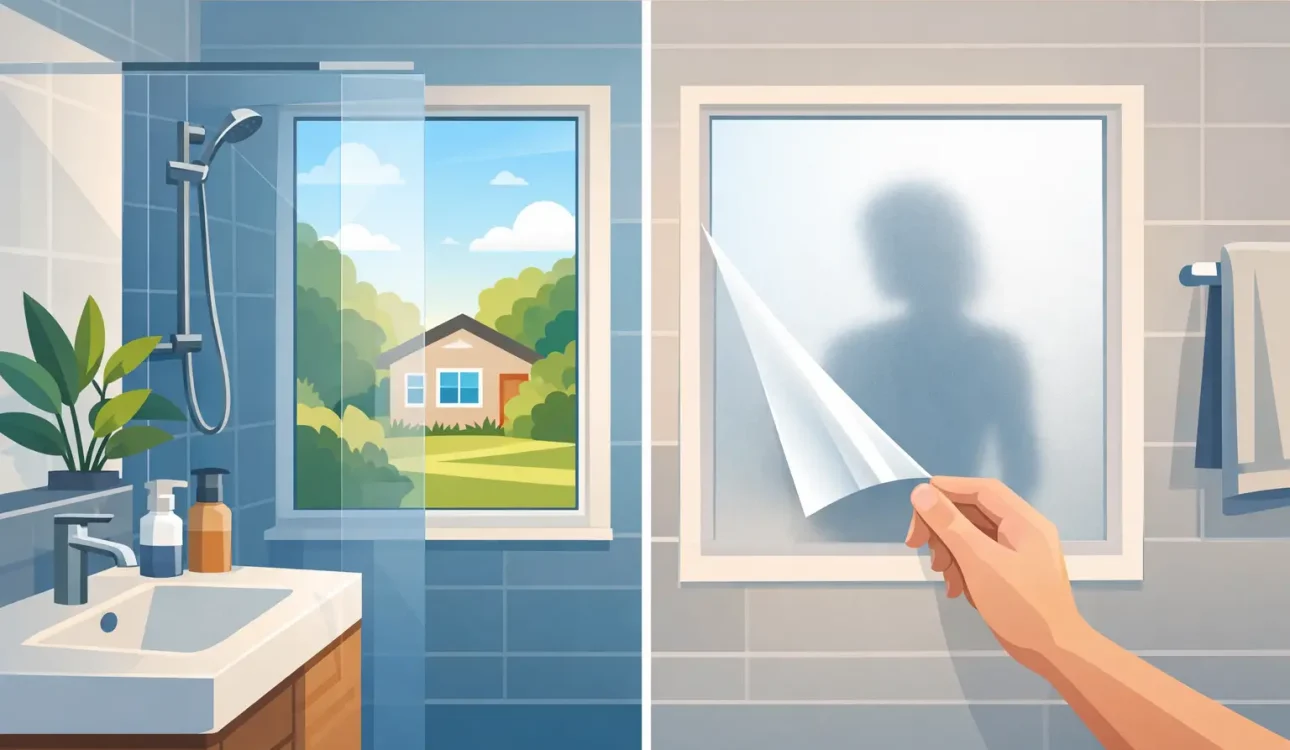
Privacy window film changes the way light passes through glass. Frosted, matte, and textured films scatter light so that people on either side cannot see clear details through the window. The bathroom stays bright during the day, but the view into the room is softened or completely blocked depending on the film selected.
This makes film particularly useful for bathroom windows facing another building, a shared corridor, a backyard, or a busy street. Unlike curtains, it does not collect moisture, need frequent washing, or reduce the usable space around a tight window. Unlike etched or replacement glass, it can usually be installed without removing the existing window.
The result should be privacy that feels built into the room rather than an afterthought. A clean frosted finish can suit a modern shower area, while a subtle pattern can add character to a powder room or guest bathroom.
Start With the Actual Sightline
Before choosing a finish, stand in the locations where privacy matters most. Look at the window from the shower, bathtub, toilet, and vanity. Then check the view toward the bathroom from outside at different angles. A window may appear private from directly in front of it but still expose the room from a neighboring balcony or upper-floor unit.
Full-window coverage is often the simplest choice for small bathroom windows. For larger windows, partial coverage may be more appropriate. Applying an opaque or frosted film to the lower half preserves daylight and sky views while blocking the most common viewing angle. This is especially effective when the bathroom is above ground level but still visible from nearby homes.
Consider nighttime conditions as well. Interior bathroom lighting is brighter than the outdoors after dark, so silhouettes can be more noticeable through lightly tinted or decorative films. If the window is directly exposed, select a film with a higher opacity rather than relying on a subtle pattern alone.
Choose the Right Film Finish
Not all privacy films deliver the same level of concealment. The best choice depends on the position of the window, the amount of natural light available, and the design of the bathroom.
Frosted and Matte Film
Frosted film is the most widely used option for bathroom glass because it creates an even, diffused appearance. It provides dependable daytime and nighttime privacy while allowing generous light into the space. A matte white or sandblasted-glass effect works well in contemporary bathrooms and blends easily with most tile, fixture, and frame colors.
The level of frost matters. A lighter frost may obscure details but still show general shapes when lights are on. A denser frosted film offers stronger coverage for shower windows and ground-floor bathrooms. A specialist can help match the opacity to the exposure instead of selecting based on a sample viewed under showroom lighting alone.
Decorative and Patterned Film
Decorative window film can be a strong choice when privacy and visual interest are equally important. Reeded-glass effects, geometric patterns, gradients, and textured finishes can complement the room while disrupting a direct view through the glass.
However, a decorative pattern is not automatically a high-privacy solution. Open sections, clear lines, or lightly printed designs may allow visibility at close range. For a bathroom facing a busy area, choose a pattern with substantial coverage or pair the design with a frosted base.
Blackout and Opaque Film
For windows that require complete visual blocking, opaque or blackout film is the most decisive option. It is useful for a window inside a shower enclosure, a bathroom facing a shared passage, or a space where daylight is not a priority.
The trade-off is clear: maximum privacy means less natural light. In a compact bathroom, that can make the room feel more enclosed. Opaque film is best reserved for the portion of the window that needs it, unless artificial lighting and ventilation are already well planned.
Do Not Rely on One-Way Film for Bathroom Privacy
Reflective or one-way film is often misunderstood. It can provide daytime privacy when the exterior is much brighter than the interior. At night, that effect reverses when bathroom lights are on, making the interior more visible from outside.
That does not make reflective film a poor product. It can be useful for daytime glare reduction and heat control on suitable windows. It is simply not the right stand-alone answer for a bathroom that needs dependable privacy around the clock. Frosted or opaque privacy film is the safer choice when privacy is non-negotiable.
Account for Heat, UV, and Humidity
Bathrooms are humid spaces, but quality window film installed correctly on suitable glass is designed to perform in everyday moisture conditions. The critical factor is preparation. Glass must be thoroughly cleaned, and the film should be accurately trimmed and bonded so that edges are not exposed to unnecessary water contact.
If your bathroom receives strong afternoon sun, privacy can be combined with solar performance. Certain films can reduce glare and help manage solar heat while still providing a frosted appearance. This is worth considering for bathrooms with large windows, particularly in warm climates where direct sun can make the room uncomfortable and fade nearby finishes.
Not every film is appropriate for every glass type. Double-pane units, tempered glass, coated glass, and older windows may have different compatibility requirements. A professional assessment helps avoid selecting a film that could create excess heat absorption or affect the glass manufacturer’s warranty.
Professional Installation Makes the Finish Look Right
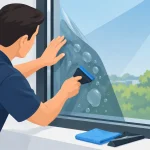
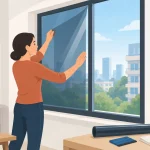
Bathroom film is highly visible because the glass is often close to eye level. Bubbles, uneven edges, trapped debris, and poorly aligned patterns can make an otherwise attractive room look unfinished. Precision installation is not just cosmetic – it helps the film perform properly over time.
A professional installer will assess the window dimensions, glass condition, access around the frame, and the desired coverage height. This is particularly useful for unusual window shapes, louvered panels, sliding windows, or glass positioned inside a shower area. The installer can also advise whether the film should stop at the frame edge, align with tile lines, or cover only a specific lower section.
After installation, allow the film to cure as instructed. Minor water haze can be normal during the initial curing period. Once cured, clean the film with a soft cloth and a mild, non-abrasive cleaner. Avoid rough pads, sharp tools, and harsh chemicals that can damage the surface.
A Small Upgrade With a Daily Payoff
Privacy film is one of the few bathroom improvements that changes comfort immediately without replacing windows, adding bulky coverings, or disrupting the room’s layout. It can make a compact bathroom feel calmer, brighter, and more secure at the same time.
ShieldShade International helps homeowners select premium privacy, frosted, decorative, and solar film solutions based on the glass, exposure, and performance needed. The best result is not simply the darkest film available. It is a finish that protects your privacy, suits your bathroom, and continues to look right long after installation.
Take a few minutes to assess the view toward your bathroom window after dark. That real-world sightline will tell you far more about the privacy level you need than any product photo can.