
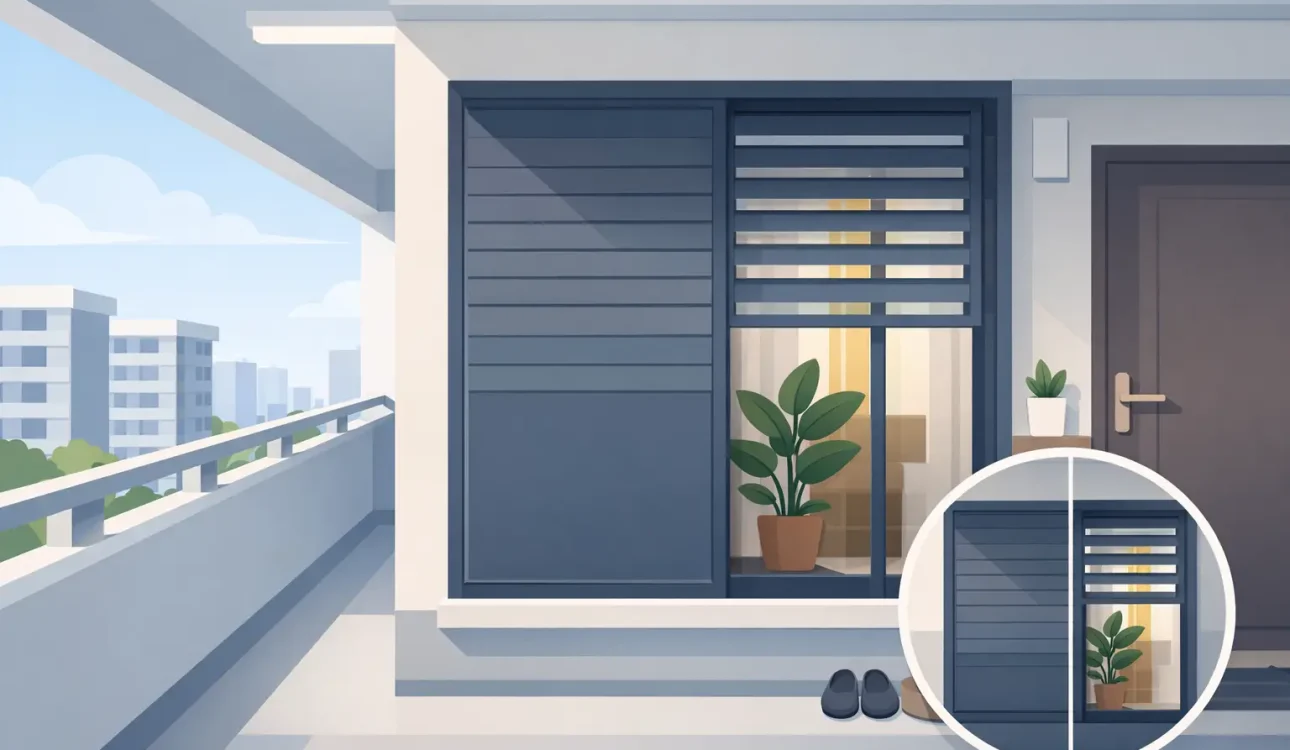
If your living room or kitchen window faces a common corridor, you already know the problem. An effective hdb corridor privacy window solution needs to block direct sightlines without making the home feel closed in, dark, or stuffy. That balance matters even more in Singapore-style apartments, where homes are close together and daylight is too valuable to give up.
Many homeowners start with curtains, blinds, or sheer panels. They help, but they also come with trade-offs. Curtains collect dust, block airflow, and often stay half-drawn all day. Blinds can look bulky on certain corridor-facing windows, and once they are tilted for privacy, the room usually loses some natural light. If you want privacy while keeping the glass usable, window film is often the cleaner and more practical answer.
Why an HDB corridor privacy window solution needs more than just coverage
Privacy is the obvious goal, but it is rarely the only one. Corridor-facing windows also bring in afternoon glare, heat, and a constant sense of exposure. In homes where the corridor is active, with neighbors walking past, deliveries arriving, or children playing nearby, that exposure can become a daily frustration rather than a small inconvenience.
The right solution should do three things well. It should reduce visibility from outside, preserve a comfortable level of daylight, and suit the way the room is actually used. A kitchen may need more brightness. A bedroom may need stronger screening. A study may need privacy without turning the space dim during working hours. This is why one-size-fits-all recommendations usually fall short.
Window film works well because it changes what the glass does without changing the window itself. You keep the clean lines of the original glazing, avoid a renovation-heavy fix, and choose a finish based on how much privacy and light control you need.
The most practical hdb corridor privacy window solution for most homes
For many corridor-facing units, frosted or privacy window film is the most dependable option. It obscures the view through the glass while still allowing light to pass through, which makes it especially useful for windows that cannot stay covered all day. Instead of creating a harsh blocked-off feeling, it softens visibility and keeps the room brighter than curtains or solid coverings typically would.
This type of film is especially effective when the privacy issue is constant, not occasional. If people can look in at any time of day or night, frosted film gives more consistent coverage than reflective film, which depends on lighting conditions. During the daytime, reflective films can offer good privacy when the exterior side is brighter than the interior. At night, when your indoor lights are on, that effect can reverse. That is an important distinction many homeowners miss.
For this reason, the best choice often depends on what kind of privacy problem you are trying to solve. If you want round-the-clock screening, frosted film usually performs better. If you want daytime privacy while preserving more outward visibility, a reflective or one-way style may be worth considering, but only if you understand the nighttime limitation.
Choosing between frosted, blackout, and reflective film
Not every corridor-facing window should be treated the same way. The room, window height, and direction of exposure all affect what will work best.
Frosted film for everyday privacy
Frosted film is the safest all-around option for many HDB-style corridor windows. It diffuses visibility while still bringing in daylight, which makes it ideal for kitchens, bathrooms, utility areas, and living spaces where you want a clean finish and reliable privacy. It also suits homeowners who prefer a softer, more neutral appearance from both inside and outside.
Another advantage is that frosted film does not rely on dramatic exterior shine or a mirror-like look. That makes it a good fit for homes where aesthetics matter just as much as function.
Blackout film for full screening
If the goal is complete visual blockage, blackout film provides the strongest privacy level. It is more common in service areas, storage zones, or windows where natural light is not a priority. The trade-off is obvious: once you block the view entirely, you also lose most or all daylight through that panel.
For this reason, blackout film is usually a targeted solution rather than a whole-window recommendation. In some homes, applying it only to the lower portion of the glass creates privacy where it is needed most while preserving some light above.
Reflective film for daytime privacy and heat control
Reflective film appeals to homeowners who want privacy plus solar performance. It can reduce glare and heat gain while creating a more private exterior-facing surface during the day. This can be useful for windows that receive strong sun exposure and where daylight control matters.
Still, reflective film is not the right answer for every corridor window. If the corridor is shaded or interior lights stay on into the evening, privacy performance may be less consistent than expected. That does not make reflective film a poor product. It simply means the use case has to match the film type.
What homeowners often get wrong
The most common mistake is choosing based on appearance alone. A film may look attractive in photos but perform poorly in a corridor-facing setting if the privacy level is too light or if the lighting conditions work against it.
The second mistake is ignoring installation quality. Privacy film looks simple, but alignment, edge finishing, and surface preparation affect both durability and appearance. On a window that faces a common corridor, flaws are easier to spot because the glass is viewed from both inside and outside at close range.
The third mistake is treating privacy as separate from comfort. If the corridor-facing window also brings in harsh light or heat, choosing a film only for obscurity may solve one issue while leaving another untouched. A better result comes from selecting a film that balances privacy, daylight, and thermal performance together.
How to decide what your home actually needs
A good hdb corridor privacy window solution starts with a few practical questions. Do you need privacy all day and night, or mainly during the day? Is the room already short on natural light? Are you trying to hide direct views into the room, or do you want total blockage? Does the glass receive strong sun, or is the issue mainly visibility from passersby?
These questions help narrow the right category quickly. If your main complaint is people walking past and looking in, frosted film is usually the strongest candidate. If your problem is glare and privacy during bright hours, reflective film may be more suitable. If there is a specific lower section of glass that creates the issue, a partial application can often solve it without covering the full window.
This is where experienced guidance makes a real difference. Window film is not just decorative. The right recommendation depends on lighting behavior, glass placement, and how the space is used day to day.
Why professional installation matters more for corridor-facing windows
Corridor windows are highly visible. Any bubbling, peeling, uneven trimming, or poorly matched coverage will be noticed quickly. Professional installation helps the film sit flat, look refined, and last as intended.
It also matters because not all films are equal in adhesive quality, clarity, and long-term performance. Premium films sourced for hot, humid climates tend to hold up better, especially where sunlight, moisture, and daily temperature changes can affect lower-grade materials. A specialist installer can also recommend whether you need a full frosted panel, a gradient finish, or a combination approach based on the exact window layout.
That is where a company with deep product knowledge adds value. ShieldShade International focuses on matching film performance to real residential needs, not just selling a generic privacy layer. For homeowners who want a clean finish and dependable results, that experience reduces guesswork.
A better way to improve privacy without closing off your home
The best corridor privacy upgrades do not make the home feel smaller. They make it feel calmer. You stop worrying about passing footsteps, sudden eye contact, or keeping curtains shut all afternoon. The space stays bright, usable, and more comfortable.
That is why window film continues to be one of the smartest fixes for corridor-facing homes. It is simple in concept, but when chosen well, it solves a daily problem without turning into a design compromise. If your window is doing too little for privacy and too much to expose your space, the right film can change that quietly and effectively.