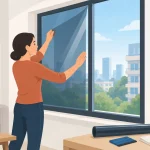
A street-facing bathroom window, a home office overlooking neighboring units, or a glass-walled meeting room can make privacy feel like a daily compromise. Privacy film alternatives give you several ways to block unwanted views, but they do not all handle daylight, heat, glare, maintenance, or cost equally. The right choice depends on what you want the glass to do once privacy is solved.
For many properties, the goal is not simply to cover a window. It is to keep rooms comfortable, preserve natural light, and maintain a clean, modern finish without a disruptive renovation. Before choosing a permanent or temporary solution, consider when privacy is needed, whether the window receives strong sun, and how much of the outward view you are willing to lose.
Why Look Beyond Privacy Film?
Privacy film is often an efficient answer for overlooked windows and interior glass partitions. Frosted, decorative, blackout, and reflective options can change the function of existing glass with minimal downtime. Still, there are situations where another treatment may suit the room better.
A bedroom may need adjustable privacy at night but an open view during the day. A rental property may require a removable option. A heritage home or premium office may call for a built-in architectural finish rather than an applied layer. Understanding the trade-offs prevents an attractive purchase from becoming an everyday inconvenience.
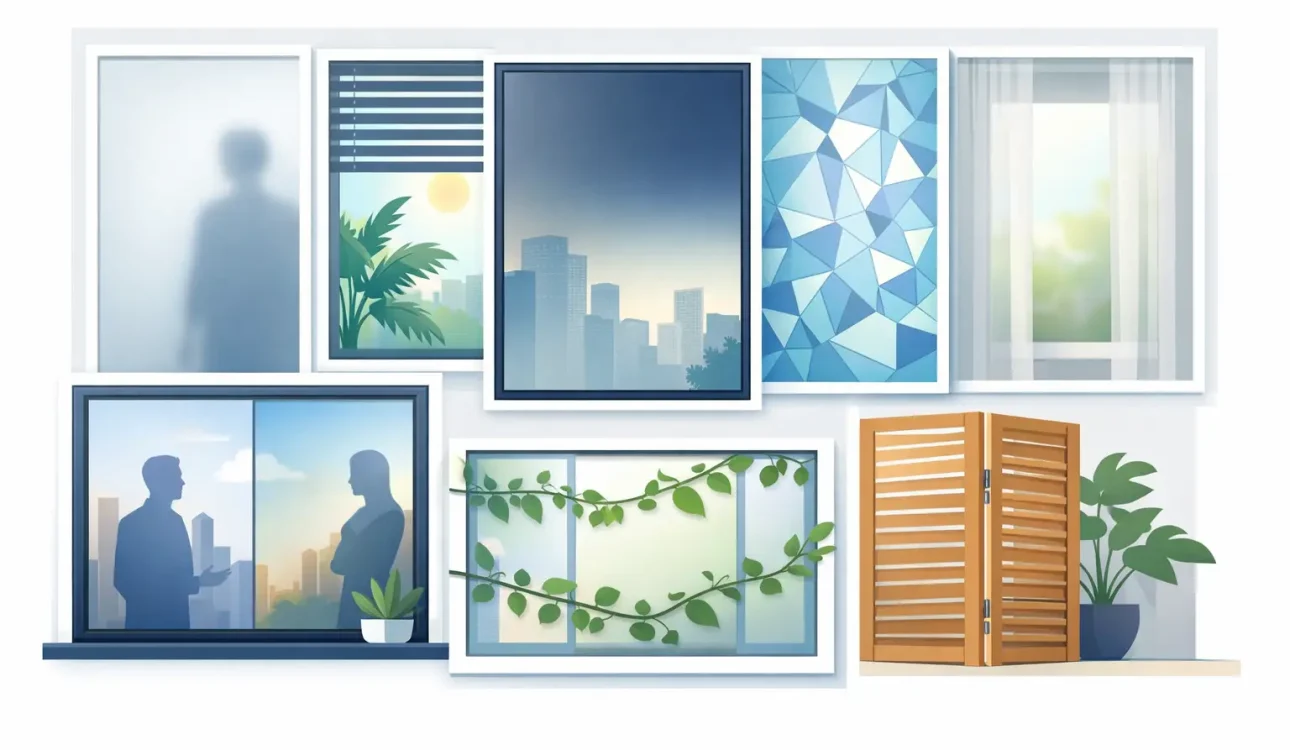
7 Privacy Film Alternatives to Compare
1. Roller Shades
Roller shades are a practical choice when you want privacy on demand. Open them fully for daylight and views, then lower them when neighbors, pedestrians, or office visitors can see inside. They are available in light-filtering, blackout, and solar-screen fabrics, so one category can serve very different rooms.
The limitation is that shades cover the entire window when in use. A blackout shade delivers excellent privacy but eliminates daylight, while an open-weave solar shade retains some visibility from inside and may not provide full nighttime privacy when indoor lights are on. For sun-exposed rooms, look for a fabric designed to manage glare and solar heat rather than treating privacy as the only requirement.
2. Venetian Blinds
Venetian blinds offer more directional control than roller shades. Tilting the slats upward can limit sightlines from nearby buildings while allowing daylight to bounce toward the ceiling. This makes them useful in offices, kitchens, and living areas where complete coverage would feel too enclosed.
Their moving parts are both their strength and weakness. Blinds can be adjusted throughout the day, but the slats collect dust and may rattle, bend, or become uneven over time. They are usually less effective than a fitted window film for reducing heat across the full glass surface, especially on wide windows facing intense afternoon sun.
3. Curtains and Drapes
Curtains are the most flexible aesthetic alternative. They introduce softness, color, texture, and a sense of warmth that works particularly well in bedrooms, lounges, hospitality spaces, and traditional interiors. Lined drapes can also improve perceived comfort near glass by reducing drafts and blocking light.
For functional privacy, fabric type matters. Sheer curtains soften views but rarely conceal interiors after dark. Heavier lined curtains offer far better privacy and room darkening, yet they can make compact rooms feel smaller and require enough wall space for a full stack when open. They also need regular cleaning, which is a meaningful consideration in dusty urban environments.
4. Interior Shutters
Plantation shutters and other fitted interior shutters provide a more architectural look. Their adjustable louvers let you direct light and manage visibility, while their solid construction can feel more durable and premium than standard blinds. They are especially effective for bedrooms, bathrooms, and street-level windows.
However, shutters are a substantial fixture rather than a quick upgrade. They cost more, reduce the clear glass area even when open, and may not suit narrow frames, sliding windows, or minimalist commercial spaces. If your main concern is heat gain through large panes of glass, shutters address the symptom after sunlight enters rather than improving the glass itself.
5. Etched or Obscure Glass
Replacing clear glass with etched, sandblasted, patterned, or obscured glass creates permanent privacy without adding a surface treatment or window covering. It is a strong fit for bathroom windows, entry sidelights, shower enclosures, and internal office partitions where privacy is needed all day, every day.
The finish can be elegant and durable, but permanence is the key trade-off. Once installed, obscured glass cannot be switched off when you want a clear view. Glass replacement also involves higher material, labor, and downtime costs than treating existing glass. For homeowners seeking a similar frosted appearance without replacing a sound window, a quality frosted film remains the more adaptable option.
6. Exterior Screens and Landscaping
Exterior privacy screens, louvers, trellises, and strategically placed planting can protect a window before sightlines reach the glass. This approach works well for patios, ground-floor rooms, balconies, and buildings where the privacy issue comes from one predictable direction.
Because it sits outside, this solution can preserve the interior window appearance and add shade to the facade. Yet it requires approval, structural planning, weather-resistant materials, and ongoing maintenance. Dense planting takes time to establish, while fixed screens can reduce airflow, daylight, and views if poorly positioned. It is often best used alongside a glazing solution rather than as the only line of defense.
7. Switchable Smart Glass
Switchable smart glass changes from clear to opaque at the touch of a button. It is a compelling option for executive offices, clinics, conference rooms, and high-end homes because it creates instant privacy without curtains or blinds. When clear, it maintains an open visual connection; when activated, it creates a frosted effect.
The technology comes with a premium price and installation complexity. Retrofitting can involve replacing existing panes, arranging electrical connections, and planning for controls and future servicing. Smart glass also should not be assumed to provide the same solar performance as a dedicated heat-rejecting film. Product specifications matter, particularly in rooms exposed to direct sun.
How Privacy Film Alternatives Perform in Real Spaces
The best option changes with the room. In a bathroom, permanent obscured glass, shutters, or frosted treatment all make sense because privacy is non-negotiable. In a bedroom, layered window coverings often work better because daytime views and nighttime darkness both matter. In a meeting room, switchable glass may justify its cost when presentation, openness, and confidentiality must coexist.
For apartments, townhomes, and commercial properties with large sun-facing windows, privacy should be evaluated alongside heat and glare. Curtains and blinds can block light after it has passed through the glass, but they do not stop solar energy as effectively as a film engineered to reject heat at the window. A dual-purpose solution may reduce cooling demand, glare on screens, and outside visibility in one installation.
Nighttime privacy deserves special attention. Some reflective or solar-control treatments offer strong daytime privacy because the exterior is brighter than the room. At night, that effect can reverse when indoor lights are on. If complete evening privacy is essential, pair a daytime glazing treatment with shades, curtains, or blinds.
Choosing the Right Alternative for Your Budget and Routine
Start with the privacy pattern, not the product category. Do you need coverage all the time, only at night, or only when a nearby building is occupied? Next, consider how much daylight and outside view you want to retain. Finally, assess whether sun, glare, UV exposure, and room temperature are also affecting comfort.
A removable shade may be ideal for a renter. Etched glass may be justified for a long-term bathroom renovation. Smart glass can support a premium commercial design brief. For many existing windows, however, a professionally specified film remains difficult to beat for speed, clean appearance, and performance without glass replacement.
Quality selection and installation make a visible difference. The film or alternative should suit the glass type, window orientation, room use, and local exposure conditions. ShieldShade International helps property owners assess those practical details, so the finished result looks intentional and performs as expected.
The most effective privacy solution is the one you will be comfortable using every day. Choose a treatment that protects your space without forcing you to give up the daylight, view, temperature control, or visual character that made the room worth improving.